Hokkaido in Winter: 7 Days of Snow Festival, Otaru and Niseko Powder
A one-week deep-winter route through Japan's snow country: three days in Sapporo timed to the February Snow Festival — giant sculptures along Odori Park, ice lanterns in Susukino — a day in canal-side Otaru, and three days skiing the famously dry powder of Niseko. This guide covers the logistics that make or break a Hokkaido winter trip: flying versus the 8-hour train from Tokyo (fly), the resort bus from Sapporo, multi-day gear rental in Hirafu, lift-ticket math from ¥7,800 to ¥13,500 a day, and why the JR Pass only wins here if you love trains more than skiing. Cold-weather packing notes included throughout.
Route: Sapporo Otaru Niseko
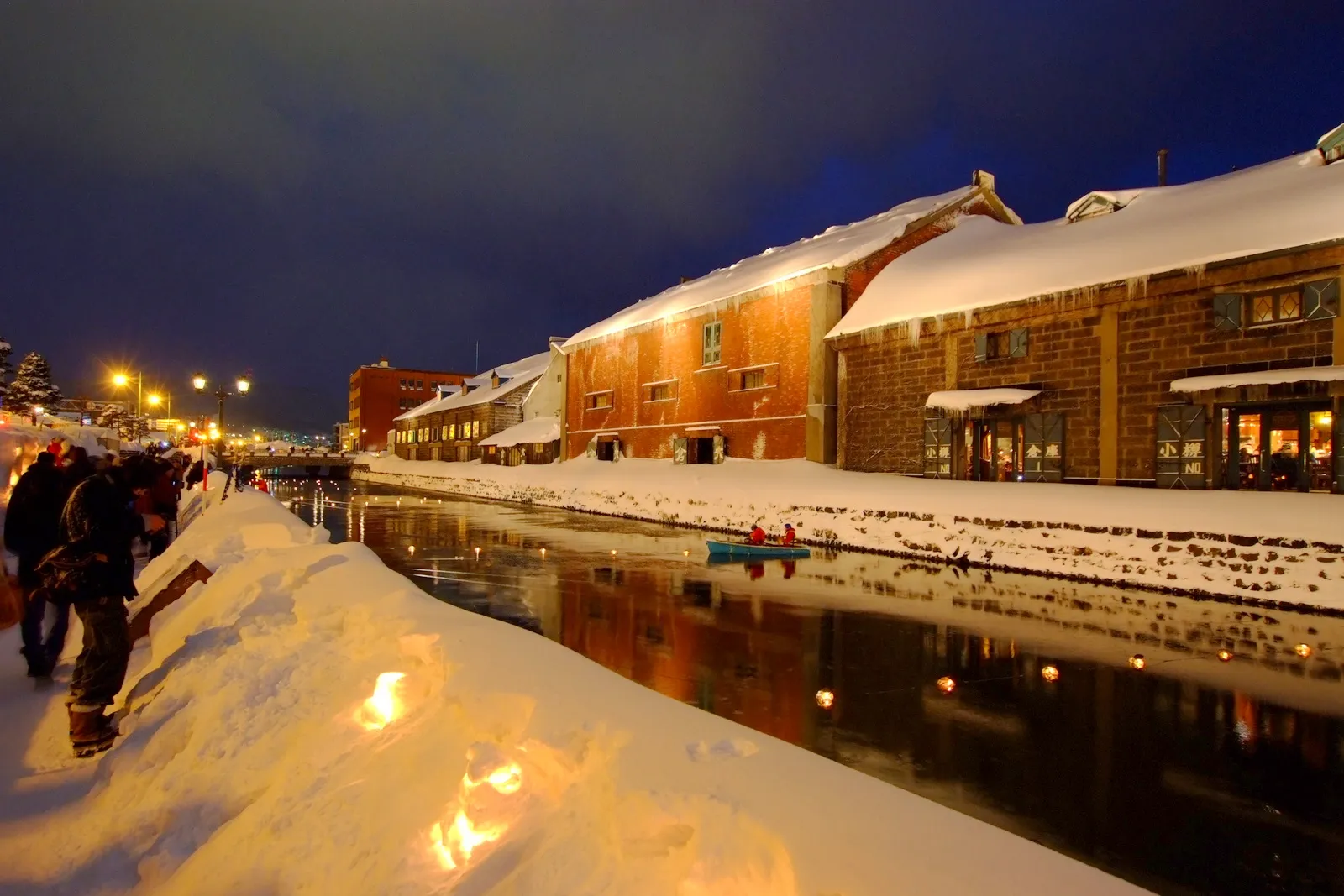
Hokkaido in February is a different country from the Japan of temples and convenience stores — snow meters deep, ramen steaming, and a festival that turns a city park into a glacier gallery. This route runs seven days: land in Sapporo for the Snow Festival, day-trip to the canal town of Otaru for its winter lights, then move to the Niseko ski hills for two full powder days. Winter logistics are unforgiving — buses book out, daylight is short — so treat this plan as a schedule, not a suggestion. The best time to visit guide explains why February is both the coldest month and the right one.
Day 1: Fly into the Snow
The Tokyo-Sapporo flight is 90 minutes (budget carriers sometimes dip under ¥5,000 one way; full-service fares commonly run ¥15,000-30,000), and from New Chitose Airport the JR Rapid Airport train covers the last 35 minutes to Sapporo Station for ¥1,230. Check in, layer up, and take the first of many miso ramen dinners in the Susukino entertainment district — this is the birthplace style and the cold justifies it.
Practical tip: Airport-to-city trains run every 15 minutes or so, but winter weather delays everything downstream — land by mid-afternoon so a delayed bag or a white runway does not eat your first evening. Pack your ski outerwear in your carry-on.
Day 2: Sapporo Snow Festival
The festival fills central Sapporo for about a week every February — recent editions have run roughly February 4-11; confirm the 2026 dates on the official site before you book flights. It is free and walkable: competition-scale snow sculptures along 1.5 kilometers of Odori Park (lit until 10 p.m.), ice sculptures in Susukino (lit until 11 p.m.), and snow slides at the family-oriented Tsudome site (10 a.m.-4 p.m.).
Practical tip: Do Odori in daylight, leave, and come back after dark — the lit-up sculptures are effectively a second venue. Warm boots matter more than a warm jacket; you will be standing on ice for hours.
Day 3: Otaru — Canal, Glass, Sushi
A local train runs the 30-40 minutes to Otaru, a port town that hibernates beautifully. Walk the canal’s gas-lit towpath between converted stone warehouses, then Sakaimachi Street’s glassworks and music-box shops — the souvenir genre this town owns. Lunch is Otaru’s other institution: sushi, in a harbor town that has always eaten straight off the boats.
Practical tip: Otaru’s own Snow Light Path festival — tiny snow lanterns along the canal — usually runs in mid-February; if your dates overlap, stay into the evening for it and return on a later train (they run late into the night in festival season).
Day 4: Bus to Niseko, Gear Up in Hirafu
Book the winter resort bus before you leave home: direct coaches run from Sapporo Station and major hotels to Niseko’s bases (2.5-4 hours depending on conditions, about ¥6,000). Check in around Hirafu — the biggest of Niseko’s interconnected base villages — and spend the evening at a rental shop: multiday packages set up for the whole stay are markedly cheaper than daily slope-side counter rates.
Practical tip: Rent skis or board in town, but bring goggles, gloves and a proper base layer from home — rental gear covers the big stuff, not the fit-critical stuff. Reserve first tracks: book tomorrow’s lesson (if any) and lift tickets online tonight.
Day 5: Powder Day One
Ski Niseko’s united peaks: Grand Hirafu is the largest sector, with the main lift pass around ¥12,500 for a full day, and the all-mountain pass that links Hirafu, Hanazono, Niseko Village and Annupuri runs about ¥13,500 in peak season. The famous pitch is the snow itself — cold Siberian-derived falls that stay light for days. The mountain spans all abilities; take a half-day lesson your first morning to learn the terrain.
Practical tip: The free inter-resort shuttle buses connect the bases and accept pass holders — figure out the loop tonight on the resort map so you are not reading a bus timetable in a snow squall. Night skiing here is a genuine thing, not a gimmick.
Day 6: Powder Day Two, Onsen Finish
A second full day, ideally one base over from yesterday — Annupuri is the gentler, quieter third, Niseko Village the intermediate middle. When your legs vote to stop, cash in the apres ritual: an outdoor onsen, snow falling on the steam. Most hotels and day-use baths around Hirafu offer it; tattoos may need a cover sticker or a private bath, so check ahead.
Practical tip: If two days of skiing were never the plan, make Day 6 a snowshoe or snowmobile morning and an onsen afternoon — Niseko’s operators run both, bookable the day before at convenience stores or hotel desks. See the onsen guide for bathing etiquette.
Day 7: Bus Back, Fly Out
Winter buses run from the resorts back toward New Chitose Airport (about 3 hours from Hirafu; reserve your seat when you book the outbound leg). The airport itself is a small destination — ramen alleys and chocolate shops — and lands you in Tokyo with time to connect to an evening international flight if the schedule cooperates.
Practical tip: Do not book a same-day international connection tighter than four hours; Hokkaido flights are the first thing winter weather touches. If the schedule looks tight, spend the last night in Tokyo instead — the where to stay guide has the airport-neighborhood logic.
Practical Notes
Intercity transport
| Leg | Mode | Time | Cost (approx.) |
|---|---|---|---|
| Tokyo (Haneda/Narita) → New Chitose | flight | ~90 min | ¥6,000-30,000 one way |
| New Chitose → Sapporo | JR Rapid Airport | 35 min | ¥1,230 |
| Sapporo → Otaru | JR local/rapid | 30-40 min | ~¥750 |
| Sapporo → Niseko (Hirafu) | winter resort bus | 2.5-4 h | ~¥6,000 |
| Sapporo → Kutchan (train alternative) | JR via Otaru + bus | ~2 h + shuttle | ¥2,240 + bus |
| Hirafu → New Chitose | winter bus | ~3 h | ~¥6,000 |
Fares as of October 2026. As of now the Hokkaido Shinkansen still terminates at Shin-Hakodate-Hokuto — the Sapporo extension is under construction and not open — so the Tokyo-Sapporo rail trip means a 4-hour shinkansen plus a 3.5-hour limited express (about 8 hours total, around ¥30,000) versus a 90-minute flight.
Budget estimate (per person, excluding international flights)
- Backpacker: US$1,400-1,900 — guesthouses, market food, 1-day lift tickets, rented gear for two days
- Mid-range: US$2,400-3,400 — Hirafu hotels or self-catering condos, 2-day all-mountain passes, one lesson
- Comfort: US$4,000-6,500 — ski-in/ski-out lodging, private lessons, onsen suites
Niseko is priced like a world resort: peak-week condos and lessons sell out months ahead — book lodging first, flights second.
JR Pass verdict
Fly, do not rail. A Tokyo-Sapporo round trip by train is roughly ¥60,000 of tickets against the ¥50,000 seven-day pass, so the pass only “wins” if you ride the trains both ways and enjoy eight-hour transfers as recreation — and it does nothing for the airport bus or lifts where your money actually goes on this route. The JR Pass guide covers the general math; the JR Pass calculator will confirm it for your dates. A domestic flight plus an IC card for Sapporo’s subway is the answer.