Where to Stay in Japan: Business Hotels, Capsules, Ryokan, and the Right Neighborhood
Japan's accommodation system runs on its own logic: some lodgings charge per person, some per room, ryokan rates assume dinner and breakfast, and a capsule costs less than a hostel dorm in most countries. This guide decodes every lodging type with realistic price bands (business hotels ¥7,000-20,000 per room, ryokan ¥6,000-60,000 per person with two meals, as of October 2026), explains solo-traveler pricing and which properties book easily in English, and maps the right neighborhood for Tokyo, Kyoto, and Osaka — Shinjuku versus Asakusa, Kyoto Station versus downtown, Namba versus Umeda.
The short version
- Business hotels are the first-timer default: ¥7,000-20,000 per room, tiny but immaculate, always near a station (as of October 2026)
- Ryokan and minshuku charge per person and usually include dinner and breakfast — that ¥15,000 ryokan night is a full-board experience, not an overpriced bed
- Book through Booking.com or Agoda for instant English confirmation; if a small Japanese-language property ignores or declines your request, move on — plenty more will take you
- In Tokyo stay near Shinjuku or Shibuya for nightlife, Tokyo Station for the shinkansen, Asakusa for atmosphere and lower rates
- In Kyoto, the Kyoto Station area is the practical pick; Shijo-Kawaramachi is the dining-and-walking pick; Arashiyama is a splurge-side base
Japan might be the easiest expensive-looking country to sleep in. The hotel ecosystem is deep, quality is uniformly high, and the cheaper end — business hotels, capsule hotels, hostels — is cleaner and better-run than most countries’ mid-range. The learning curve is in the categories: names like “business hotel” and “minshuku” carry precise meanings, pricing flips between per-room and per-person, and the neighborhood you pick in Tokyo or Kyoto shapes your trip more than the hotel does. Here is the decode. Prices below are japan-guide.com’s published bands, as of October 2026; city rates swing hard with season.
The Types, Decoded
| Type | Price (per night) | What you get |
|---|---|---|
| Hostel dorm | ¥2,000-5,000 per person | The floor: clean, quiet, often designer-grade dorms with capsule-style privacy |
| Capsule hotel | ¥3,000-5,000 per person | A sleeping pod plus shared bath; historically aimed at male business travelers, though many modern ones now run women’s floors and welcome tourists |
| Business hotel | ¥7,000-20,000 per room | The workhorse: compact rooms (bed, desk, unit bath, and not much else) in tower blocks by every major station; chains like Toyoko Inn, APA, Super Hotel, Route Inn |
| Mid-range Western hotel | ¥15,000-30,000 per room | Full-size rooms, restaurants, concierge |
| Ryokan (with two meals) | ¥6,000-60,000+ per person | Tatami room, futon, kaiseki dinner and breakfast, often onsen baths; the classic “one night, two meals” plan |
| Minshuku | ¥5,000-14,000 per person | Family-run B&B version of a ryokan, simpler, usually with meals |
| Luxury hotel | ¥30,000-200,000+ per room | International five-stars, often exceeding ¥100,000 |
Two quirks to internalize before booking anything. First, business hotels are the default answer for most first trips — they are spotless, reliably near stations, and ¥7,000-15,000 buys a perfectly good night in central Tokyo. Second, the exotic-sounding options bracket them: capsule hotels for cheap solo nights (many now have luggage storage, lounges, and women-only floors), and shukubo temple lodgings — ¥6,000-20,000 per person with vegetarian meals and morning prayers, most famously on Mount Koya — for a night you will actually remember.
The Per-Person vs. Per-Room Rule
Japan mixes two pricing systems, and mixing them up is how budgets break. Western hotels and business hotels quote per room — a ¥12,000 room sleeps two for that price, and a solo traveler often gets a cheaper single-occupancy rate. Ryokan, minshuku, hostels, and capsule hotels quote per person, with meals included where noted.
The solo-traveler consequence cuts both ways. Japan is one of the world’s easiest countries to travel alone in — single rooms are a standard business-hotel category, capsules and hostels are inherently solo, and nobody bats an eye at a party of one. But per-person properties often levy a solo supplement on tatami rooms built for two, and a few small inns prefer not to fill a two-person room with one. When comparing a “¥9,000” business-hotel room against a “¥12,000” ryokan night, remember the ryokan figure usually includes dinner and breakfast — the honest comparison is against room plus two restaurant meals.
Ryokan and Minshuku: What You’re Actually Buying
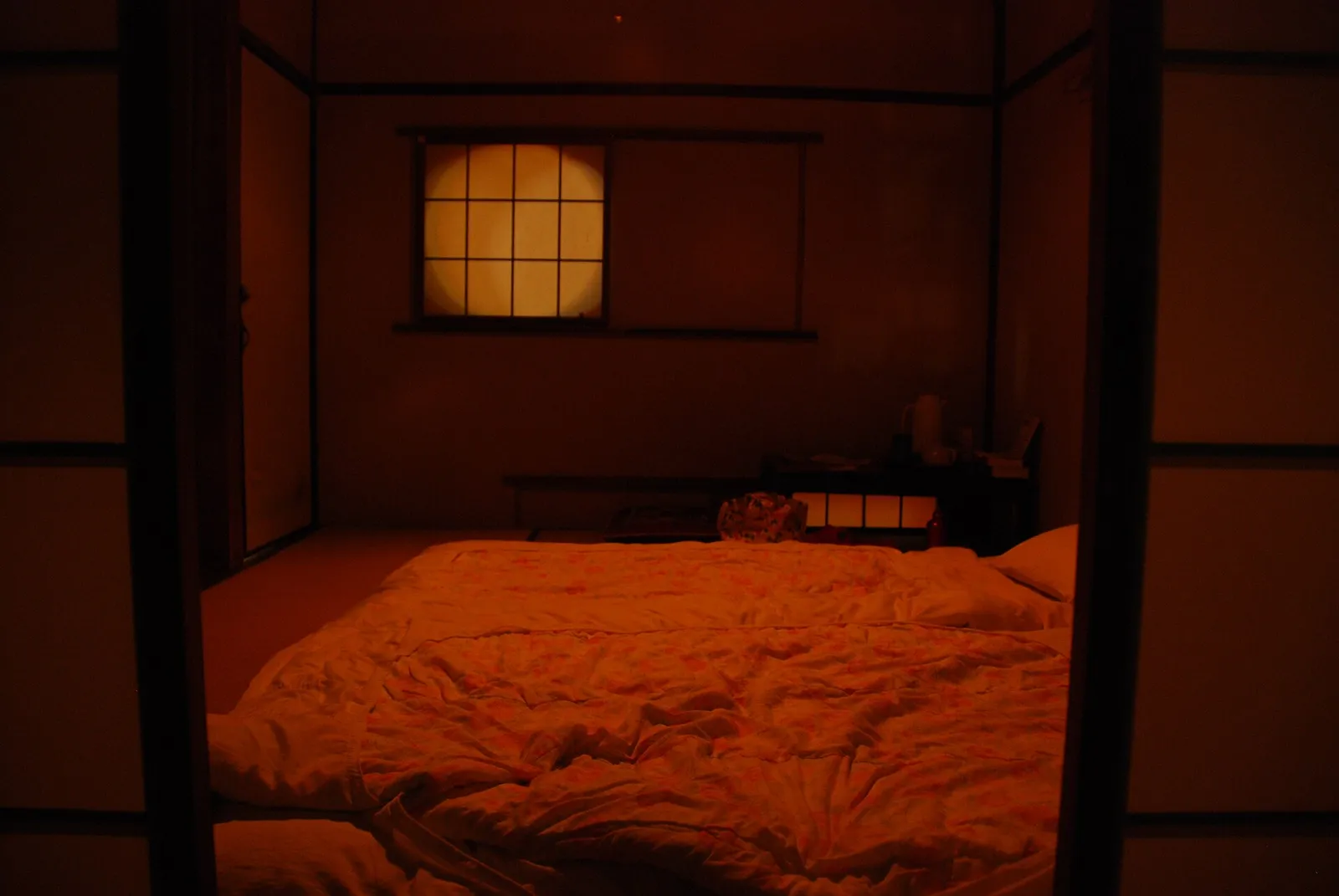
A ryokan night is a package, not a bed rate. The standard plan is “one night with two meals” (ichi-shuku nishoku): you check in mid-afternoon, change into the provided yukata robe, soak in the baths, eat a multi-course kaiseki dinner featuring local ingredients, sleep on a futon that staff lay out while you’re at dinner, and take a Japanese breakfast before an usually-early 10 a.m. checkout. The rhythm is deliberate — a ryokan is an evening event, so arrive by 4-5 p.m. or dinner suffers.
Booking guidance: reserve ryokan and minshuku one to three months out for popular onsen towns (Hakone, Kinosaki, Kurokawa), state dietary restrictions at booking rather than arrival (kitchens prep in advance — see our food guide), and expect some properties to charge the full amount if you cancel inside a week. Bathing etiquette, tattoos, and the onsen experience get their own treatment in our onsen guide — read it before your first ryokan, not after.
Booking in English: Platforms and the Awkward Reality
The friction-free path: Booking.com and Agoda list deep Japan inventory with instant confirmation and free-cancellation filters, and handle the language bridge for you — for most trips, that’s 90% of the job. Jalan and other Japanese reservation sites surface additional small-ryokan inventory and occasionally better rates; Google Translate’s camera mode gets you through their booking forms, but confirmations come in Japanese, so screenshot everything.
The awkward reality, worth stating plainly: a small minority of Japanese-language-first lodgings — mostly tiny ryokan and minshuku — decline reservations they feel they cannot service across a language gap. You will occasionally meet a “no vacancies” reply to a foreign name that a Japanese speaker would not, or a form that requires a domestic phone number. Don’t take it personally, and don’t turn it into your whole trip’s story: filter to properties with English front-desk service or instant confirmation, book those, and spend the saved energy on a better dinner. For stays where WiFi matters, note that most city hotels provide guest WiFi while some rural ryokan and minshuku do not — JNTO advises confirming at booking (see our connectivity guide).
Picking Your Neighborhood
Tokyo
| Area | Character | Best for |
|---|---|---|
| Shinjuku | Mega transit hub (15+ lines), department stores, neon nightlife, west-side skyscraper hotels | First-timers who want everything on the doorstep; anyone using Hakone or regional JR lines |
| Shibuya | Younger, fashion and music, the crossing, rising hotel towers | Nightlife and shopping energy; food crawls in Ebisu/Daikanyama nearby |
| Tokyo Station / Marunouchi | Quiet, polished, directly on the shinkansen, airport trains, day-trip rail | Day trips to Hakone/Nikko/Kamakura and early bullet-train departures |
| Asakusa | Old-town atmosphere, Senso-ji, smaller and cheaper ryokan and hotels | Atmosphere, families, lower rates; trade-off is 20-30 minutes more to Shibuya-side sights |
Kyoto
| Area | Character | Best for |
|---|---|---|
| Kyoto Station area | Modern hotels, all regional buses and trains, shinkansen in the basement | Practical value and day trips (Nara, Fushimi Inari, Osaka) |
| Shijo-Kawaramachi / Gion | Downtown dining, department stores, Gion and Pontocho walkable, Nishiki Market | Evening atmosphere and restaurant trips; fewer big-hotel deals, more machiya stays |
| Arashiyama | Riverside, bamboo grove, quiet, a few upscale ryokan | A restful second- Kyoto-half or onsen-style splurge; far from everything east |
Osaka
| Area | Character | Best for |
|---|---|---|
| Namba / Shinsaibashi | Dotonbori food scene, shopping arcades, direct trains from Kansai Airport (and to Nara) | Food-first trips and late nights |
| Umeda / Kita | Business district, big malls, near Shin-Osaka shinkansen station, Kansai-day-trip rail hub | Shinkansen-based touring and Kyoto commuting (about 30 minutes) |
The general rule for all three cities: stay within a five-minute walk of a major station, and bias toward the neighborhood whose evening scene you want — because in Japan, the last train or a short walk home is the difference between a great night and an expensive taxi.
Common Mistakes
- Comparing per-person ryokan rates to per-room hotel rates. The ryokan price includes two meals and a cultural experience; run the real math before ruling it out as “expensive.”
- Booking a ryokan without reading the meal rules. Dinner is usually served in a narrow window (6-8 p.m.), special diets need advance notice, and last-minute cancellations often cost the full amount.
- Sleeping far from a station to save ¥1,500. A “great deal” an hour from town costs you an hour twice a day and a taxi after the last train. Pay the station premium.
- Assuming hostels mean party. Japanese hostels are mostly hushed, spotless, and full of thirty-something solo travelers. Capsules are even quieter — earplugs, not nightlife.
- Expecting a big room at business-hotel prices. You’re buying location, cleanliness, and a bulletproof shower. The room will be small. That’s the deal, and it’s a good one.
- Taking one declined booking as rejection. Filter to instant-confirmation, English-front-desk properties and move on. Thousands of Japanese lodgings actively want foreign guests.
- Ignoring the checkout clock. Ryokan check out by 10 a.m. and business hotels by 10-11 a.m., earlier than you may be used to — pack the night before early-morning shinkansen departures.