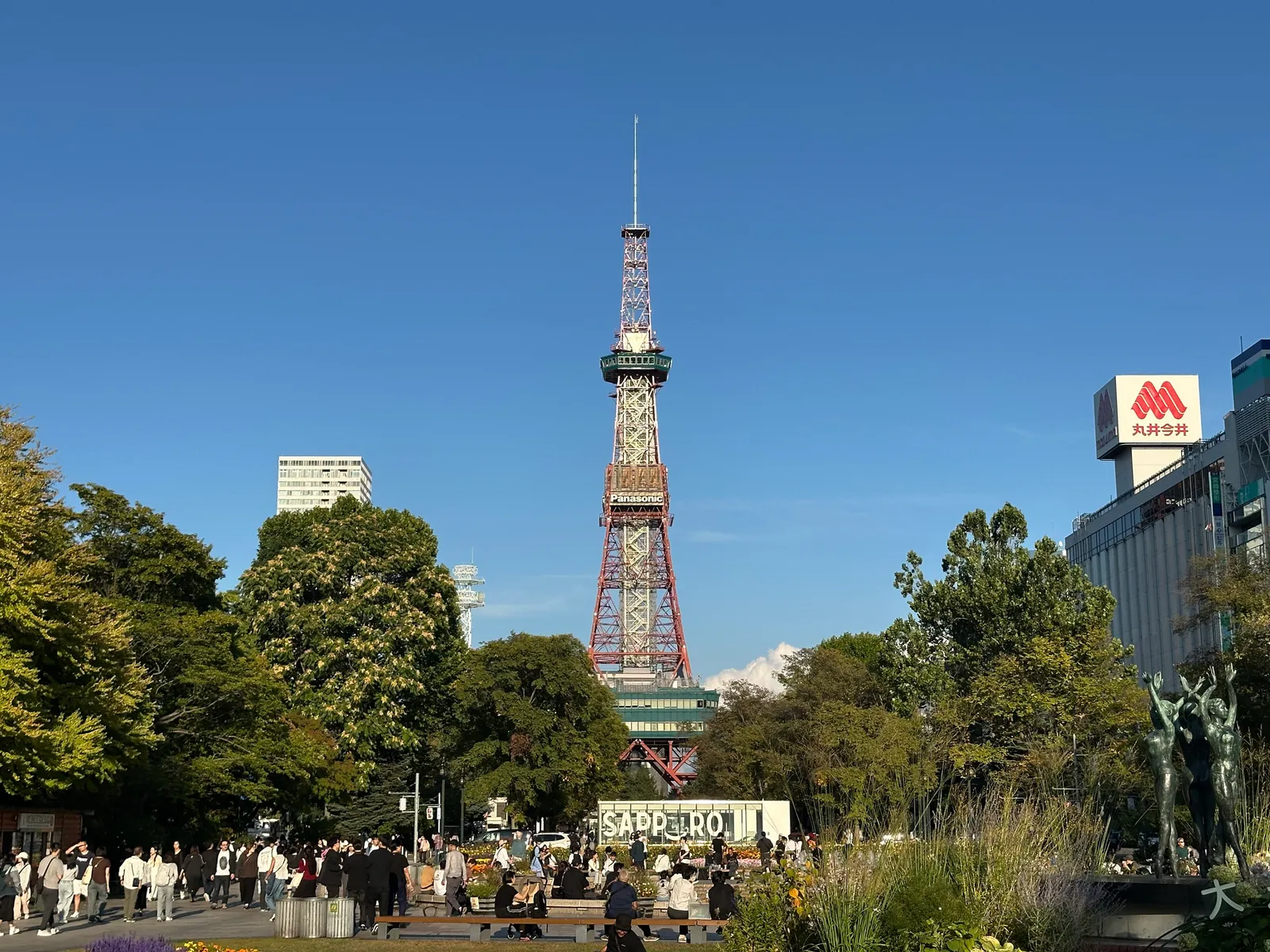
Sapporo is Japan's fifth-largest city and its most livable-feeling one: a young grid of a town planned by Meiji-era modernizers, wrapped around a kilometer-and-a-half central park, with a mountain night view, a 1972 Olympic ski jump in its suburbs, and snow - meters of it - for a third of the year. Winter is the headline season: the Sapporo Snow Festival in early February turns downtown into a gallery of giant sculptures, the ramen alleys steam, and ski resorts sit within day-trip range. Summer flips the script with dry 25-degree days, beer gardens, lavender fields two hours away, and food festivals in the park. The eating here - miso ramen, soup curry, grilled mutton, Hokkaido seafood and dairy - justifies the trip on its own. Best for winter travelers, skiers, families, and eaters who want a big city that stays calm.
Top sights at a glance
No. 1
Odori Park
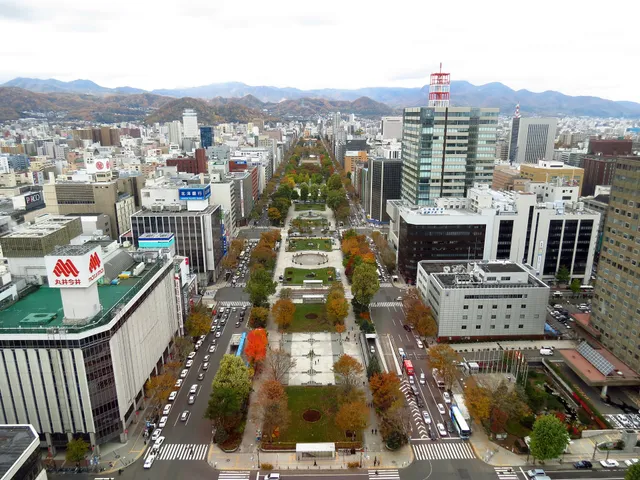
The green spine of the city: a park 1.5 kilometers long laid over twelve city blocks in the exact center of Sapporo's grid, with the TV Tower at its east end. Every season reprograms it - lilacs in May, beer gardens in July, flower beds in summer, and in February the main site of the Snow Festival. It is the place Sapporo comes to eat lunch, and the reference point for navigating the whole city: addresses count blocks north or south of Odori.
Good to know · Free, always open, and impossible to miss - Odori subway station sits beneath it, where all three subway lines cross. Climb the TV Tower (1,200 yen, 9:00-22:00) for the classic view down the green strip. In July and August the park's beer gardens open from late afternoon; go early to claim a bench table under the trees.
No. 2
Sapporo Snow Festival
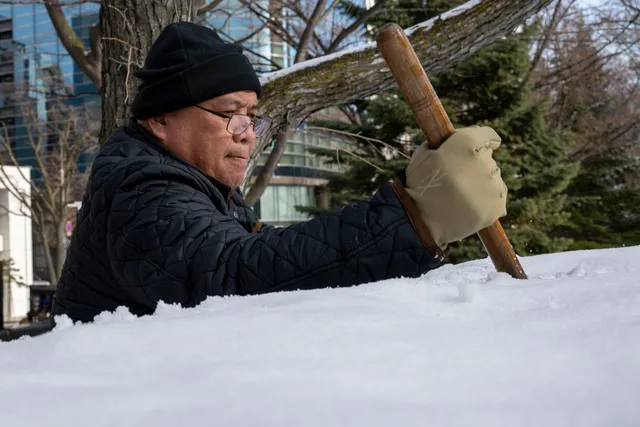
Started in 1950 by high schoolers with six snow statues, now one of the world's great winter events: for about a week each early February, Odori Park fills with massive sculptures - some over 15 meters tall - alongside stages, slides, and hundreds of smaller works, while Susukino exhibits around a hundred ice sculptures and the family-oriented Tsu Dome site adds snow rafting. The 2027 edition runs February 4-11. It is crowded, cold, and completely worth it.
Good to know · Free at all sites. Go on the first weekend's weekday mornings if you can, and see Odori after dark, when sculptures are lit until 22:00 and Susukino's ice until 23:00. Dress for -10C with thermal layers and ice grips. Book rooms three or more months ahead; festival dates are announced each summer at snowfes.com.
No. 3
Susukino
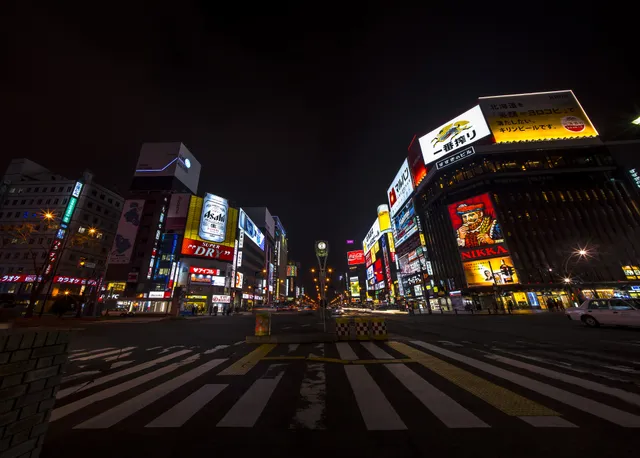
Japan's largest entertainment district north of Tokyo: a dense grid of neon running bars, izakaya towers, karaoke boxes, and restaurants stacked eight stories deep, one subway stop south of Odori Park. It is also a superb eating district. The narrow Ganso Ramen Yokocho lane, a few blocks east of the main drag, holds the small counters where Sapporo's rich miso ramen tradition was built - cranked seats, steam on the windows, a bowl under 1,500 yen.
Good to know · Most ramen counters open around 11:00 and run past midnight; peak is 18:00-21:00, so a 17:30 or 22:00 arrival avoids lines. Point at a neighboring bowl or show 「味噌ラーメンをください」. The Tanukikoji covered arcade parallel to the north is the rainy-day and souvenir route. One drink minimum per seat is the polite rule at tiny bars.
No. 4
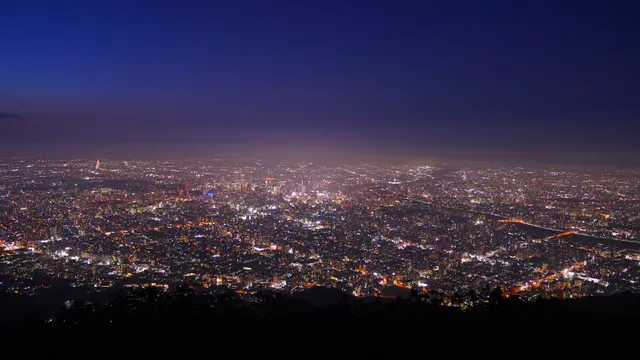
Mt. Moiwa
The 531-meter hill directly southwest of downtown, and one of Japan's officially designated 'new three best night views'. The ride is half the fun: a large ropeway to the mid-station, then a tiny two-car cableway that hauls you through the forest to the summit deck, where the city's grid glows to the horizon and, on clear winter nights, the Sea of Japan darkens beyond it. The planetarium and theater at the top are charmingly retro.
Good to know · The two-stage round trip costs about 2,100 yen for adults (as of October 2026, confirm current fares). Hours 10:30-22:00, from 11:00 in December-March; time your visit 30-40 minutes before sunset to watch daylight fade. From Susukino take the streetcar 25 minutes to Ropeway Iriguchi (230 yen), then the free shuttle bus up.
No. 5
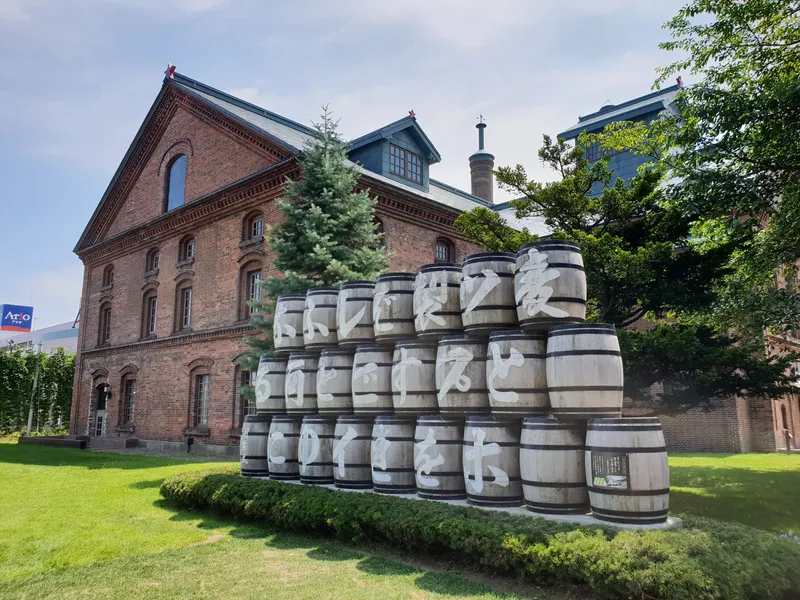
Sapporo Beer Museum
A red-brick 1890s brewery building housing the story of Japan's oldest beer brand, launched by the colonial development commission in 1876 to feed Hokkaido's pioneers. The exhibits trace brewing history with vintage posters and machinery, and tastings follow. The adjoining Sapporo Beer Garden beer halls serve the other great local invention: jingisukan, grilled mutton with vegetables cooked over a dome broiler, with bottomless beer under the brick vaults.
Good to know · Museum entry is free; the guided Premium Tour with tasting is 1,000 yen (Japanese-language, book ahead). Open 11:00-18:00, closed December 31, as of October 2026. Take the Loop 88 Factory Line bus from Odori or Sapporo Station (240 yen, every 30 minutes) to the Sapporo Beer-en stop. Reserve the beer hall for dinner in Snow Festival season.
See it in motion
Some places earn a moving picture
Stills can't show how this place moves — the drift, the light show, the crowd flow. We picked a recent, high-quality walkthrough rather than a promotional cut.
4K Japan Walk Snowy Sapporo Hokkaido from Odori Park to Susukino北海道札幌大通からすすきのへ歩く
WALKER JAPAN 4k · YouTube · plays on click
Embedded via YouTube's official player (privacy-enhanced mode). Video: 4K Japan Walk Snowy Sapporo Hokkaido from Odori Park to Susukino北海道札幌大通からすすきのへ歩く by WALKER JAPAN 4k. Not affiliated with Japan Travel Navi; screened for quality and accuracy on 2026-10-06.
Sapporo confuses people who expect Japan to be old. This is a city that had a population of seven in 1857 and was then built, deliberately, on an American-style grid with a central park - Japan’s grand modernization project made concrete. What that history produced is the country’s most navigable big city and its winter capital: five months of snow, a February festival that builds five-story sculptures out of it, and ski hills on the town’s edge. Come in summer and you get the other Sapporo - dry, cool, festival-drunk, eating sweet corn and soft serve under trees. Either way, the food alone justifies the flight: this is miso ramen’s hometown, the birthplace of Japanese beer, and the front door to Hokkaido’s seafood and dairy.
A Bit of History
Hokkaido is Japan’s frontier, annexed and developed only in the late 1800s, and Sapporo is its purpose-built capital. The Tokugawa shogunate took formal control of the island - homeland of the indigenous Ainu - in 1869, and the new Meiji government created a Colonization Commission to develop it. They chose a site on the Ishikari plain whose Ainu name, Sapporo, means roughly “important river flowing through a plain,” and laid out a city in 1871 on a North American grid: numbered blocks, straight avenues, a 1.5-kilometer park down the middle. Foreign specialists were hired wholesale; the American advisor William Smith Clark, whose parting words to his students - “Boys, be ambitious!” - are quoted on the city’s souvenirs to this day, left in 1877.
The commission did not just plan the city; it invented industries. The Kaitakushi Brewery opened in 1876, producing what became Sapporo Beer, Japan’s oldest brand. Dairies, wheat fields, and coal mines followed, and the city grew from a frontier grid into Hokkaido’s commercial hub. Rice is not the staple here; butter and corn soup are the local flavors, because that is what the colonial economy grew.
The twentieth century brought the 1972 Winter Olympics - the first held in Asia - which gave Sapporo its world audience and its ski-jump landmark on Mount Okura, and steady growth into Japan’s fifth-largest city, around 1.9 million people. Today it is a young, low-rise, unusually relaxed metropolis that functions as basecamp for Hokkaido: flights and trains fan out to the island’s ski resorts, national parks, and food towns, while the city itself holds the snow festival, the breweries, and ramen alleys. The Ainu, whose displacement underwrote all of this, are now recognized as an indigenous people of Japan, and their culture is presented at the Hokkaido Museum and, increasingly, in city programming.
Culture & Daily Life
The grid makes Sapporo instantly legible: blocks are numbered north-south from Odori Park and east-west from a main axis, and addresses actually make sense - a small gift after Tokyo. The subway’s three lines cross under Odori, a streetcar loops the south side, and everything central is a 15-minute walk from something. It is the easiest big city in Japan to be a stranger in.
Winter organizes the year. Snow falls from November through March - the city budgets for meters of it, roof-high banks line the sidewalks, and everyone owns proper boots. Cars change tires in late November by municipal custom. The compensation is light: February’s festival and the glare of sun on snow. If you visit between December and March, pack for minus ten Celsius: thermal base layers, insulated boots with ice grips, and a hat that covers your ears. Sidewalks are plowed but glazed.
Summers are the local secret. The city sits at the same latitude as Portland or Rome, and July and August bring dry, breezy days in the mid-twenties - the reason Sapporo has no air-conditioner culture and why July’s beer gardens fill Odori Park nightly. Locals will tell you, correctly, that this is Japan’s best summer city.
Eating is the civic sport. Beyond the headliners below, the everyday Sapporo meal is soup curry - vegetables and chicken in a spiced broth you eat like curry with a spoon - and Hokkaido’s dairy shows up as butter on everything, soft serve on every corner, and corn-and-butter ramen in autumn. The Curb Market and Nijo Market near the station sell seafood bowls from 7:00 a.m.; eat at the counter and let the aunties choose your toppings.
Nature & Day Trips
Sapporo is unusual among Japanese cities for having real wilderness on its edges. Mount Moiwa’s forest sits inside the city limits; the ski jump at Mount Okura is a bus ride from downtown; and Sapporo Teine, the Olympic downhill venue, runs lifts 40 minutes from the center - night skiing included, and gentle enough for beginners. The big resorts - Niseko’s powder, Rusutsu, Kiroro - are two to three hours away by bus or train, making Sapporo a legitimate ski-trip base rather than just an airport gateway.
The classic non-ski day trip is Otaru, half an hour northwest by JR train: a canal lined with stone warehouses, a glassblowing and music-box district, and some of Japan’s best and oldest sushi counters. In February its Snow Light Path festival lights the canal with tiny snow lanterns, a mellower companion to Sapporo’s spectacle. Inland, Jozankei Onsen is an hour away by bus - a hot-spring canyon town for a half-day soak, especially in autumn when the maples fire. Hoheikyo Onsen beyond it adds a famous outdoor bath and Indian curry, a combination that makes complete sense after skiing.
In summer, the trips turn lavender-colored: Furano and Biei’s patchwork hills are two-plus hours away by train or tour bus, peaking in July. Shikotsu-Toya National Park’s caldera lakes sit an hour south for hiking and lakeside onsen. And within the city, Moerenuma Park - a vast park-final-design by sculptor Isamu Noguchi, with glass pyramids and snow-covered hills designed to be played on - is the surprising pick, 30 minutes from the center and largely empty of tourists year-round.
Food & Drink
Start with the two dishes Sapporo exported to the world. Miso ramen was born here in the postwar alleys: a pork broth fortified with miso, often wok-tossed with bean sprouts and corn, butter melting on top against the cold. The birthplace lore points to a narrow lane off Susukino - Ganso Ramen Yokocho - where a dozen tiny counters still serve it; expect 1,000-1,500 yen a bowl, cash-friendly, seats cranked up to the counter. Jingisukan (“Genghis Khan”) is the other: grilled mutton and onions cooked over a domed metal helmet-broiler, the signature dish of the Sapporo Beer Garden halls, eaten with raw cabbage dunked in the drippings.
Then there is soup curry, the local lunch obsession - count the vegetables, choose your spice level from one to ten - and Hokkaido seafood: hairy crab in winter, sweet shrimp, uni, and salmon roe over rice at Nijo or Curb Market counters from around 1,500-3,000 yen. Dairy is the island’s flavor base: soft serve at every attraction, “Hokkaido butter” listed by name on menus, and melon from Furano in August.
Drink locally. Sapporo Beer’s museum halls pour the brewery-fresh version of the classic red star; Sapporo Classic, a draft sold almost only in Hokkaido, is the order that marks you as knowing; and the city’s craft scene has grown serious, with taprooms around Susukino and the station east side. Whisky pilgrims take the train 40 minutes west to Yoichi, home of Nikka’s founding distillery. A generous izakaya dinner with drinks runs 3,500-5,500 yen; ramen and soup curry keep budget days at 2,000 yen.
Top Sights
Odori Park
The park is the city’s living room and its map reference. Twelve blocks long, a hundred meters wide, it splits Sapporo into north and south halves and fills, on any sunny lunch hour, with office workers on benches and kids around the fountains. Walk it end to end in 25 minutes: flower carpets and the lilac grove (a festival in late May), the summer beer gardens from mid-July through August, autumn chrysanthemums, and in winter the park becomes the Snow Festival’s main gallery.
At the east end stands the 1957 TV Tower, and its 90-meter observation deck (1,200 yen, 9:00-22:00; a 1,700-yen ticket covers a day-and-night double visit) gives you the whole grid at once - the park’s green line running west, mountains framing three sides. For the higher, farther version of the same view, take the subway to the JR Tower’s T38 deck above Sapporo Station at dusk instead. Odori subway station sits directly beneath the park’s center; all three lines stop there, so it is also the place you will pass through a dozen times without trying.
Sapporo Snow Festival
For roughly a week each February - February 4-11 for the 2027 edition - Sapporo builds a temporary city of snow. The Odori site holds the monuments: colossal sculptures that take the Japan Self-Defense Forces weeks to carve, some over 15 meters high and wide enough to stage concerts on, flanked by a hundred-plus smaller statues from local companies and sister cities, food tents, and snow slides. The Susukino site, a mile south, displays around a hundred ice sculptures - swans, temples, corporate logos - chipped and lit to 23:00. The Tsu Dome site, 15 minutes out, is the kids’ zone: snow rafting, slides, and an indoor arena, 10:00-16:00.
Everything is free. The strategy is timing: weekday mornings for the big statues in daylight, after 17:00 for the lit version and the thinned crowds (most tour groups leave by 20:00), and Susukino late. Take the subway between sites - Odori to Susukino is one stop - and use the Tsu Dome shuttle (200 yen from Sakaemachi Station). Wear ice grips; the park is packed snow. Hotels sell out by early December for festival week, and flights spike - book both three-plus months out, and confirm next year’s dates on the official site, since they shift by a day or two annually.
Susukino
By day Susukino is a normal business district with excellent lunch floors; by night it is a canyon of neon - crab signs, ramen lanterns, karaoke towers - that claims to be Japan’s largest entertainment district north of Tokyo. Its pleasures are vertical: restaurant floors stacked over bars stacked over basement speakeasies, generally friendly, generally safe, with no red-light awkwardness on the main streets (that trade has its own marked zone, which you will not stumble into accidentally).
Two specific stops. First, Ramen Yokocho, the original narrow lane a block east of the station-side boulevards, home to a dozen counters and some of the oldest miso-ramen names in Japan; go at opening (11:00) or after 21:30 to get a stool. Second, the Tanukikoji covered arcade one block north - six blocks of shutters-down-by-day, lively-by-evening shops and drugstores that make the district manageable in a blizzard. Beyond eating, Susukino’s other job is aprés - late drinking is a fully supported civic activity here. The last trains run a little past midnight; taxis are plentiful and honest.
Mt. Moiwa
Sapporo’s night view is rated among Japan’s best, and the mountain delivers it from inside the city. The journey is a two-stage, ninety-year-old lift system: a modern ropeway gondola to the mid-station, then a tiny two-car “mini cableway” that creeps up through the trees to the 531-meter summit. From the outdoor deck, the city’s grid spreads north and east - you can pick out Odori Park as a dark channel in the glow - with the Sea of Japan horizon on clear nights.
Adult round-trip tickets run about 2,100 yen (ropeway and mini cablecar combined, as of October 2026; hours 10:30-22:00, from 11:00 December-March - last entry 30 minutes before close). The timing that works: arrive an hour before sunset, watch the lights come on, ride down by 20:00 to beat the crowd. The summit’s “sanctuary” terrace is a couples’ cliché with a brass bell; singles are welcome at the same railing. Getting there is part of the fun - take the streetcar from in front of Susukino’s Lawson corner 25 minutes southwest to Ropeway Iriguchi (230 yen, tap your IC card), then the free shuttle minibus that loops every 15 minutes. Alternatively a taxi from Susukino runs about 2,000 yen and saves 25 minutes.
Sapporo Beer Museum
Hokkaido’s colonial project included a state brewery, founded in 1876; the red-brick buildings from the 1890s now house the Sapporo Beer Museum, and the air inside smells faintly of malt a century on. The free exhibits tell the brand’s story with earnest vintage flair - founding-era kettles, poster art, the red star’s secret society origins - and end at the tasting bar, where the brewery-fresh “Fukuzukuri” versions cost a few hundred yen a glass.
Two upgrades are worth the money. The 1,000-yen Premium Tour (Japanese-language, book online or at the desk) walks the old brew house with a tasting flight at the end. Better still, stay for dinner at the attached Sapporo Beer Garden: brick-vaulted halls where servers in period costume bring all-you-can-eat jingisukan - mutton, lamb, and vegetables you grill over the helmet-shaped broiler yourself - with the draft flowing (course menus from roughly 4,000-6,000 yen). The Loop 88 “Factory Line” bus runs from Odori and the station every 30 minutes at 240 yen; last admission to the museum is 17:30, and the whole complex closes December 31.
Getting There & Around
Almost everyone flies: Tokyo’s Haneda and Narita connect to New Chitose Airport in about 90 minutes, with discount fares from 15,000 to 30,000 yen and low-cost carriers under 6,000 when booked early. From the airport, the JR Rapid Airport train runs to Sapporo Station in around 35 minutes (about 1,200 yen, IC cards welcome). The all-rail route from Tokyo - shinkansen to Shin-Hakodate-Hokuto, limited express onward - takes about eight hours and around 30,000 yen, Japan Rail Pass valid; the direct shinkansen extension to Sapporo is still under construction and years from opening as of October 2026, so flying remains the sensible default.
In town, buy a Sapica or use your Suica/ICOCA: all three subway lines, buses, and the streetcar accept major IC cards. Subway fares run roughly 220-380 yen by distance; the all-day subway card is 830 yen, and the weekend-and-holiday Donichika ticket is 520 yen - a steal if you are museum-and-park hopping on a Saturday. The streetcar costs a flat 230 yen. Central Sapporo is a compact grid: Odori to Susukino is a five-minute walk, and the station to Odori is ten, so you will walk more than you ride. Taxis are metered, plentiful, and reasonable for cold-night shortcuts.
Where to Stay
Stay between Sapporo Station and Odori Park if it is your first visit: the station side puts you at the airport train’s door and inside the JR Tower’s dining floors, while the Odori end keeps the park, the Snow Festival’s main site, and the subway interchange at your feet. This strip is also where the winter parade of ice-gripped tourists and ski groups moves, so book festival-week rooms by early December.
Susukino, a stop south, suits night owls and eaters: the ramen lanes, izakaya towers, and last-train calculus all sit downstairs, and rooms run slightly cheaper. It is noisy in a fun way; high floors fix that.
For a quieter, more local base, the Nakajima Park area south of Susukino has the park itself, a subway station, small independent hotels and a century-old ryokan, with Susukino still walkable. In every case, winter visitors should confirm the hotel’s airport-bus stop and luggage delivery options - Sapporo’s hotel desks handle ski bags with routine skill.
Sources & verification (9)
- https://www.japan-guide.com/e/e2163.html
- https://www.japan-guide.com/e/e5301.html
- https://www.japan-guide.com/e/e5311.html
- https://www.japan-guide.com/e/e5305.html
- https://www.japan-guide.com/e/e5309.html
- https://www.japan-guide.com/e/e5300.html
- https://www.japan-guide.com/e/e5306.html
- https://www.japan-guide.com/e/e6700.html
- https://www.japan-guide.com/e/e6745.html