Skiing Japan: Powder Season, Passes and Post-Slope Onsen
Japan is one of the world's great ski countries: Siberian storm systems dump unusually dry powder on Hokkaido from December into April, and hundreds of resorts range from one-lift hills to interconnected mountains with night skiing and hot springs. This guide compares the big three destinations — Niseko, Rusutsu and Hakuba — on snow quality, English support, crowds and 2026-27 lift-ticket prices (Niseko's all-mountain day pass runs ¥8,800-13,500), explains why renting gear in town beats the slope-side counter, covers the rules that get passes confiscated (never duck a boundary rope), and lays out how to reach the snow from New Chitose, Haneda or Tokyo Station. Prices as of October 2026.
The short version
- The season runs December into early April (some Hokkaido and Hakuba resorts into May), with the best snow from mid-January through February
- Niseko United's all-mountain 1-day pass costs ¥8,800-13,500 in 2026-27 depending on the date — Rusutsu's counter price is ¥16,700 but ¥13,200 bought online in advance
- Rent the full package (skis/board, boots, outerwear) for ¥4,000-8,000 per day, and book a multiday set with a town shop in Hirafu or Hakuba Village instead of paying daily slope-side rates
- Never duck a boundary rope: at Niseko the backcountry is entered only through official gates, violators can lose their pass, and a backcountry rescue is billed at ¥100,000 or more
- The ski trip ends in an onsen — pack the bathing etiquette from our hot springs guide before you go
Japan receives some of the driest, most reliable snow on earth: cold air crossing the Sea of Japan and the Siberian storm track drop powder in quantities that skiers fly across the world for, onto hundreds of resorts from Hokkaido down to Kyushu. The good news for first-timers is that the big three — Niseko, Rusutsu and Hakuba — run on English signage, online passes and rental packages, so the logistics are easier than the terrain. This guide picks between them, prices the 2026-27 season, and ends where every Japanese ski day should: in a hot spring.
The Season and the Snow
The ski season broadly runs December through early April, with the biggest names opening in late November and some high-altitude resorts (Grand Hirafu in Niseko, Happo-one in Hakuba) staying open into early May on spring snow. The sweet spot is mid-January through February: the snowpack is deepest, the powder is coldest and lightest, and daylight is short but the resorts light up for night skiing. Temperatures are mild for the latitude — rarely below -10°C — and ski-in onsen towns make the cold a pleasure rather than a problem.
Hokkaido has the driest, most consistent powder on the storm track. Honshu’s Sea-of-Japan side (Nagano, Niigata) gets heavier, wetter falls punctuated by bright bluebird days, more vertical variety and the 1998-Olympic valley scenery around Hakuba. Book lodging first and flights second for the peak weeks around Christmas, New Year and early February: Niseko’s best weeks sell out months ahead.
Niseko vs Rusutsu vs Hakuba
| Niseko | Rusutsu | Hakuba | |
|---|---|---|---|
| Snow | Driest, most consistent powder in Japan | Same Hokkaido dryness, more tree runs | Bigger verticals, heavier snow, more sun between storms |
| English support | Everywhere — the resort runs on international staff | Good — official English site and resort hotels | Good across the valley, Olympic-scale infrastructure |
| Price (1-day lift, 2026-27) | All-mountain pass ¥8,800-13,500 by date | ¥16,700 at the counter, ¥13,200 online | Individual resorts ¥6,200-9,500; 10-resort valley pass ¥10,400 |
| Crowds | The busiest; peak weeks are an international scrum | Noticeably quieter | Spread across ten separate resorts |
| Getting there | Bus from New Chitose, about 3 hours | Bus from New Chitose, about 2 hours | Train + bus from Tokyo, 3-5 hours door to door |
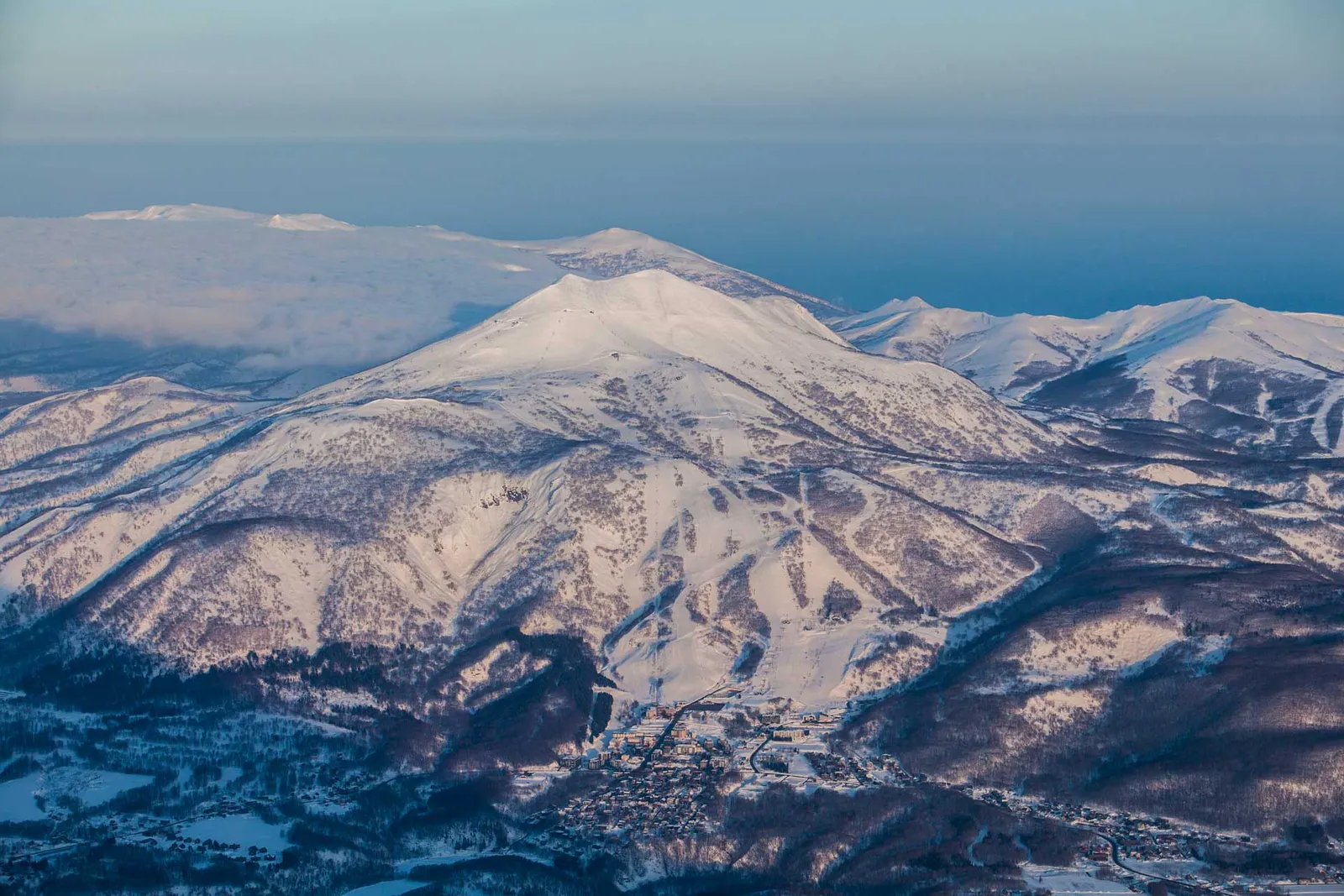
Niseko is the full international resort: four interconnected peaks (Grand Hirafu, Hanazono, Niseko Village, Annupuri) on one all-mountain pass, genuine night skiing, every cuisine in Hirafu village — and peak-week prices and queues to match. Rusutsu, on the other side of Mount Yotei, is the connoisseur’s alternative: three mountains, 18 lifts, tree runs and long groomers, two big self-contained resort hotels, and a fraction of Niseko’s scene. Hakuba is the choice if you want skiing inside a Tokyo-Kyoto itinerary rather than a dedicated ski trip: no domestic flight, ten resorts from gentle Norikura-Cortina to Olympic Happo-one, and onsen in the valley.
If none of the three fits, japan-guide’s ski overview rates Nozawa Onsen (a resort above a classic onsen town), Shiga Kogen (Japan’s largest linked area) and Zao (snow monsters) in the same tier — the same logistics below apply.
Lift Tickets and Rental Gear
Buy online, always. The 2026-27 season prices show the pattern: Rusutsu’s 1-day adult ticket is ¥16,700 at the counter but ¥13,200 online, while Niseko United’s all-mountain day pass runs ¥13,500 peak (roughly Dec 24-Feb 28), ¥12,600 regular, ¥8,800 early and spring season. Grand Hirafu alone is ¥12,500 for a full day. Hakuba is the value pick — Happo-one is ¥8,700, the smaller resorts ¥6,200-9,500, and the shared Hakuba Valley ticket covering all ten is ¥10,400. Across the country, a one-day pass at a large ski area typically costs ¥7,000-11,000, with discounts for buying online, in shoulder season or through your hotel.
Rental follows the same rule: every resort rents full sets — skis or snowboard, boots, poles — for roughly ¥4,000-8,000 per day, with ski wear (jacket, pants, gloves, goggles) another similar amount. The cheaper play is a town shop: Hirafu and Hakuba Village have rental dealers whose multiday packages, set up once for your whole stay, undercut daily slope-side counter rates noticeably, and they take online reservations for peak weeks. Bring the fit-critical items — goggles, gloves, proper base layers — from home (the packing guide covers winter layers), and if you travel with your own gear, takkyubin forwarding moves skis or a board across Japan for about ¥2,000-3,000 in two to three days.
Rules and Etiquette on the Snow
Japanese resorts look international but enforce a stricter line than North American skiers may expect, and the penalties are real:
| Rule | What it means for you |
|---|---|
| Boundary ropes are closed | Never duck a rope, ever. Closed means closed — for avalanche control, grooming or protection |
| Backcountry through gates only | At Niseko, off-piste terrain is entered solely through official gates that open and close daily with conditions; when a gate is shut, the terrain behind it is off limits |
| Violations cost the pass | Niseko United confiscates lift passes from rule-breakers and can refuse to sell new ones; a backcountry rescue is billed at ¥100,000 or more |
| Queue like a local | Lift lines are single file; groups of two can stay paired, and merging lines alternate one-for-one |
| Stop where you can be seen | Pull to the run’s edge, never below a crest or roller, and never in the middle of a cat track |
| Downhill has priority | The skier below you can’t see you; pass wide and slow |
Snowboarding is welcome at virtually every resort (skiers still outnumber boarders, and terrain parks and halfpipes are standard), and children’s ski schools with English instruction book out for peak weeks — reserve lessons when you book lodging.
Getting There
For Niseko and Rusutsu, fly. Haneda or Narita to Sapporo’s New Chitose Airport is about 90 minutes, and reserved winter buses connect the airport directly to Hirafu in around 3 hours (about ¥6,000 one way) and to Rusutsu in about 2 hours (¥5,500, reservation required). From Sapporo, Rusutsu runs a free daily ski-season shuttle if you reserve by 3 p.m. the previous day, and Niseko-bound buses take 2.5-4 hours depending on conditions. The full week-by-week plan — Snow Festival, Otaru, then the mountain — is our Hokkaido winter itinerary; as it explains, the train from Tokyo (8 hours, about ¥30,000) loses to the flight on every axis.
For Hakuba, ride the rails. The Hokuriku Shinkansen reaches Nagano from Tokyo in 100 minutes (¥8,000), where express buses climb to the valley in 60-90 minutes (¥3,500-3,800); alternatively the JR Azusa limited express from Shinjuku via Matsumoto takes 4-4.5 hours total (about ¥8,270) — the only big-ski route where a JR Pass can genuinely pay. Do not day-trip Hakuba from Tokyo; stay at least two nights or the travel eats the snow time.
Après-Ski: The Onsen Finish
The Japanese ski trip has a ritual ending, and it is not a bar: it is an outdoor hot spring with snow falling on the steam. Hakuba’s valley onsen and Niseko’s hotel baths both sell day-use access, typically for a few hundred to two thousand yen, and the larger resorts have slopeside rotenburo where a soak resets ski legs overnight. Bathing is naked and gender-separated, towels stay out of the water, and tattoos may need a cover patch or a private bath — the full ritual, step by step, is in our onsen guide. Eat early, soak late, and book dinner in Hirafu during peak weeks, when the good tables go by 7 p.m.
Common Mistakes
- Paying counter prices. Rusutsu charges ¥16,700 at the window and ¥13,200 online; every major resort discounts advance purchases. Buy the night before, not the morning of.
- Booking flights before lodging. Niseko and Hakuba peak-week rooms sell out months ahead and the flights are the flexible part. Reverse the order.
- Renting daily at the slope. Reserve a multiday package with a town shop in Hirafu or Hakuba Village; daily counter rentals cost more and eat your first runs every morning.
- Ducking a rope for a powder shot. Closed terrain is closed for a reason — at Niseko it costs you the pass and puts a ¥100,000+ rescue bill in play. Use the gates, check the daily bulletin, and go with a guide if backcountry is the goal.
- Day-tripping Hakuba from Tokyo. Five-plus hours door-to-door for four hours on the snow is a bad trade. Book two nights minimum.
- Underestimating peak-week crowds. Mid-January to February has the best snow and the most people; if you can travel in early December or March, prices drop sharply (Niseko’s spring pass is ¥8,800) and the queues vanish.
- Skipping the onsen. The outdoor bath after the last run is half the point of skiing in Japan, and it costs a tenth of a day’s lift ticket. Learn the three key rules in the onsen guide and go.
Sources & verification (8)
- https://www.japan-guide.com/e/e2262.html
- https://www.japan-guide.com/e/e2262_how.html
- https://www.japan-guide.com/e/e6700.html
- https://www.niseko.ne.jp/en/lift/
- https://www.niseko.ne.jp/en/niseko/niseko-rules/
- https://rusutsu.com/en/winter-lift-tickets/
- https://www.japan-guide.com/e/e6715.html
- https://www.japan-guide.com/e/e6090.html