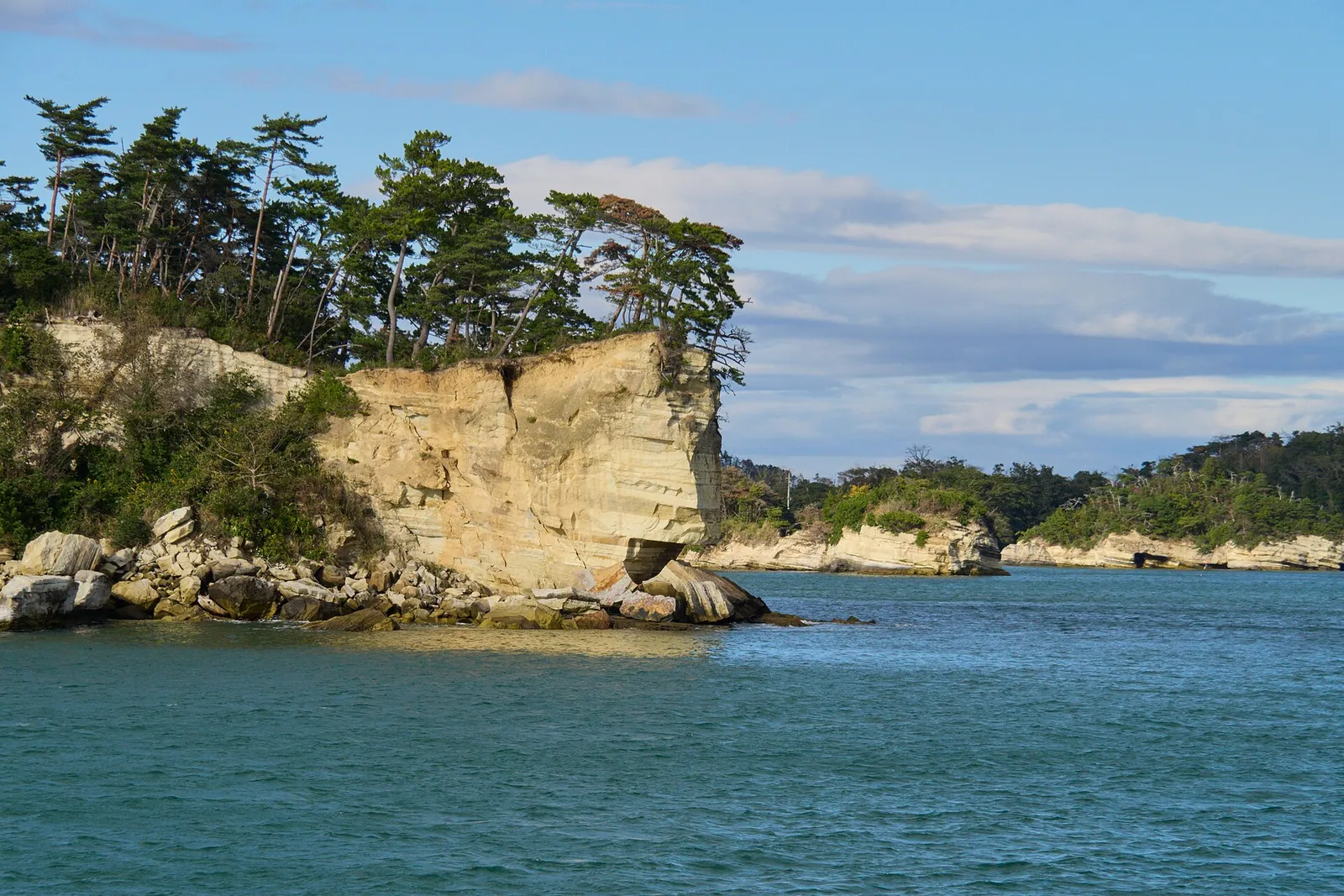
Sendai is the capital of Tohoku and the region's only real metropolis - a leafy, relaxed city of about a million built by the warlord Date Masamune around 1600. Masamune is still the headliner: his mausoleum, his shrine, and his castle ruins structure a visit. The modern pleasures are the charcoal-grilled beef tongue served at counters across the city, a broad zelkova avenue that doubles as the living room, and Japan's biggest Tanabata festival in August. Half an hour away sits Matsushima Bay, ranked among Japan's three classic views since the Edo period. Sendai works best as a base: an hour and a half from Tokyo by shinkansen, with temple mountains, gorges, and hot springs in day-trip range. Best for travelers who want history and food without Kyoto-level crowds.
Top sights at a glance
No. 1
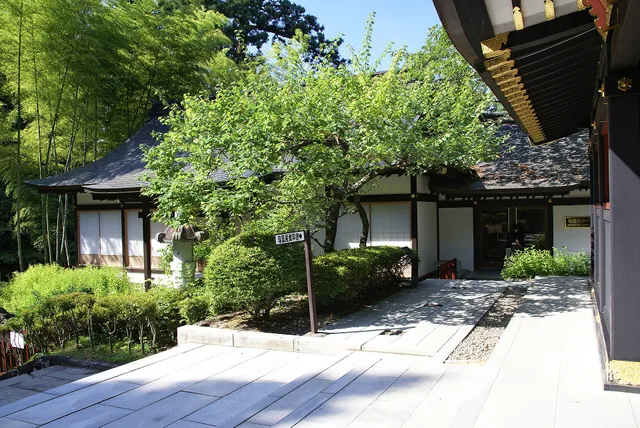
Zuihoden Mausoleum
The resting place of Date Masamune, the one-eyed founder of Sendai, who died in 1636 and was buried the following year on a wooded hill east of the city. The original 1637 mausoleum, an explosion of Momoyama-style carving, lacquer, and gold, was designated a national treasure in 1931 and then burned to the ground in a 1945 air raid. The current building is a meticulous 1979 reconstruction, fronted by a long cedar approach. Excavations of Masamune's remains found he stood about 159 centimeters and confirmed his blindness in one eye.
Good to know · Entry is 570 yen (460 yen with a Loople day pass), 9:00-16:50, from 16:20 in December-January, closed December 31, as of October 2026. The small on-site museum explains the excavation. Take the Loople bus to stop 4, about 15 minutes from Sendai Station, or the subway to Kokusai Center and walk uphill through the woods.
No. 2
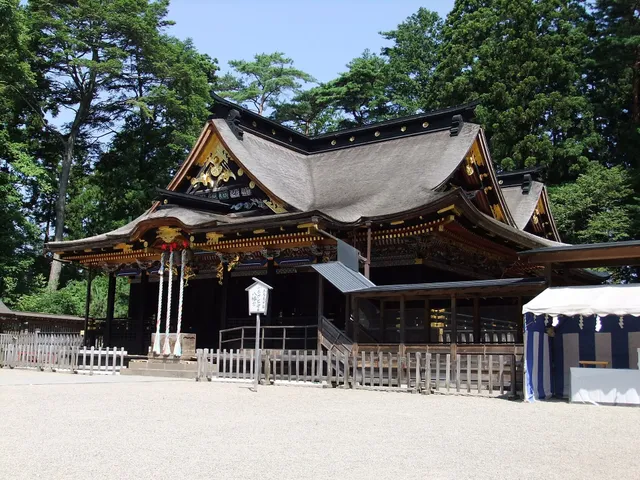
Osaki Hachimangu
Masamune's family shrine, completed in 1607 and dedicated to Hachiman, the god of war who doubles as guardian of the city. The hall is a survivor: a gongen-zukuri structure in which the shrine's inner sanctum and worship hall share one roof, sheathed in black lacquer, gold leaf, and vivid mineral pigments - the same decorative language as Zuihoden, applied to a living shrine. It is one of the finest early-Edo shrine buildings left standing in Japan, and it still functions as where Sendai prays before exams, weddings, and New Year.
Good to know · Free and always open, with no closing days. At the hall, follow the local rhythm: toss a coin, two bows, two claps, one bow - and note the omikuji fortunes are printed in black to match the lacquer. City buses from Sendai Station take 20 minutes (230 yen); the Loople stops at stop 11. Combine with Aoba Castle on a morning loop.
No. 3
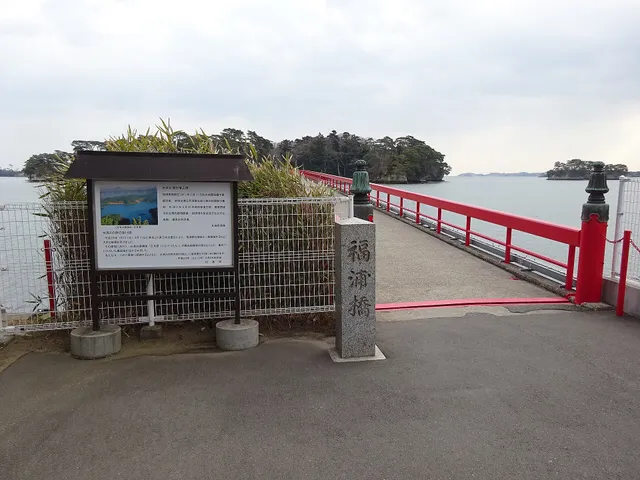
Matsushima Bay
A bay scattered with more than 200 pine-covered islets, ranked since the Edo period among Japan's three most scenic views alongside Miyajima and Amanohashidate - the only one of the three you experience from a boat. Cruises of about 50 minutes (around 1,500 yen) thread between the islands from Matsushima pier. Ashore, Zuiganji, the Zen temple Masamune rebuilt in 1609 as his family temple, charges 700 yen including its museum; the red-arched Godaido hall frames the bay. In winter, grill-your-own oyster huts open along the shore.
Good to know · Take the JR Senseki Line 40 minutes from Sendai Station to Matsushima-Kaigan (440 yen); everything is walkable from there. The smarter loop: train to Hon-Shiogama (20-30 minutes), boat across the bay, train back. Cruise hours run roughly 9:00-16:00 year-round; first sailings are calmest. Zuiganji is open daily from 8:30, closing between 15:30 and 17:00 by season.
No. 4
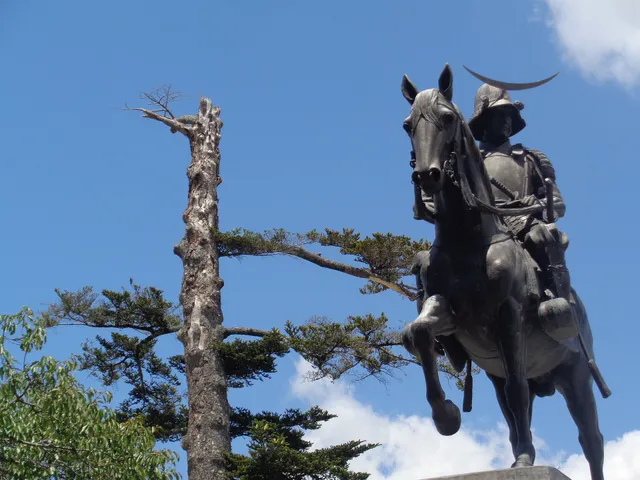
Aoba Castle Ruins
Masamune chose a plateau 100 meters above his new town and built his castle here in 1600. The keep is long gone - fire, anti-feudal demolition, and 1945 bombing took their turns - but the site keeps its outer stone walls, one guard turret, and the best view over the modern grid of the city, with the statue of Masamune on horseback at the edge of the escarpment. The base of the main keep is laid out in lawn and stone, which makes the scale legible, and a museum on site reconstructs the castle in models and VR.
Good to know · The grounds are free and always open; the Aoba Castle Museum costs 770 yen (VR set 1,430 yen), 9:00-17:00, from 16:00 November-March, as of October 2026. The Loople bus reaches it in about 20 minutes (stop 6); by subway, ride the Tozai Line to International Center and walk 15-20 minutes uphill. Come for the view at golden hour.
No. 5
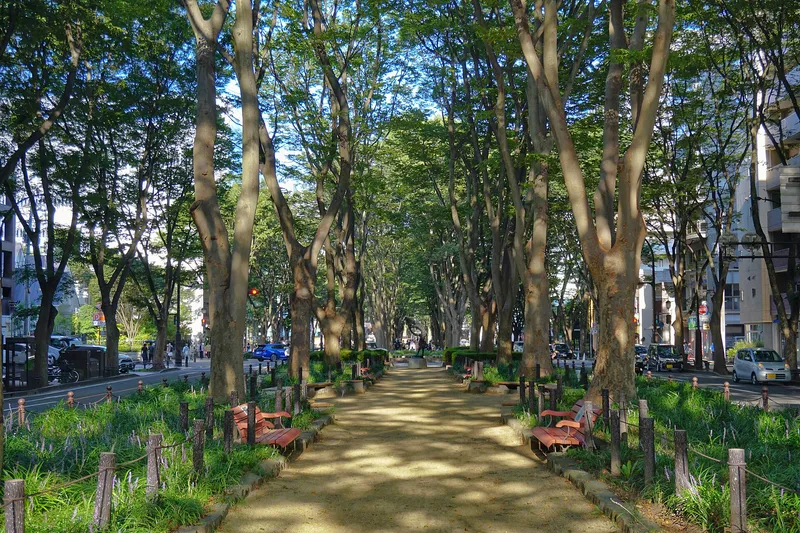
Jozenji-dori Avenue
The avenue that gives Sendai its nickname, the City of Trees: a broad boulevard a few blocks west of the station, closed to traffic down its center and canopied by rows of zelkova trees planted in the 1960s. This is the city's living room - café tables under the leaves, weekend events, and in early December the Sendai Pageant of Starlight, when the trees are strung end to end with lights and the whole street glows green-gold after dark. In September a jazz festival takes over the same pavement with stages up and down the avenue.
Good to know · Free, always open, and a 10-minute walk from Sendai Station's west exit. Visit at night in December for the illumination; on summer evenings the shaded center walk is the coolest place downtown. If you are pairing it with shopping, the Ichibancho arcade - Tohoku's largest - begins at the avenue's east end.
See it in motion
Some places earn a moving picture
Stills can't show how this place moves — the drift, the light show, the crowd flow. We picked a recent, high-quality walkthrough rather than a promotional cut.
Sendai Walking Tour 🇯🇵 | Sendai Station, Shopping Arcade & Jozenji-dori 【4K HDR/60fps】
Sendai Walks · YouTube · plays on click
Embedded via YouTube's official player (privacy-enhanced mode). Video: Sendai Walking Tour 🇯🇵 | Sendai Station, Shopping Arcade & Jozenji-dori 【4K HDR/60fps】 by Sendai Walks. Not affiliated with Japan Travel Navi; screened for quality and accuracy on 2026-10-06.
Sendai is the payoff for the extra 90 minutes on the train from Tokyo: Tohoku’s capital, a city of about a million that manages to feel greener, calmer, and friendlier than any place its size should. It was built from scratch around 1600 by Date Masamune - the one-eyed warlord in the crescent moon helmet - and he remains the city’s presiding personality, buried under gold leaf on a forested hill. The modern argument for Sendai is simpler: Japan’s best charcoal-grilled beef tongue, a leafy avenue that acts as the city’s living room, and Matsushima, one of Japan’s three classic views, half an hour away by local train. It is also the natural basecamp for the whole region - see our Tohoku itinerary for how the pieces fit together.
A Bit of History
Date Masamune is one of feudal Japan’s most cinematic figures: he lost his right eye to smallpox as a child, inherited his domain at 14, and spent his youth fighting his way to control of the Tohoku region. After backing the winning side at Sekigahara in 1600, he began raising a new castle town on a plateau above the Hirose River - Sendai, named for a phrase meaning roughly “a thousand generations.” The city was planned big from the start, with wide boulevards meant to accommodate processions; you can still feel that width downtown.
Masamune also projected power abroad. In 1613 he dispatched an embassy led by Hasekura Tsunenaga across the Pacific and the Atlantic to the Pope and the King of Spain - the first Japanese mission to the Americas and Europe, decades before the country closed itself. The gamble failed to outlast the shogunate’s isolation policy, but the story (and the surviving portraits of Hasekura, designated national treasures) are displayed at the city museum near the castle ruins.
The city that grew around the castle became Tohoku’s administrative and military center, then its academic one: Tohoku University, founded in 1907, was Japan’s third imperial university and remains one of its best, keeping Sendai young - students are roughly a tenth of the population. World War II fire bombing destroyed much of the center, including Masamune’s mausoleum, and the postwar rebuild produced the modern grid you see today. The 2011 earthquake hit the coast hard to the east - Matsushima’s islands, ironically, shielded the bay’s towns from the worst of the tsunami - and coastal Miyagi’s recovery has been the region’s defining story since.
Culture & Daily Life
Sendai’s nickname is Mori no Miyako, the City of Trees, and it is earned rather than promotional: the main avenues are planted in double rows, there is a park every few blocks, and Jozenji-dori’s zelkova canopy shades the middle of the busiest street downtown. The layout is legible in a way Tokyo never is - the city runs on a grid between the station and the castle hill, and fifteen minutes of walking explains the whole center.
The student population keeps the eating cheap and late, and the civic calendar keeps it festive. The Tanabata Matsuri, August 6-8, is the largest star festival in Japan: thousands of hand-made paper streamers and ornaments fill the shopping arcades, with fireworks the evening before. It forms the Tohoku trio with Aomori’s Nebuta and Akita’s Kanto festivals, and together they make August the region’s peak - book rooms two months out.
Daily life runs on one of Japan’s easier transit systems: two subway lines, flat-fare buses, and the Loople, a clockwise sightseeing loop that hits every major sight from the station. IC cards (Suica, ICOCA, and the local icsca) work on all of it. English signage is decent in the core, thin beyond it; a phrase card earns smiles in the old shitamachi lanes around the morning market.
Nature & Day Trips
Matsushima Bay, covered below as a sight, is also the region’s signature landscape and the easiest trip - 40 minutes by the Senseki Line. Give it a half day and add Zuiganji’s cedar approach. West of the city, the mountains start almost immediately: Akiu Onsen, a 1,500-year-old hot-spring gorge town, is 40 minutes by bus, and Sakunami further up the same valley is a quiet base for autumn color.
The two classic full-day trips are Yamadera and Zao. Yamadera, the “mountain temple” of the poet Basho, is a cliff-hugging complex of halls reached by 1,015 stone steps, an hour from Sendai on the JR Senzan Line - go early and you climb through mist with nobody above you. Zao, on the Miyagi-Yamagata border, offers summer hiking and, in February, the surreal frozen “snow monsters” - conifers encased in ice - visible from its ropeway; ski buses run from Sendai in winter. Naruko Gorge, 90 minutes north, is one of Tohoku’s loudest autumn-color spots, with a wooden bath-hopping trail of historic kominka baths nearby. All of these fit on rail lines out of Sendai Station, which is exactly why the city works as a base.
Food & Drink
Gyutan - thick-cut charcoal-grilled beef tongue - is the reason to plan a lunch around lunch. It was invented here in 1948 by a yakitori restaurant owner who turned a discarded cut into a set meal, and the format has barely changed since: tongue, charred and salted, served with barley-mixed rice and oxtail soup. Expect 1,500-2,500 yen for a set, and expect the famous counters to queue at noon - the gyutan restaurants on the third floor of Sendai Station (conveniently called Gyutan Dori) open at 10:00, an hour before the downtown shops, which is the local workaround for lines. Order by pointing or with 「牛たん定食を一つ、お願いします」.
Beyond gyutan, the local shorthand is this: zunda - sweet mashed edamame - appears on everything from mochi to shakes and is the city’s green signature; sasa-kamaboko, bamboo-leaf-shaped fish cake, is the omiyage that fills the station shops; and hiyashi chuka, chilled ramen, was popularized here as a summer dish. The Sendai Morning Market, a scrappy street a few blocks west of the station, sells cheap sashimi bowls and oden at counter stalls where office workers have breakfast.
From Matsushima, the winter haul is oysters - grilled on the shell at waterfront huts from around 700-1,000 yen a half dozen - and the region’s sea squirts (uni’s brinier cousin) in season. For drinking, local Miyagi sake is excellent and underpriced; the brewer’s rice comes from the same paddies as the prefecture’s famed sasanishiki. A generous izakaya night with local pours runs 3,500-5,000 yen.
Top Sights
Zuihoden Mausoleum
The approach tells you what kind of lord Masamune was: a long avenue of cedars climbing to a gate where the momoyama aesthetic - layered black, vermilion, gold, and ultramarine, dragons and lions carved into every beam - was rebuilt from photographs after 1945. The original 1931-national-treasure burned in the air raids; the 1979 reconstruction is painstaking, and the site museum shows what the excavation of Masamune’s grave found in 1974: his remains unusually well preserved, evidence of his single eye, and the personal effects of a man who dressed in a full-height Catholic vestment from Spain for his European visitors.
Zuihoden is not solemn so much as theatrical - which suits its occupant, the lord who wore a crescent-moon helm for effect. His son and grandson lie in plainer mausoleums along the forest paths (the Kansenden and Zuihoden’s neighbors), and the whole complex takes about 90 unhurried minutes. It is the single best introduction to what Sendai was under the Date clan, and the first thing to see after you drop your bags.
Osaki Hachimangu
Masamune built his shrine in 1607, and the contrast with the mausoleum is the lesson: where Zuihoden is resurrected, Osaki Hachimangu is original - its lacquer darkened by four centuries, its gold intact. The honden and haiden sit under one continuous roof in the gongen-zukuri style borrowed from Toshogu at Nikko, and the interior glow of gold leaf against black is the reason architects make the trip.
Come on a weekday morning and you will share it with locals making offerings before work. The shrine sits on a rise west of the center, a 20-minute bus ride from Sendai Station; the Loople loop drops you at stop 11. Pair it with the castle ruins in one morning - the two bookend Masamune’s city, one for his death, one for his rule - then reward yourself with gyutan downtown.
Matsushima Bay
Japan’s three classic views are a canonical list from the Edo period, and Matsushima is the one you can eat lunch on. The bay holds more than 200 pine-topped islands, worn into soft shapes by the tide, and the standard cruise (about 50 minutes, around 1,500 yen) threads among them from the pier beside Matsushima-Kaigan Station. The boats are roomy and frequent; buy at the pier, no reservation needed outside Golden Week.
The shore walk is as good as the water. Zuiganji, rebuilt by Masamune in 1609 as his family temple, is the region’s most important Zen temple - a vermilion hall behind a cedar avenue, with a museum of Momoyama gold screens and the lord’s own armor; entry is 700 yen including the museum. Godaido, the small red hall on its islet at the entrance to the bay, is the postcard view; Fukuura Island, reached by a 252-meter red bridge (200 yen), has quiet shoreline trails on the far side. In season, the oyster huts along the coast road grill on the shell. Half a day minimum; most of a day is better.
Aoba Castle Ruins
The castle was never about the keep - it was about the plateau. Masamune’s engineers cut a flat fortress out of the hill 100 meters above the town, and the site’s modern virtue is the same as its medieval one: the view. From the statue of the lord on horseback at the western edge, the whole city grid runs east toward the bay, and at dusk the sightline turns gold.
What remains are the massive stone walls, one original guard turret, and the lawn-covered base of the main keep, plus a museum (770 yen) with Edo-period models and a VR reconstruction of the full castle - the set ticket with VR is 1,430 yen. A Gokoku shrine occupies part of the grounds. Budget an hour plus the museum; the Loople bus stops at the door, or take the Tozai subway line to International Center and climb through the woods, which is the better walk in April when the path’s cherries bloom.
Jozenji-dori Avenue
Sendai’s center street is not a shopping arcade but an avenue with a park running down its middle, and on any given afternoon it fills with café tables, buskers, and office workers eating lunch on the grass under the zelkovas. The trees were planted when the city rebuilt after the war, and their canopy has become the city’s logo - the Tourist Association hands out pamphlets with a silhouette of it.
Two events claim the street. In September, the Jozenji-dori jazz festival puts stages along the avenue for a weekend - professional and amateur bands, free, from noon to night. And in December the Sendai Pageant of Starlight strings the trees with hundreds of thousands of lights, drawing crowds every evening; stand at Nishi Park end and look down the glowing tunnel. Between festivals it is simply the best walk downtown, connecting the station area to the Ichibancho arcade and the Aoba-dori business strip, and it is where the city shows itself off - unhurried, green, and pleased to see you.
Getting There & Around
Sendai is 90 minutes from Tokyo Station on the Hayabusa shinkansen (about 11,000 yen one way, all seats reserved - book ahead in peak season; slower Yamabiko trains have unreserved cars and cost the same), making it an easy bolt-on to any Tokyo trip. The Japan Rail Pass covers it. Sendai Airport, 20 km southeast, connects to the station in 15-25 minutes (680 yen) and handles domestic flights plus routes to Seoul, Taipei, and a few Chinese cities.
In town, the Loople sightseeing bus (260 yen per ride, 630 yen day pass, 9:00-16:00 every 20 minutes) circles the main sights clockwise from the station - the practical spine of a first day. The two subway lines cover everything else. If you are doing a full sightseeing day plus Matsushima, ask at the JR ticket office for the Sendai Area Pass (1,420 yen, one day, visitors only) or Sendai Marugoto Pass (2,930 yen, two days), which bundle Loople, subway, city buses, and the JR line to Matsushima - as of October 2026, both are the best value in the city. IC cards (Suica, ICOCA, icsca) work everywhere; taxis start around 500 yen and are reasonable for the station-to-hotel hop.
Where to Stay
Stay near Sendai Station if efficiency is the priority: the gyutan counters are upstairs, the Loople and subways leave from the door, and the shinkansen puts Tokyo, Matsushima, and Yamadera within an hour. The east side is business-chain territory; the west side, around the Aoba-dori strip, adds izakaya floors and is the better evening stroll.
For a more atmospheric base, the blocks between Jozenji-dori and the Ichibancho arcade put you in the walkable heart - café mornings, the December lights outside your door, and everything central within 15 minutes on foot. Rates here run somewhat higher than station-side for the same chains.
The third option is Aobayama, the quiet hillside west of the center toward the castle ruins: small business hotels and guesthouses, morning walks on the forest paths, and a 15-minute downhill commute to downtown. Families and longer stays favor it; first-timers with two nights should take the station or arcade areas instead.
Sources & verification (13)
- https://www.japan-guide.com/e/e5150.html
- https://www.japan-guide.com/e/e5151.html
- https://www.japan-guide.com/e/e5152.html
- https://www.japan-guide.com/e/e5153.html
- https://www.japan-guide.com/e/e5155.html
- https://www.japan-guide.com/e/e5156.html
- https://www.japan-guide.com/e/e5157.html
- https://www.japan-guide.com/e/e5158.html
- https://www.japan-guide.com/e/e5100.html
- https://www.japan-guide.com/e/e5101.html
- https://www.japan-guide.com/e/e5102.html
- https://www.japan-guide.com/e/e5105.html
- https://zuihoden.com/en/about/