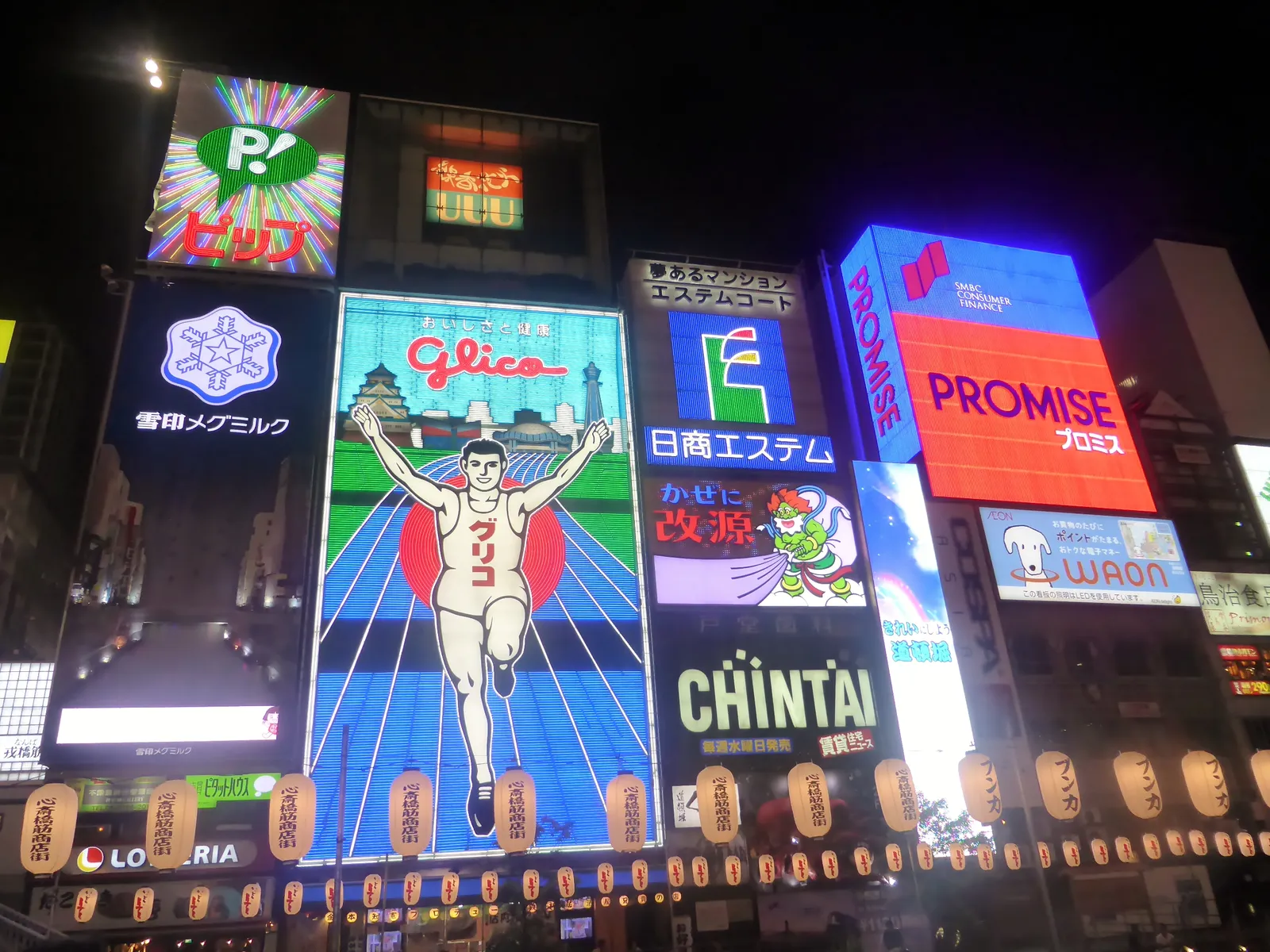
Osaka is Japan's third-largest city and its self-appointed capital of eating, a brash, funny, merchant-built metropolis that treats Tokyo politeness as optional and dinner as the point of the day. The core experiences are all appetite-driven: takoyaki and okonomiyaki, kushikatsu in retro Shinsekai, the neon canyon of Dotonbori, and a fortress-castle built by Japan's great unifier. It also makes the perfect base for Kansai — Kyoto is 30 minutes, Nara 40, Kobe 30 — and its airport is a major international gateway. Osaka suits food-first travelers, repeat visitors who want the Japan beyond temples, and anyone who found Tokyo a little too orderly. Give it two to three days, more with Universal Studios Japan.
Top sights at a glance
No. 1
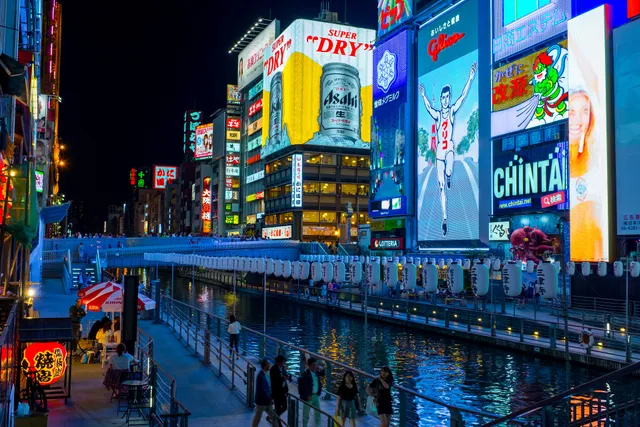
Dotonbori
A canal-side street that is less a place than a full-volume advertisement for appetite: giant mechanized crab, running octopus, and the Glico running man — an Osaka icon since 1935 — blazing over what may be the densest concentration of neon food signage on earth. This is where Osaka's 'eat until you drop' culture reaches its loudest, and it never really stops; some restaurants run 24 hours. Come for the spectacle at night, then duck one street north into Hozenji Yokocho, two 80-meter stone-paved alleys of lantern-lit izakaya where the volume drops and the food gets better.
Good to know · Free, and best 18:00-21:00 when the neon is fully lit — weekends are a slow-moving crowd, so weekdays win. Take the Midosuji subway line to Namba (about 8 minutes and ¥240 from Umeda). Escape the tourist menus on the canal: Hozenji Yokocho and the back streets of Sennichimae have the food locals actually queue for.
No. 2
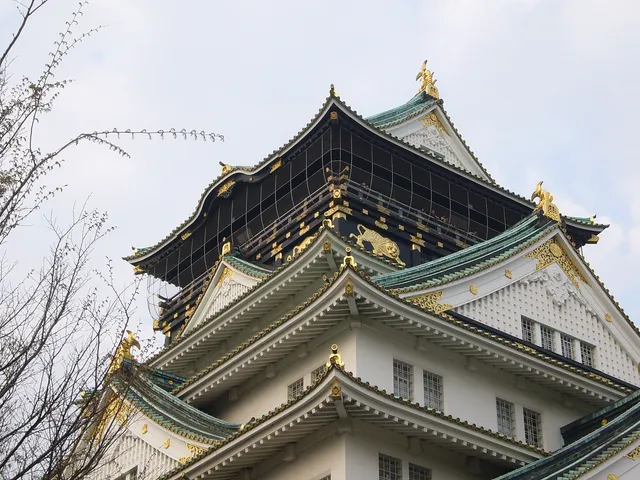
Osaka Castle
The fortress from which Toyotomi Hideyoshi, Japan's great unifier, launched the country's reunification in the late 1500s — and the symbol of the merchant city that grew around it. The keep is a 1931 concrete reconstruction with an elevator, housing a museum of the castle's samurai drama, but the real awe is outside: the largest castle walls in Japan, a stone base rising over a moated park of some two square kilometers. A new museum section opened in 2025 displaying the original Tokugawa-buried stone walls, and the park's 600 cherry trees make early April a mob scene worth joining.
Good to know · Park free and open around the clock; the keep museum costs ¥1,200, open 9:00-18:00 (entry until 17:30), closed December 28-January 1, as of October 2026. Buy an e-ticket in advance to skip a queue that can pass 30 minutes. Nearest stations: Tanimachi Yonchome (subway) or Osakajokoen on the JR Loop Line, 10 minutes and ¥180 from Osaka Station.
No. 3
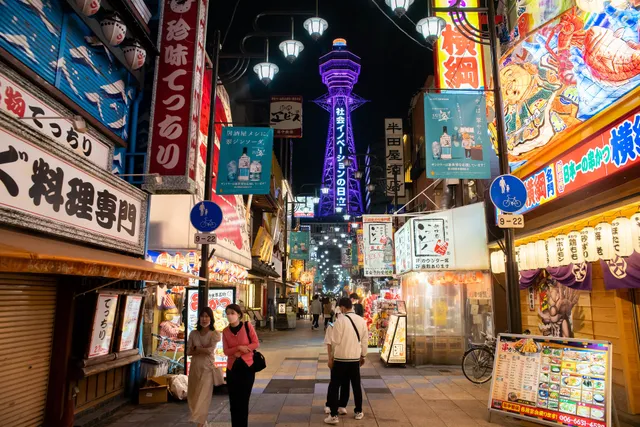
Shinsekai
The 'New World,' a retro district laid out after a 1903 exposition — the north half modeled on Paris, the south on Coney Island, and a century of drift later, something entirely its own: grill smoke, pachinko parlors, and the Tsutenkaku tower rising over it all. This is the home turf of kushikatsu, Osaka's deep-fried everything-on-a-stick, served in canteen-style shops, some open around the clock. Shinsekai was long the city's rough edge; today it is safe, scruffy, atmospheric, and the most Osaka place in Osaka.
Good to know · Free to wander; evenings are liveliest. Tsutenkaku's observatory and open-air deck cost ¥1,500, open 9:00-21:45 (entry until 21:15), with online reservation recommended, as of October 2026. Kushikatsu counters charge roughly ¥100-200 per skewer — obey the cardinal rule posted on every tub: no double-dipping in the sauce. Nearest stations: Ebisucho or Dobutsuen-mae (subway), Shin-Imamiya (JR Loop).
No. 4
Kuromon Market
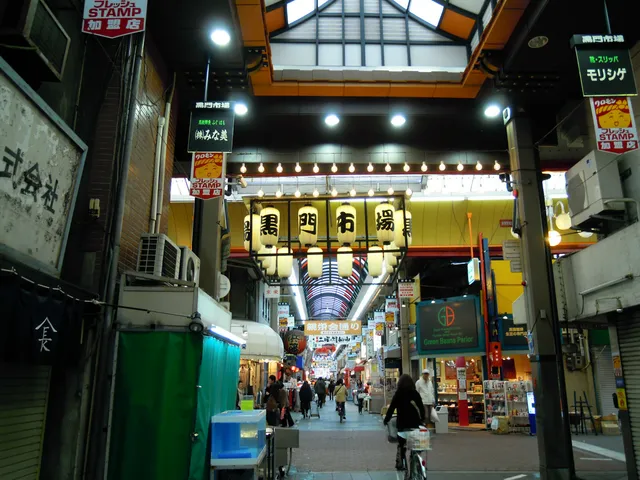
A 600-meter covered arcade of roughly 150 shops known as 'Osaka's Kitchen' — the wholesale-to-street market where the city's restaurants shop and where you can eat your way from end to end: grilled scallops and crab legs, wagyu skewers seared in front of you, sea urchin, fresh juice, and takoyaki. Unlike Tsukiji in Tokyo, most stalls here run a full day, roughly 8:00-18:00, and many open daily, which makes it an easy stop rather than a dawn expedition. Eat at the counter where you buy, not while walking.
Good to know · Free entry; budget ¥2,000-4,000 for a serious graze, cash-friendly. Go late morning to early afternoon; some shops close Sundays and holidays. It is steps from Nipponbashi Station on the Sakaisuji Line, next to Den Den Town, Osaka's Akihabara-style electronics-and-anime district — combine them.
No. 5
Universal Studios Japan
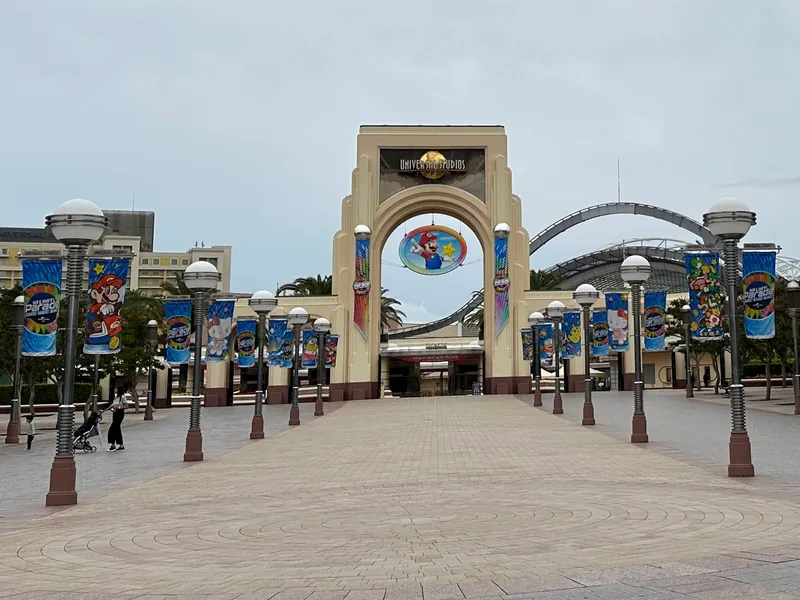
One of Asia's best theme parks and, for many international visitors, the reason they added a day to Osaka. Super Nintendo World — the world's first Mario land, with Yoshi rides and a real-life Bowser's Castle — plus the Wizarding World of Harry Potter, a Jaws-era backlot feel, and roller coasters that punch above their regional weight. It is genuinely excellent and genuinely crowded: this is a plan-ahead park, not a stroll-in park, and the difference between a great day and a queue marathon is made before you arrive.
Good to know · 1-day Studio Passes run ¥8,400-9,400 by date (ages 12-64), and since May 2025 on-site ticket sales have ended — buy dated e-tickets in advance via the official site or Klook, as of October 2026. Super Nintendo World uses timed entry; the reliable way in is an Express Pass (¥6,800-23,800), which sells out on busy days. From Osaka Station, the JR Yumesaki Line reaches Universal City in 15 minutes (¥200); arrive 45-60 minutes before opening.
See it in motion
Some places earn a moving picture
Stills can't show how this place moves — the drift, the light show, the crowd flow. We picked a recent, high-quality walkthrough rather than a promotional cut.
🇯🇵 OSAKA, JAPAN 4K WALKING TOUR - Dotonbori District Sunset & Night Life City Walk | 4K HDR - 60 fps
World Wanderings: 4K Walking Tours · YouTube · plays on click
Embedded via YouTube's official player (privacy-enhanced mode). Video: 🇯🇵 OSAKA, JAPAN 4K WALKING TOUR - Dotonbori District Sunset & Night Life City Walk | 4K HDR - 60 fps by World Wanderings: 4K Walking Tours. Not affiliated with Japan Travel Navi; screened for quality and accuracy on 2026-10-06.
Osaka announces itself differently. Where Tokyo is polished and Kyoto is mannered, Osaka is loud, funny, and structurally obsessed with dinner — the local creed is kuidaore, “eat until you drop,” and the city’s neon canyon in Dotonbori is basically that philosophy as architecture. This is a merchant city, built by businessmen rather than shoguns, and it behaves like one: chatty, transactional, warm, quick with a joke. First-time visitors expecting Japan-as-temple will recalibrate within an hour. Food-first travelers, repeat visitors who want the country beyond postcard Japan, and anyone using Kansai Airport as a gateway will all do well here — Kyoto is half an hour away, Nara forty minutes, and Osaka itself deserves two or three days of serious eating plus a castle.
A Bit of History
Osaka is old capital material, not just Tokyo’s loud neighbor. In the seventh century the Naniwa palace here served intermittently as an imperial seat, among the earliest in Japan, and the city’s bay position made it the country’s front door for trade with Asia. The decisive turn came in 1583, when Toyotomi Hideyoshi — born a peasant farmer and ended Japan’s century of civil war — chose Osaka as his base and raised one of the largest castles ever attempted, its walls and moats engineered to overawe rivals. The Tokugawa shoguns who followed saw the threat exactly: they tore down Hideyoshi’s castle and rebuilt it as their own, ringing the city with canals instead of samurai estates.
What grew in the samurais’ absence was a merchant civilization. Direct shogunal rule meant warriors stayed out and traders ran everything, and by the 1700s Osaka was the distribution hub of the nation — “the kitchen of the realm” (tenka no daidokoro), where rice from every domain was warehoused, priced, and traded. Its Dojima Rice Exchange pioneered organized futures trading decades before similar markets appeared in the West, an origin finance historians still cite. With money came culture: bunraku puppet theater, popular literature, and a food scene that treated eating as civic identity — all of it bankrolled by merchants and aimed at a mass audience, commercial from the start.
The modern era industrialized the city into the “Manchester of the Orient” — textiles, factories, shipping — and World War II flattened most of it in air raids. The rebuild was fast and commercially brilliant: in 1970 Osaka hosted Asia’s first world exposition, and the Japan Mint, striking coins here since 1871, still anchors the riverside. The Kansai economy it anchors today counts some 19 million people, with the city proper around 2.7 million. Osaka’s modern exports are cultural and underrated: the majority of Japan’s television comedians train here, manzai double-act comedy is a local dialect art form, and the city’s down-to-earth food culture went from working-class fuel to national obsession. Understand Osaka as the anti-Tokyo — merchants over bureaucrats, laughter over ceremony — and everything about the place clicks.
Culture & Daily Life
People speak Kansai-ben here, a dialect as distinct from Tokyo Japanese as Glasgow is from London, and it changes the social weather: conversations start faster, jokes land louder, and strangers talk to you on the regular. The classic Osaka greeting is moukarimakka — “making any money?” — used like “how’s it going.” You will not need to speak it, but knowing it explains the city.
Practical switch-ups from Tokyo: stand on the RIGHT on escalators (Osaka chose the opposite side from Tokyo and nobody remembers why). Otherwise the mechanics of daily life are the same nationwide — IC cards (ICOCA is the local one; your Tokyo Suica works fine), konbini on every corner, no tipping, trains that run to the second. Payment behavior and phone connectivity are covered at /guides/money-and-payments/ and /guides/internet-esim-connectivity/.
Osaka’s daily religion is eating out, at every price. Standing bars (tachinomi) pour beer at lunchtime; office districts like Tenma and Kitashinchi are packed by 6 p.m.; even the convenience stores feel food-proud. Two etiquettes matter at the table: never double-dip your kushikatsu in the communal sauce tub (this rule is enforced with signs and occasionally shouting, entirely in fun), and slurping noodles is praise, not offense. If a shop has no English menu, point and use 「これをください」 (kore o kudasai) — printable at /cards/.
One honest note on Shinsekai and the southern quarters: the district’s mid-century reputation for roughness lingers in old guidebooks, but it is a normal, safe, atmospheric neighborhood today. Take standard big-city care late at night and enjoy the retro grit.
Baseball is the other religion. The Hanshin Tigers, Kansai’s perpetually beloved team, play at historic Koshien stadium, and a summer game among the trumpet bands and (when the Tigers score) balloon releases is one of Japan’s great spectator afternoons — book well ahead for weekend games.
Nature & Day Trips
Osaka is the least scenic of Japan’s big cities — it knows this and compensates with food. The green oases are Nakanoshima, a riverside island of lawns, museums, and a rose garden between two rivers downtown, and Osaka Castle Park, whose 600 cherry trees turn the moats pink-white in early April. For a real escape, Minoo Park on the city’s northern edge offers a paved riverside hike through a forested gorge to a waterfall, about 45 minutes from Umeda on the Hankyu line — an easy half day with maple color in November. On the bay side, the Kaiyukan, one of the world’s largest aquariums with a whale-shark tank the size of a building, anchors an easy waterfront half-day.
As a base, Osaka is unbeatable. Kyoto is 30 minutes by JR special rapid; Nara, with its Great Buddha and deer park, about 40 minutes on the Kintetsu line from Namba. Kobe and its harborfront steak houses are 30 minutes; Himeji, Japan’s finest original castle, under an hour; and Koyasan, the mountaintop monastery town with temple lodgings, about two hours by train and cable car. Most travelers base in Osaka or Kyoto and day-trip the other — Osaka wins on hotel prices, food, and airport access (Kansai Airport is 40 minutes by train), Kyoto wins on atmosphere.
Food & Drink
Start with the holy trinity. Takoyaki — golf balls of batter, octopus, pickled ginger, and green onion, glazed with sauce, mayonnaise, and bonito flakes that dance in the heat — costs ¥400-800 for eight and is a street snack you eat standing at the counter, not walking (local rule). Okonomiyaki, a griddled cabbage-and-egg pancake loaded with pork, squid, or shrimp and sauced like a heart attack, runs ¥1,000-1,800; some shops hand you the spatula and let you cook it yourself on a table griddle, which is half the fun. Kushikatsu — anything battered, skewered, and deep-fried, from quail eggs to banana — is priced per skewer at roughly ¥100-200 in Shinsekai’s canteens, with the sauce tub and its no-double-dip law.
Beyond the trinity: kitsune udon (noodles with sweet fried tofu, arguably born here), tecchiri pufferfish hot pot in winter, and teppanyaki grills in Kitashinchi serving Kobe beef at prices that explain the neighborhood’s black Amexes. Dotonbori is the neon frontline of all this, but the deeper eating is a street north in Hozenji Yokocho’s lantern alleys, and in Tenma, the old-school drinking district by Tenmangu shrine where a ¥3,000-5,000 night of standing bars and skewers is normal. Kuromon Market (below) covers the morning shift.
Budget reality: Osaka is the cheapest of Japan’s big three for eating well. ¥1,000 buys lunch, ¥3,000-4,000 a very good dinner with drinks, and the konbini floor is national-championship level. Breakfast is not a restaurant meal here — bakeries and konbini cover it — but make lunch a set meal (¥900-1,300) on a department-store restaurant floor: Takashimaya and Hanshin above Namba Station run famous food basements and dining rows. And the okonomiyaki question — Osaka-style mixed, Hiroshima-style layered — is a rivalry you can only settle by eating both. The phrase kuidaore is not a suggestion.
Top Sights
Dotonbori
The photograph everyone takes — Glico running man over the canal, neon crab writhing, a thousand phone screens held up — is real and worth seeing in person once, at full dark. The Glico sign has run over this crossing since 1935, and the canal-side street behind it stacks restaurants the way Akihabara stacks electronics: every floor, every cuisine, every volume setting. By day it is merely busy; by night it is the closest thing Japan has to Las Vegas, and the crowd-watching is the main exhibit.
The move that upgrades Dotonbori from photo stop to dinner memory: walk one block north to Hozenji Yokocho, two stone-paved 80-meter alleys of lantern-lit restaurants around the tiny Hozenji temple, where diners pour water over moss-covered statues for luck. Book nothing, wander in early, and eat where the lanterns look oldest. Then finish on Ebisubashi bridge with the crowd. Nearest station: Namba, on every major line; from Umeda take the Midosuji subway, 8 minutes and ¥240.
Osaka Castle
Hideyoshi’s 1583 fortress anchors a two-square-kilometer park, and the approach — across moats, past the largest stone walls in Japanese castle-building, through gates built to slow armies — is the best part. The keep inside is a 1931 ferro-concrete reconstruction with an elevator and a very good museum on the castle’s Tudor-drama history: Hideyoshi’s rise, his son’s fall, the 1614-15 sieges that ended the Toyotomi line. A museum section opened in 2025 shows the original stone walls the Tokugawa buried to erase Hideyoshi’s footprint, rediscovered in the 1950s.
The ¥1,200 ticket covers keep and walls museum, open 9:00-18:00 (entry until 17:30), closed December 28-January 1, as of October 2026 — buy the e-ticket ahead to skip the 30-minute queue on busy days. The park is free and best at dawn or in cherry season; the Nishinomaru Garden next to the keep (¥300, ¥350 in cherry season) holds 600 trees and the classic keep-and-blossoms shot. Get here via Tanimachi Yonchome station or Osakajokoen on the JR Loop Line, 10 minutes and ¥180 from Osaka Station.
Shinsekai
If Dotonbori is Osaka at maximum volume, Shinsekai is Osaka at ease. The district was built around a 1903 national exposition — planners modeled the north half on Paris, the south on New York’s Coney Island — and when the future moved on, it stayed: grayscale arcades, kushikatsu smoke, signs that have aged into art. The Tsutenkaku tower (103 meters, observatory at 91) has watched over it since 1956 and now sells adrenaline add-ons including a rooftop slide (¥1,500 observatory, plus ¥1,100 for the slide, 9:00-21:45, as of October 2026).
The activity here is eating kushikatsu — pick a shop with plastic-lantern charm and a queue of locals, order skewers a few at a time, dip once. Afterwards, walk to Spa World, a multi-floor bath complex with themed saunas from around the world (¥1,500), or just drift the arcades. Shinsekai sits between Ebisucho and Dobutsuen-mae subway stations and JR Shin-Imamiya on the Loop Line; from Namba it is one cheap subway stop. Evening is the district’s natural habitat.
Kuromon Market
Six hundred meters of covered market, about 150 shops, one purpose: feeding Osaka, restaurateurs and tourists alike. The produce and dry-goods stalls are the working market; the magnet is the prepared food — scallops and oysters grilled to order, wagyu skewers at ¥500-1,500 a stick, sea urchin and crab by the box, strawberries like small apples in winter, and fresh juice for pocket change. Buy, eat at the counter beside the stall, move on. The etiquette matters: eating while walking is discouraged, and stallkeepers respond well to a cheerful hello and patience with the point-and-order system.
Hours run roughly 8:00-18:00, most shops daily, some closed Sundays and national holidays, as of October 2026 — late morning is the sweet spot, and there is no point coming after 17:00. Access is trivial: Nipponbashi station exits into the market’s orbit, ten minutes’ walk from central Namba. Addictive next door is Den Den Town, Osaka’s answer to Akihabara — retro game shops, anime goods, maid cafes — which makes this corner of Minami a full easy day.
Universal Studios Japan
USJ is a world-class park with the world’s first Super Nintendo World — an uncanny mushroom-and-coin landscape where you race Yoshi through Bowser’s Kingdom and the power-up bands on your wrist interact with question blocks — plus a meticulous Wizarding World of Harry Potter, Godzilla and anime collaborations that rotate yearly, and enough thrill rides to fill two full days if you have them.
The planning is the experience. Tickets are date-stamped and dynamically priced — ¥8,400-9,400 for adults in 2026 — and on-site sales ended in May 2025, so there is no showing up and buying at the gate: purchase through the official app or site (or Klook) days to weeks ahead. Nintendo World caps entries with timed tickets; the busy-day version is a lottery in the app, and the guaranteed route is an Express Pass (¥6,800-23,800 by ride count and date) that also skips the headline coasters — buy early, as these sell out. From Osaka Station the JR Yumesaki Line reaches Universal City in 15 minutes (¥200); arrive an hour before official opening. Budget one full day, two with small children or big Harry Potter feelings.
Getting There & Around
Kansai Airport (KIX), on a man-made island in the bay, is the main international gateway: the Nankai Rapi:t limited express reaches Namba in 35-40 minutes for ¥1,520 (e-ticket), the Nankai Airport Express does it for ¥970, and the JR Haruka runs to Osaka Station in about 45 minutes for ¥2,380-2,900, with a ¥1,800 tourist one-way ticket for foreign passport holders — fares as of October 2026. Itami Airport, closer in, handles domestic flights and LCCs. From Tokyo, the shinkansen runs to Shin-Osaka in 2.5-3 hours (¥13,870 unreserved, around ¥14,500 reserved).
In town, the Osaka Metro and JR Loop Line cover everything a visitor needs; most subway rides cost ¥180-390. Day passes are strong here: the Enjoy Eco Card (¥820 weekdays, ¥620 weekends) covers the subway and buses, and the Osaka Amazing Pass (¥3,500 one day) adds free entry to two dozen attractions including the castle keep — do the math against your list. Your Suica or ICOCA works everywhere. Taxis are plentiful and cheaper than Tokyo’s for short hops; the city is flat and less walkable than Kyoto, so ride more.
Where to Stay
Namba and the Dotonbori fringe is the pick for first-timers and food-first travelers: you are inside the neon and the eating, with direct airport trains (Nankai from Namba) and Kintetsu access to Nara. It is loud — pack earplugs — and hotel rooms skew small, but you will walk home from dinner.
Kita, the Umeda district around Osaka Station, is the grown-up alternative: the city’s biggest transport hub, direct JR access to the castle loop and USJ, one stop from Shin-Osaka’s shinkansen, and the refined Kitashinchi dining quarter next door. Business hotels here are comfortable and often cheaper than Namba equivalents on weekends.
Tenma and Nakazakicho, north of central, suit longer stays and repeat visitors: old shotengai drinking culture in Tenma, canal-side cafes in Nakazakicho, and a local rhythm you will not find south of Dotonbori. Wherever you land, stay beside a subway or JR station — Osaka’s districts are far apart, and the wrong location costs an hour a day.
Sources & verification (9)
- https://www.japan-guide.com/e/e4000.html
- https://www.japan-guide.com/e/e4001.html
- https://www.japan-guide.com/e/e4012.html
- https://www.japan-guide.com/e/e4031.html
- https://www.japan-guide.com/e/e4021.html
- https://www.japan-guide.com/e/e4006.html
- https://www.japan-guide.com/e/e4022.html
- https://www.japan-guide.com/e/e2033.html
- https://www.japan-guide.com/e/e2157.html