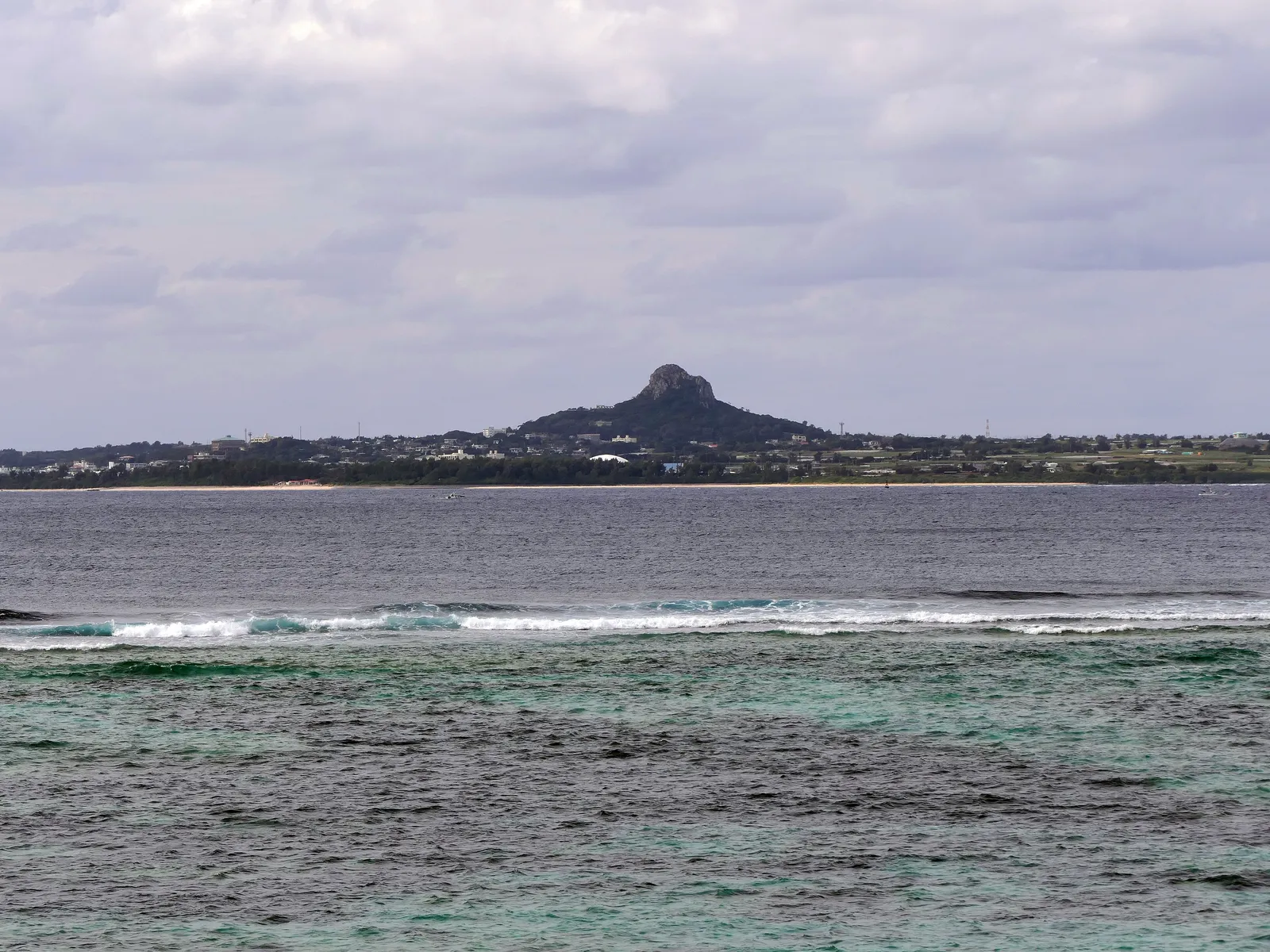
Okinawa is not quite 'Japan with beaches' - it was the independent Ryukyu Kingdom until 1879, trading between China and Japan, and it still speaks, eats, builds, and prays differently from the mainland. The rhythm here is its own: castle ruins and sacred groves, sanshin music and lion-dog guardians, a cuisine built on pork, bitter melon, and purple sweet potato, and the country's best water lapping coral beaches a short ferry or drive from the capital Naha. The headline sights are Shuri Castle - its rebuilt main hall reopening in late 2026 after the 2019 fire - the whale sharks of Churaumi Aquarium, and the swimming coves of the Onna coast. Best for travelers with four-plus days, a tolerance for rental cars, and an appetite for an older, warmer, more Southeast Asian-feeling Japan.
Top sights at a glance
No. 1
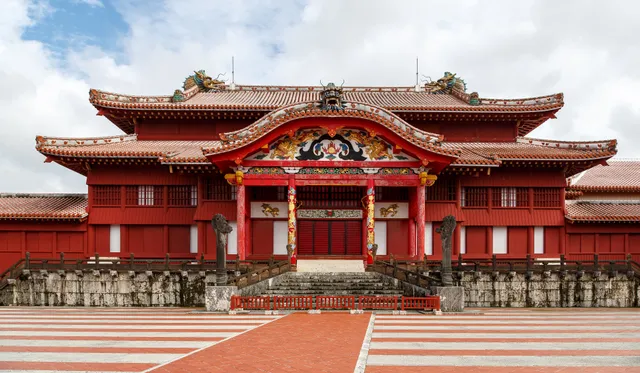
Shuri Castle
The palace of the Ryukyu kings for four centuries, a Chinese-influenced complex of vermillion halls and stone courts above Naha - a UNESCO World Heritage site as one of the 'gusuku' castles of the kingdom. Fire destroyed the main hall in October 2019, and the reconstruction, carried out with public donations and traditional carpentry, is the story of modern Okinawa. The rebuilt hall opens to the public on November 23, 2026, with timed-entry reservations.
Good to know · Until November 21, 2026 the paid inner zone is 400 yen; from November 23 it is 1,000 yen including the main hall, which needs a free timed reservation booked online (the park closes November 22 for the changeover). Open 8:30-19:00 April-November, to 18:00 December-March. Take the Yui Rail monorail to Shuri station and walk 15 minutes uphill, or bus 7/8.
No. 2
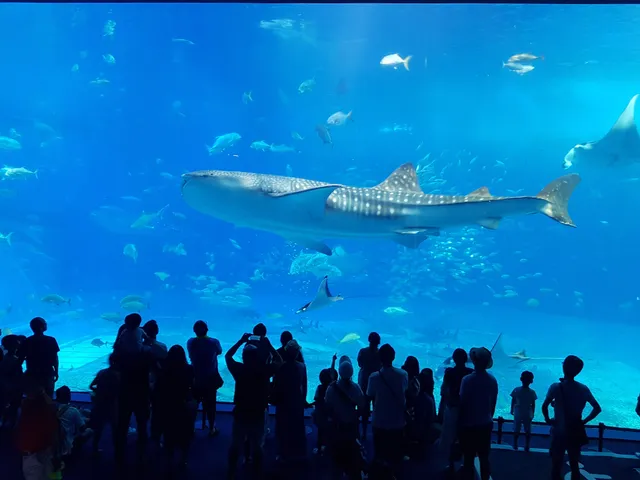
Churaumi Aquarium
Japan's best aquarium and Okinawa's single biggest attraction, built into the coast at the far north of the island. The Kuroshio Tank - 7,500 cubic meters of open ocean in glass - holds whale sharks and manta rays in a display that genuinely justifies the word 'awe'. Around it, the free Ocean Expo Park adds dolphin shows, sea turtle pools, and a white-sand beach. Plan it as the anchor of a northern day trip, not a quick stop.
Good to know · Admission is 2,180 yen for adults; open 8:30-18:30 in the standard season with extended summer hours, no scheduled closing days (as of October 2026). Buy tickets online to skip the line, and go on a weekday morning - midday tour buses fill the tank gallery. It is about two hours from Naha by rental car; by bus, take the highway bus to Nago and transfer, allowing three hours each way.
No. 3
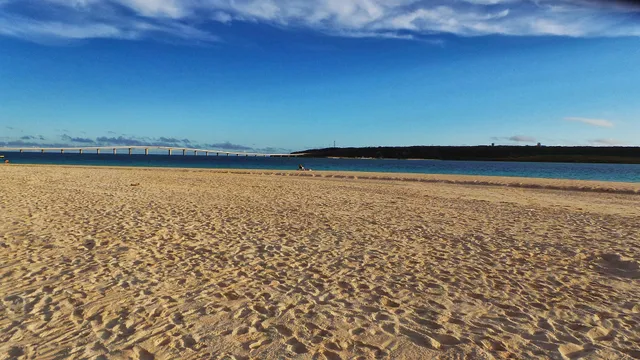
Okinawa's Beaches
The water is the reason many people come: that impossible Okinawan blue, over coral, from late March through October. The main island's best swimming stretches along the Onna coast north of Naha - Manza, Moon Beach, Zanpa - plus Emerald Beach beside Churaumi and city-friendly Naminoue right in Naha. For the truly glassy water, jump on a ferry to the Kerama Islands, thirty to seventy minutes offshore, where snorkeling visibility reaches fifty meters.
Good to know · Beaches are free; swimming season officially runs late March to October, and jellyfish nets go up in summer. Rent snorkel gear (2,000-3,500 yen a day) rather than buying. Ferries to Tokashiki and Zamami leave Naha's Tomari Port - book Kerama trips the day before in peak season. Show 「スノーケリングをしたいです」 at any dive shop to arrange gear and tours.
No. 4
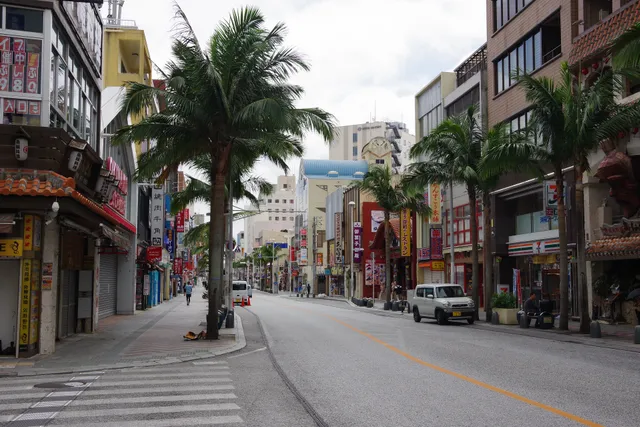
Kokusai Street
Naha's one-and-a-half-kilometer main street is the island's funnel: souvenir shops stacked with purple sweet potato everything, department stores, snack stalls, and the entrances to the covered Heiwa Dori arcade and Makishi Public Market behind it. Chaotic and touristy, yes, but it is also where Okinawa's folk music scene plays nightly and the best budget eating on the island hides on side floors. Do your souvenir shopping here in one efficient sweep.
Good to know · Free to wander, liveliest from 11:00 to 21:00, most shops closed by 22:00. Detour one block south to the Tsuboya pottery lane for studio shops sans tat, and eat at Makishi Market's second-floor cooked-food stalls - pick your seafood downstairs and they cook it. The street is a 5-minute monorail ride (Makishi station) from Naha Airport connections.
No. 5
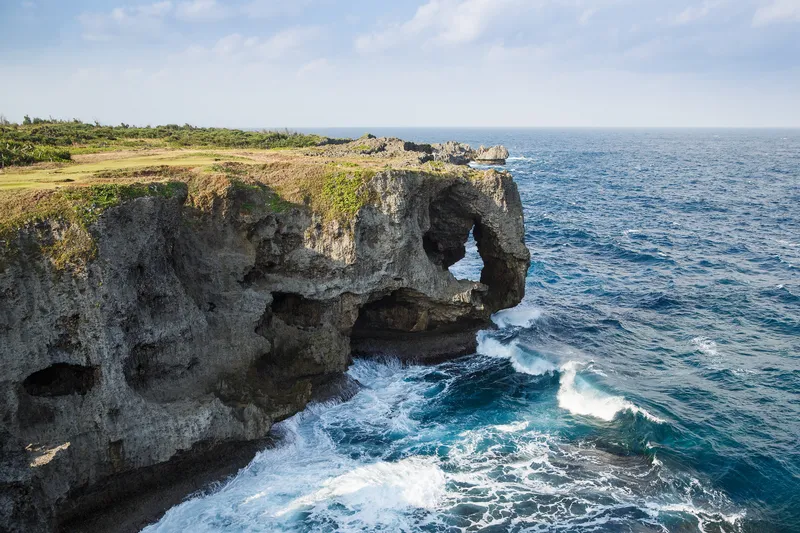
Manzamo
A twenty-meter limestone headland on the Onna coast whose grassy top curls into an elephant-trunk cliff over the East China Sea - the classic Okinawa postcard. Kings praised it as a field where ten thousand could sit; now it is the most convenient dramatic vista on the main island, fifteen minutes' walk from the road, with sunsets that deserve the parking lot's crowds.
Good to know · Entry is 100 yen (adults and children alike); hours 8:00-20:00 March-October, 8:00-19:00 November-February, open year-round, viewing until sunset, as of October 2026. It is a 60-90 minute drive north of Naha - pair it with Churaumi and the Onna beaches as a northern loop, timing your arrival for late afternoon light on the cliff face.
See it in motion
Some places earn a moving picture
Stills can't show how this place moves — the drift, the light show, the crowd flow. We picked a recent, high-quality walkthrough rather than a promotional cut.
🇯🇵 Okinawa, Japan 4K Walking Tour 🌴 Summer Beach town in Naha, Okinawa | 4K HDR 60fps
World Wanderings: 4K Walking Tours · YouTube · plays on click
Embedded via YouTube's official player (privacy-enhanced mode). Video: 🇯🇵 Okinawa, Japan 4K Walking Tour 🌴 Summer Beach town in Naha, Okinawa | 4K HDR 60fps by World Wanderings: 4K Walking Tours. Not affiliated with Japan Travel Navi; screened for quality and accuracy on 2026-10-06.
Okinawa is the Japan that wasn’t Japan for most of its history. For four and a half centuries these islands were the Ryukyu Kingdom, a maritime trading state that paid tribute to imperial China while bowing to Japanese overlords, absorbed both cultures without fully becoming either, and was only annexed as a Japanese prefecture in 1879. The result today is a place that feels different the moment you land - different music, different food, different gods, a different pace - wrapped around some of the clearest water in the Pacific. Travelers who come expecting a beach resort get bored in two days; travelers who come expecting a separate country with beaches stay a week and start researching Ishigaki flights home. Give it four to six days, rent a car for at least two of them, and let the island set the tempo.
A Bit of History
The Ryukyu Kingdom unified in 1429 under King Sho Hashi, ruled from Shuri Castle above today’s Naha. Its genius was geography and diplomacy: the kingdom positioned itself as a loyal tributary of Ming and Qing China while also acknowledging the Japanese satellite of Satsuma - which invaded in 1609 and took over foreign trade but left the throne in place. For centuries Ryukyu ships moved goods, people, and techniques between China, Japan, Korea, and Southeast Asia, and the kingdom grew rich as the region’s middleman. Shuri’s architecture shows the mix plainly: a Chinese-style vermillion palace on a Japanese-style stone gusuku, with sacred groves and springs that belong to neither.
In 1879 the new Meiji state annexed the kingdom outright as Okinawa Prefecture, and the mainland set about making Okinawans Japanese - suppressing the Ryukyuan languages in schools among other tools of assimilation. Then came the twentieth century’s catastrophe: the Battle of Okinawa in the spring of 1945, the only land battle fought on Japanese soil, which killed roughly a quarter of the island’s civilian population, many in group deaths the prefecture’s peace museums document unflinchingly. The US military governed Okinawa until 1972, three years longer than the rest of Japan, and the bases stayed: most of the land occupied by US forces in Japan is still concentrated on this island chain, shaping local politics and daily life.
What survived all of this is a distinct identity, and Okinawans will tell you so without prompting. The castle ruins and sacred sites were listed as UNESCO World Heritage in 2000 as a group of nine “gusuku sites”; when fire destroyed the rebuilt main hall of Shuri Castle in October 2019, the reconstruction - publicly funded, publicly watched, carried live on webcams - became a local project of self-assertion. The hall reopens to visitors on November 23, 2026, timed entry and all, and it is worth planning a trip around.
Culture & Daily Life
The differences announce themselves on the street. Rooflines carry pairs of shisa, the lion-dogs that guard against misfortune. The three-stringed sanshin, ancestor of the mainland’s shamisen, backs folk songs you will hear from storefronts and live houses any night. Eisa drum dancing fills the summer Obon season. People greet with a warmth mainland Japan reserves for old friends, and the local philosophy of taking it easy - “nankurunaisa,” roughly “it will all work out” - is less a slogan than a scheduling principle.
The calendar runs warmer, too. Typhoon season runs roughly July through September; a direct hit shuts the island for a day or two, so build a buffer day into any late-summer trip. Winter is mild (16-20C) and too cold for swimming but perfect for sightseeing; the water warms by May and stays bath-like into October. If beaches matter, aim for late March through June or, best of all, October-November, when the sea is warm, the crowds are thin, and the typhoons have mostly passed.
Language notes: English is thinner here than in Tokyo, so keep a translation app handy; Japanese works everywhere, and pointing covers the rest. Carry cash - market stalls and small izakaya rarely take cards - and note that IC cards work on the monorail but rarely on rural buses. One rule of respect: utaki sacred groves and springs are active religious sites, not parks - observe quietly, and honor any closed inner areas.
Nature & Day Trips
The main island is 100 kilometers top to bottom, and the drives are the destination. The standard northern loop runs from Naha up Route 58 and the expressway to the Onna coast - Manzamo’s cliff, the beaches - and on to Churaumi and the Ocean Expo Park; do it as a full day with a car. North of the aquarium the Yanbaru forest, a UNESCO natural site since 2021, holds subtropical jungle, mangrove paddling, and rare birds; Cape Hedo at the very top is where the wild island ends. The southern loop is the historical one: Okinawa World’s Gyokusendo cave and old village, the Himeyuri Peace Museum’s sobering wartime testimony, Sefa-utaki’s stone sacred spaces, and the rolling WWII memorial corridors of Peace Memorial Park at Itoman.
The best water is offshore. The Kerama Islands - Tokashiki and Zamami above all - are 30 to 70 minutes from Naha’s Tomari Port by high-speed ferry: gin-clear water, coral right off the beach, and humpback whales passing close January through March on dedicated watching boats. Flights hop from Naha to Ishigaki (50 minutes), gateway to Iriomote’s jungle rivers and Taketomi’s preserved village - that is a second trip, and you will be planning it.
Practicalities: rent a car at the airport for any itinerary beyond Naha (drive on the left, roads are good, expressway tolls are modest), or use the highway buses up the spine of the island and local buses with patience. Do not attempt the northern loop by bus in one day - it can’t be done well.
Food & Drink
Okinawan cooking is pork, vegetables, and crossroads influence, and it is cheaper than mainland eating across the board. The mandatory bowl is Okinawa soba - wheat noodles in pork broth with braised pork belly (soki), fish cake, and red ginger; it is not buckwheat, it is not ramen, and it costs 600-900 yen everywhere. Goya champuru stir-fries bitter melon with egg and tofu into the island’s signature home dish; rafute is pork belly simmered until it surrenders; umibudo “sea grapes” pop like salty caviar; and taco rice - spiced beef, cheese, shredded lettuce over rice - is the purest artifact of the American occupation, invented here and glorious at 2 a.m.
Eat where the menus have photos and the dining room has grandparents. Kokusai Street’s arcades and Makishi Market’s second floor handle quick meals; the neighborhoods around Makishi station hold old-school izakaya where a full night of food and awamori runs 3,000-4,000 yen. Awamori, the indigenous distilled rice liquor, runs 30 to 60 percent alcohol and is toasted with “karii!” before the first pour. Orion beer, in its fat blue can, is the better daytime choice.
Sweets lean purple: beni-imo (Okinawan sweet potato) flavors everything from ice cream to KitKats, and the Blue Seal ice cream chain, an American-rooted fixture since 1948, is everywhere and unmissable. Satsumaimo tarts make the ideal souvenir. For fruit, keep an eye out for shikuwasa, the local sour citrus, as juice or in cocktails. A very good meal for two with drinks, at a market or neighborhood izakaya, runs 4,000-6,000 yen - noticeably gentler than Tokyo.
Top Sights
Shuri Castle
Come to Shuri for two things: the views over Naha from the gusuku’s walls, and the story of a kingdom. The castle was the royal seat from 1429, burned and rebuilt repeatedly, reconstructed in 1992 from historical records, listed with eight other Ryukyuan sites as UNESCO World Heritage in 2000, and then, on October 31, 2019, the main hall burned again. The response defined modern Okinawa: a public reconstruction funded by donations from across Japan, with cypress joinery raised on livestream and craftspeople trained on-site. The rebuilt hall opens to the public at noon on November 23, 2026, with an opening ceremony that morning.
Logistics as of October 2026: the paid inner zone (Hoshinmon gate, Kankamon archive hall, viewing platforms) is 400 yen until November 21; the park closes November 22 for the switchover; from November 23 the fee is 1,000 yen including the main hall, which requires a timed-entry reservation at no extra charge - book online via the official site the moment your dates are fixed, because the first months will be busy. Hours are 8:30-19:00 April-November, 8:30-18:00 December-March (last entry 30 minutes earlier). The free outer zone - Kankemon gate, the UNESCO-listed Sonohyan Utaki stone gate, Tamaudun royal tomb next door - fills half a day on its own. Take the monorail to Shuri station and walk 15 minutes up, or the loop bus from Kokusai Street.
Churaumi Aquarium
Everything about Churaumi is scaled to the ocean it interprets. The Kuroshio Tank holds 7,500 cubic meters of water behind one of the world’s largest acrylic panels, and its residents - multiple whale sharks, manta rays, tuna schools, a whale-shark-and-manta choreography at feeding times - move past the glass like weather. Give the tank 30 minutes of stillness, then work outward: the coral farm labs, the deep-sea hall, the shark research tank. Plan 2-3 hours inside, plus the outdoor Ocean Expo Park (free), whose dolphin theater, sea-turtle pools, and native Okinawan village sit above Emerald Beach, a white-sand cove with calm, roped swimming in season.
Admission is 2,180 yen (high schoolers 1,440, children 710, under-6 free); hours 8:30-18:30 off-season with later closes in summer, and no scheduled closing days as of October 2026 - check the site for typhoon notices. Buy the online ticket, arrive at opening, and do the tank gallery before the midday buses. Getting there: two hours by rental car from Naha (the sensible choice), or the highway express bus to Nago with a local transfer, allowing three hours each way. Combine with Manzamo and the Onna coast on a northern day - and do not cut the visit short; this is the one Okinawan sight that fully earns its fame.
Okinawa’s Beaches
The beach decision is really a geography decision. Closest to Naha, Naminoue Beach sits below a clifftop shrine a ten-minute taxi from downtown - small, urban, surprisingly swimmable, and useful for a half day without a car. Up the west coast, the Onna resort stretch holds the postcard strands - Manza, Moon Beach area coves, Zanpa - where hotel-managed sand meets public rock formations; most welcome day visitors for a small fee. In the far north, Emerald Beach at the Ocean Expo Park is free, calm, and glassy in the morning.
For water quality above all, cross to the Keramas: Tokashiki and Zamami have coral ten meters from the sand, water like window glass, and resident sea turtles. High-speed ferries from Tomari Port take 35-70 minutes and cost a few thousand yen round trip - reserve ahead in summer, and check sea state, since winter swells cancel sailings. On any beach, jellyfish nets and flags are seasonal truth, not decoration, and reef shoes beat flip-flops on coral entries. Snorkel rental runs 2,000-3,500 yen a day; show 「スノーケリングをしたいです」 at any diveshop and they will point you to a calm entry.
Kokusai Street
Naha’s spine since postwar reconstruction, “Kokusai-dori” - International Street - runs about 1.5 kilometers from the prefectural office to Makishi, and no first-time visitor should skip it, though everyone should also escape it regularly. The street itself is souvenir density: beni-imo tarts, chinsuko cookies, awamori gift boxes, habushu snake-liquor bottles (photograph freely, buy thoughtfully), and purple everything. One block south, the Heiwa Dori covered arcade leads to Makishi Public Market, Naha’s kitchen: downstairs stalls sell sea grapes and pigs’ feet, and the second floor cooks what you buy.
Timing: stores open around 10:00-11:00 and close by 21:00-22:00; the arcades empty by 20:00. Do the market at lunch (order the sea-grape tempura set or bring fish upstairs), the street at dusk, and one block south to Tsuboya’s pottery lane in between - Yachimun stoneware from working kilns is the island’s best-made souvenir. At night, Kokusai Street’s side floors hold live houses where sanshin players work through the Okinawan songbook; walk in, order a drink, listen. Everything above is five minutes on foot from Makishi monorail station.
Manzamo
The name translates, roughly, to “a meadow big enough for ten thousand to sit,” which King Sho Kei is said to have declared on seeing it in the 1700s. The reality is a grass-topped plateau of Ryukyu limestone that ends abruptly in a twenty-meter cliff, one flank eroded into the island’s most photographed elephant-trunk arch, over the East China Sea. It is not a hike; it is a ten-minute stroll from the parking lot through a gate, and it delivers the main island’s most concentrated dose of coastal drama.
Entry costs 100 yen (adults and children the same), with hours 8:00-20:00 from March to October and 8:00-19:00 from November to February - open year-round, viewing until sunset, as of October 2026. It sits on the Onna coast about 60-90 minutes’ drive north of Naha, which makes it the natural first or last stop on the northern loop with Manza’s beaches and Churaumi. Come at the end of the day instead: the cliff faces west, tour groups clear out by late afternoon, and the light on the rock turns everything briefly golden.
Getting There & Around
The gateway is Naha Airport, with direct flights from Tokyo (2.5-3 hours, often 10,000-30,000 yen, less on LCCs) and good links from Osaka, Fukuoka, Taipei, and Seoul. From the airport into downtown Naha, the Yui Rail monorail is the answer: single rides cost around 300 yen for airport-to-downtown hops, OKICA and Suica IC cards are accepted, and the 24-hour unlimited pass (1,000 yen) pays off with four rides - useful for Kokusai Street, Shuri, and the T-subogawa area in one day.
Beyond Naha, there is no rail - your choices are rental car, highway bus, or tour. For the Onna coast, Churaumi, and the south’s historical sites, a rental car is genuinely worth it (left-side driving, compact-kei cars from about 5,000-7,000 yen a day, expressway to Nago with modest tolls); book by segment if you only want it for two of five days. The highway express buses run Naha-Nago roughly hourly if you are car-free, but a bus-only northern loop wastes half a day. In Naha itself, the monorail plus feet cover everything; taxis are reasonable and plentiful.
Where to Stay
Split your nights rather than committing to one base. In Naha, stay on or just off Kokusai Street: the city’s eating and music are downstairs, the monorail is minutes away, and the day-trip ferries and airport buses depart from nearby. This is the obvious choice for your first and last nights.
For the middle of the trip, move north to the Onna coast, where resort hotels and small inns front the best water - pick a stretch (Manza for cliffs, Moon Beach for families, Cape Zanpa for quiet) and book early for March-May and October, when the swimming is best. Resort rack rates run high in peak season; business hotels in Nago town are the value alternative inland.
The atmospheric option is a minshuku, a family-run guesthouse in the rural south, where hosts feed you garden vegetables and point you to the nearest utaki. Wherever you stay in summer, confirm air conditioning and, in September, ask about typhoon cancellation policies; flexible bookings earn their keep here.
Sources & verification (8)
- https://oki-park.jp/shurijo/info/14/
- https://oki-park.jp/shurijo/info/15/
- https://oki-park.jp/shurijo/ticket_guide/
- https://oki-park.jp/shurijo/about/189/
- https://www.churaumi.okinawa/en/guide/info/
- https://www.churaumi.okinawa/en/guide/hour/
- http://www.manzamo.jp/
- https://www.yui-rail.co.jp/ticketinfo-ticket/ticketinfo/1day-pass/