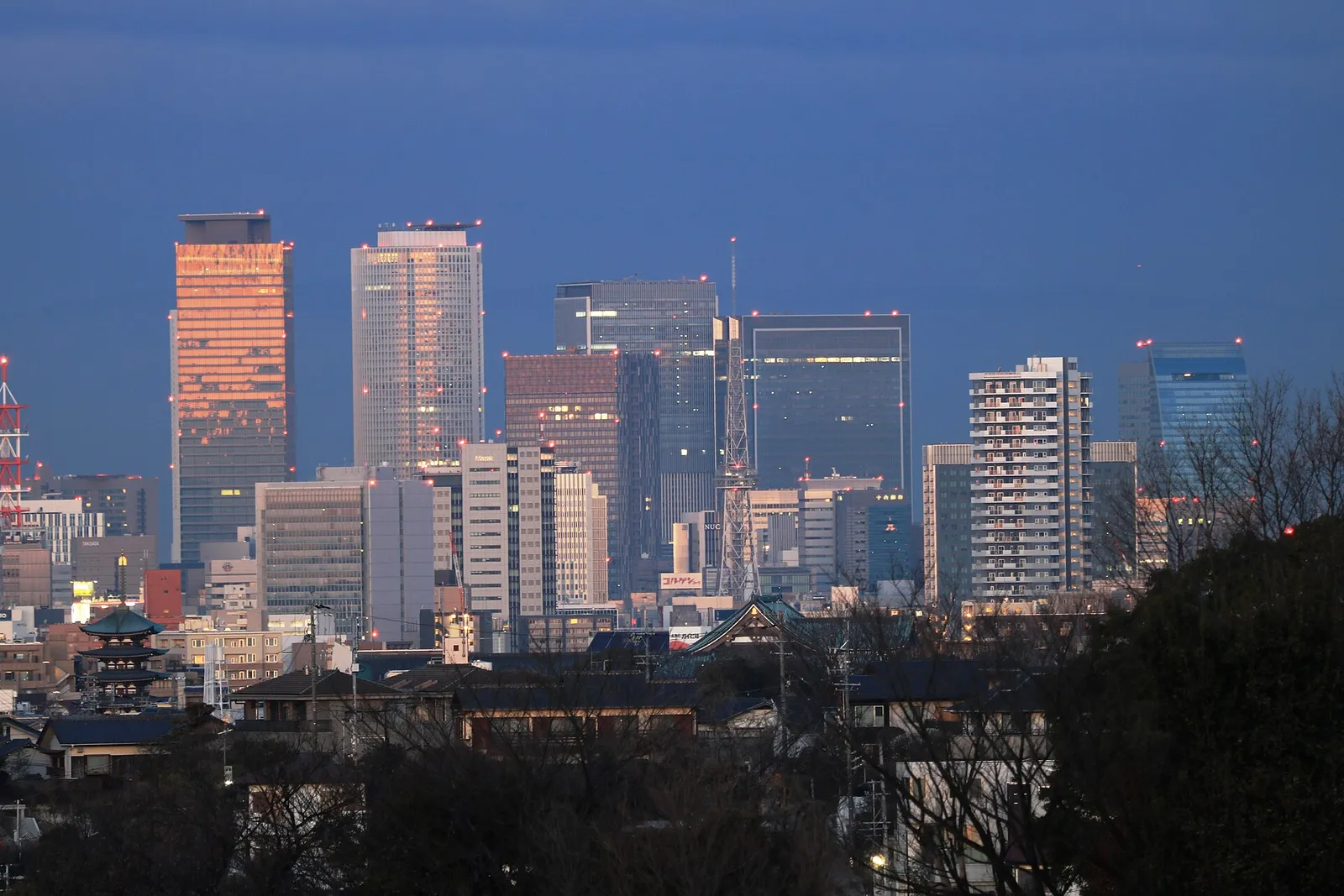
Nagoya is Japan's fourth-largest city and its great middle child: sitting on the shinkansen line exactly between Tokyo and Kyoto, it is where most foreign visitors change trains and keep going. That is a mistake. This is the home port of Toyota and Japan's manufacturing heartland, a castle town with a national-treasure palace, a shrine that houses one of the imperial regalia, and a famously assertive local cuisine built on red hatcho miso — eel bowls eaten three ways, spicy chicken wings, miso cutlets — that costs noticeably less than the same meal in Tokyo. Give it two days as a base for day trips into the Japan Alps, or three if you love trains: the SCMAGLEV museum here is the best rail museum in the country.
Top sights at a glance
No. 1
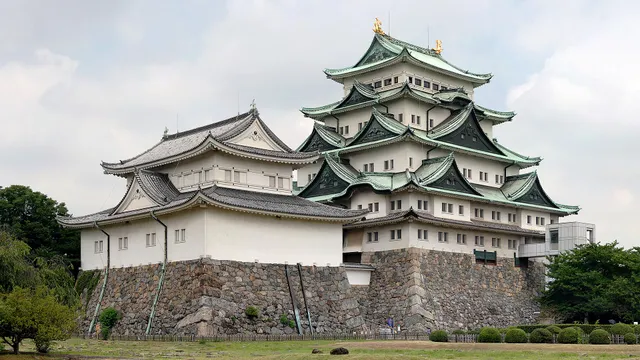
Nagoya Castle
The fortress from which the Owari Tokugawa — senior branch of the shogun's family — ran one of Japan's richest regions from 1612. The famous golden shachihoko dolphins on the roof gave Nagoya its nickname, and the wartime-burned keep was rebuilt in concrete in 1959. Since 2018 you can no longer enter the keep itself, which sounds like a deal-breaker but is not: the reconstructed Hommaru Palace, with its gold-leafed chambers and replica screen paintings, is the best part of the site, and a full wooden rebuild of the keep is planned (not before the early 2030s). Come in late March or early April and the cherry trees along the moat do half the work.
Good to know · Adults ¥1,000, junior high and younger free; open 9:00-16:30, closed December 29-January 1, as of October 2026 — a fee change was announced for October 2026, so confirm on the official site. Take the subway to Shiyakusho (City Hall) Station, 10 minutes and ¥240 from Nagoya Station, and enter through the East Gate.
No. 2
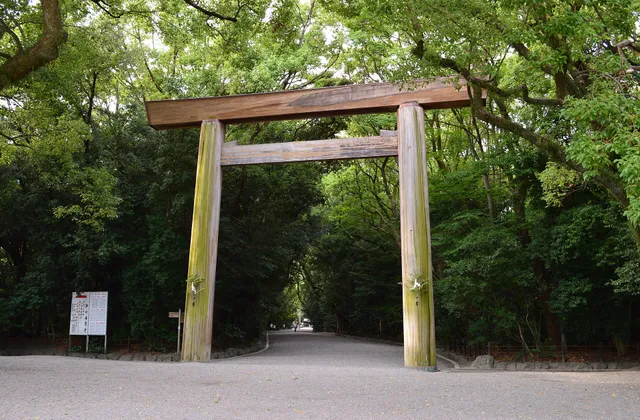
Atsuta Shrine
Shinto's second holiest site after Ise, a dense camphor-forest sanctuary three train stops south of downtown that has been rebuilt or re-roofed at regular intervals across its roughly 1,900-year history. Its inner sanctuary stores the Kusanagi-no-Tsurugi, the grass-cutting sword and one of the three imperial regalia — never displayed, guarded behind fences, cloth, and ritual, which is precisely the point. What you actually experience is the approach: a giant wooden torii, camphor trees, and the constant murmur of visitors paying respects. Millions come each year, and the shrine hums rather than crowds.
Good to know · Grounds are free and never close. The Kusanagi-kan exhibition hall (¥500, or ¥800 combined with the treasure house) opens 9:00-16:30 with occasional irregular closures. From Nagoya Station take the Meitetsu line five minutes to Jingumae Station (¥250) and walk three minutes; show a driver or station staff 「熱田神宮」 if you need pointing.
No. 3
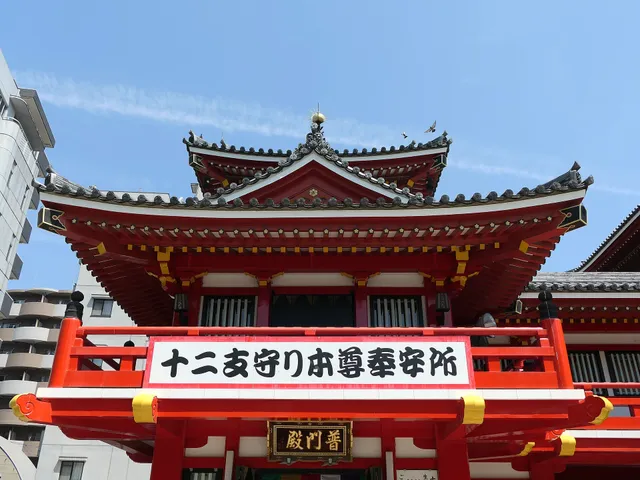
Osu Kannon & Shopping Street
A working temple fronted by a red-lantern shopping district — several arcades and several hundred shops selling retro video games, kimono, cosplay wigs, used cameras, and deep-fried everything. The Osu Kannon temple itself, a Shingon-sect Kannon temple originally founded in the fourteenth century and moved to this spot when the castle city was built in 1612, is free, small, and genuinely used: worth two quiet minutes for its giant paper lantern and wooden veranda before you dive back into the noise. This is Nagoya's Akihabara-meets-amusement-market, older and scruffier than Tokyo's electronics districts, and the default answer to "what do I do on a Tuesday evening in Nagoya?"
Good to know · Free; temple grounds generally 9:00-17:00, shops roughly 11:00-20:00 with smaller stalls closing earlier. Nearest subway: Osu Kannon Station on the Tsurumai line, two stops from Nagoya Station. Sunday afternoons are the liveliest regular day, and occasional flea-market days fill the temple square — check local listings. Come hungry — the arcades are the cheapest food in central Nagoya.
No. 4
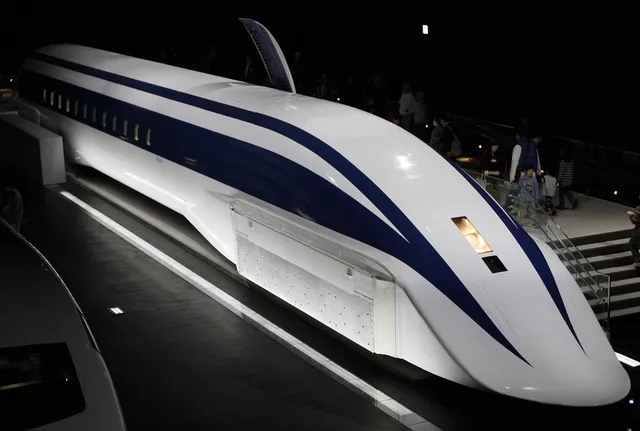
SCMAGLEV and Railway Park
JR Central's museum of everything it has ever run, housed in hangars on the waterfront: 39 full-size vehicles from Meiji-era steam locomotives through every generation of Tokaido Shinkansen to the MLX01 maglev that set the world rail speed record of 603 km/h in 2015. You can walk under the record car, board a 0-series shinkansen that ran when the line opened in 1964, and study Japan's largest railway diorama from a gallery above. Driving simulators (¥100-500, same-day tickets only, one try per person) sell out on busy days — queue at opening. Even for casual fans, the two-hour loop is a highlight of any Chubu trip.
Good to know · Adults ¥1,200, school children ¥500; open 10:00-17:30 (entry until 17:00), closed Tuesdays (or Wednesday when Tuesday is a holiday) and December 28-January 1, as of October 2026. No reservation needed for individuals — only groups of 20+. Ride the Aonami Line from Nagoya Station 25 minutes to Kinjofuto (¥360); the museum is a five-minute walk from the station.
No. 5
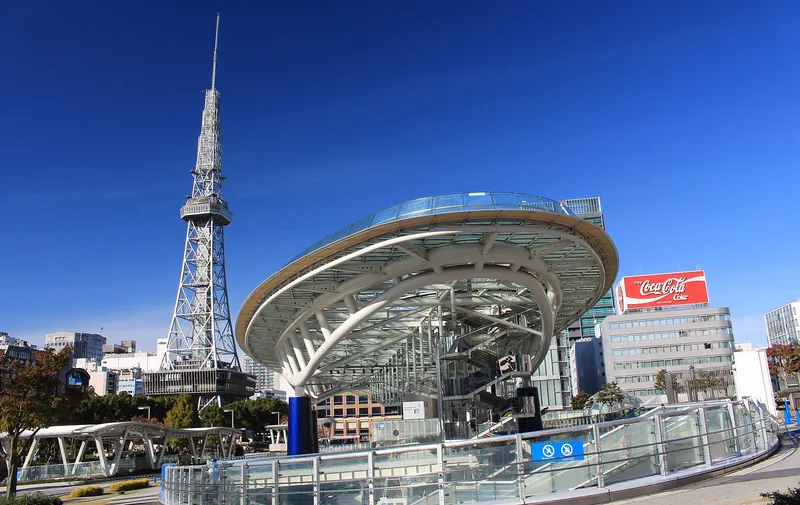
Oasis 21
A glass-and-water spaceship parked over a shopping mall in Sakae, downtown Nagoya. The roof — the Spaceship-Aqua — is a shallow pool of water you walk across on glass, with the TV tower rising behind and the surrounding skyline bent into the reflection; on a still evening it is the best free photograph in the city. Below the water are two levels of restaurants and shops around an airy atrium, plus a bus terminal, all bolted directly onto Sakae Station. It is a 20-minute visit that pairs naturally with the Nagoya TV Tower and Hisaya Odori Park next door, which together make up Sakae's compact evening circuit.
Good to know · Free, generally 10:00-21:00 for shops and restaurants. Directly connected to Sakae Station on the Sakura-dori and Meijo subway lines, two stops from Nagoya Station with a transfer at Fushimi. Visit at sunset for the water-reflection shot, then walk one block west to Hisaya Odori Park.
See it in motion
Some places earn a moving picture
Stills can't show how this place moves — the drift, the light show, the crowd flow. We picked a recent, high-quality walkthrough rather than a promotional cut.
Nagoya - 4K Walking Tour | From Nagoya Sta. via Sakae & Osu to Nagoya Castle | Japan 🇯🇵 Mar 2025
traveler_HIRO · YouTube · plays on click
Embedded via YouTube's official player (privacy-enhanced mode). Video: Nagoya - 4K Walking Tour | From Nagoya Sta. via Sakae & Osu to Nagoya Castle | Japan 🇯🇵 Mar 2025 by traveler_HIRO. Not affiliated with Japan Travel Navi; screened for quality and accuracy on 2026-10-06.
Nagoya is the big city foreigners fly over. Sitting on the Tokaido Shinkansen line exactly halfway between Tokyo and Kyoto, it watches millions of visitors change trains and continue on — which quietly suits the locals, because they know what they have: a 400-year-old castle town that became the workshop of Japan, the densest concentration of Toyota factories and suppliers on earth, and a food culture so stubbornly local it has its own name, Nagoya-meshi. First impressions are of a wide, low, unhurried city that works — fewer English signs than Tokyo, far fewer tourists, and restaurant queues measured in minutes rather than hours. It suits travelers who rate a city by its food, rail fans of any seriousness, and anyone using central Japan as a base for the Alps.
A Bit of History
Nagoya’s origin story involves Japan’s three great unifiers. Oda Nobunaga, the warlord who began the unification of Japan, was born a few hundred meters from where the castle now stands, at Nagoya Castle’s predecessor in the 1530s; Toyotomi Hideyoshi, his successor, worked his way up from the bottom of Nobunaga’s ranks nearby. But the city itself was decreed in 1610 by Tokugawa Ieyasu, the third unifier and the first shogun of the peace that lasted 250 years. Ieyasu moved his Owari branch of the family — the seniormost of the three Tokugawa cadet lines — into a brand-new fortress built by “tenka bushin,” an obligatory construction program that put twenty rival feudal lords to work on the walls so they would have neither money nor energy left for rebellion.
The scheme worked. For the entire Edo period, Nagoya was the political capital of one of Japan’s richest regions, the choke point where the Tokaido, the country’s main coastal highway, met routes into the mountainous north. Castle towns like this grew samurai administrators, merchant wealth, and an audience for craft — one reason the region still produces more potters, mechanics, and toolmakers than anywhere else in Japan.
The industrial turn came early and never left. Textile machinery in the Meiji era became aircraft engines in the 1930s — the Zero fighter was designed nearby — and Toyota, founded as a loom maker, opened its auto plant in the neighboring city in 1937. World War II erased the castle keep and most of the center; the postwar decades rebuilt Nagoya as the capital of the Chubu industrial belt, the single largest manufacturing zone in the country. The concrete keep went up in 1959, the shinkansen arrived in 1964, and the world’s fair in 2005 and the maglev test line in Yamanashi both reinforced the city’s self-image as Japan’s engineering front room.
Today the city proper holds around 2.3 million people — fourth in Japan after Tokyo, Yokohama, and Osaka — with a metro area of nine million that never markets itself and never struggles. The honest framing: Nagoya will not perform for you the way Kyoto does. It is a living city with a handful of excellent sights, superb food, and the country’s best launch pad for the Japan Alps — see /destinations/takayama/ and /itineraries/alpine-japan-itinerary/ — and it rewards travelers who like that pitch.
Culture & Daily Life
Nagoya’s culture runs on two fuels: manufacturing and miso. The first explains the city’s matter-of-fact pride in making things — the Toyota Commemorative Museum of Industry and Technology, a short subway ride from the station, walks you from 1900s looms to modern assembly lines and is far more interesting than its corporate name suggests. The second explains dinner. Nagoya cooking is built on hatcho miso, a dark, salty-sweet red paste aged in cedar vats, used with a heavier hand than anywhere else in Japan. Visitors split on it; the correct position is that miso katsu — a pork cutlet drowned in it — sounds wrong and is right.
The other local institution is “morning” service. Order a coffee before about 11 a.m. at a Nagoya kissaten and toast, a boiled egg, or a small salad arrives with it at no or nominal charge — a custom so entrenched that skipping breakfast at your hotel to take advantage is simply correct strategy. Point at the menu and ask 「モーニングセットをください」 (moningu setto o kudasai).
Daily logistics run smooth and cheap. The subway is the city’s spine — two main lines crossing at Nagoya Station and Sakae — with a manaca IC card or your mobile Suica working identically (see /guides/trains-and-ic-cards/). Cash matters a touch more here than in Tokyo: market stalls, smaller izakaya, and temple stalls still default to it, and the tax-free floor requires passport-at-register as everywhere (see /guides/money-and-payments/). People are direct, helpful, and far more likely to switch to slow, patient Japanese than English — carry the printable phrases at /cards/. Dress code is irrelevant; tattoos rarely raise eyebrows at public baths compared with hot-spring country, but the etiquette basics at /guides/etiquette-manners/ still apply.
Nature & Day Trips
Nagoya is not a nature city, but it is the best-situated big city in Japan for day trips. West and north, the Chubu mountains begin within an hour: Takayama’s old merchant quarter and the farmhouses of Shirakawa-go are doable as long day trips on the wide-view Hida express — better, two days — and the whole route is mapped in /itineraries/alpine-japan-itinerary/. Inuyama, 30 minutes by train, has one of Japan’s twelve original castle keeps and the open-air Meiji-mura museum of relocated Victorian-Japanese architecture. Ise Shrine, the holiest site in Shinto, is about 90 minutes away by limited express.
Two more specialized options: Ghibli Park, on the expo site at Nagakute, recreates the studio’s films across wooded walks — it uses dated advance tickets that go on sale on the 10th of each month and routinely sell out, so decide early. And the Toyota museum already mentioned pairs well with a rainy day. Within the city, Tsuruma Park is the cherry-blossom headquarters in late March and early April; Higashiyama Zoo and Botanical Gardens is a sprawling, slightly retro favorite with koalas. For an evening, skip both and walk Hisaya Odori Park downtown with a can of coffee from a vending machine — very Nagoya.
Food & Drink
Nagoya-meshi is the city’s real monument, and the correct plan is to graze through it. The headliner is hitsumabushi: grilled eel over rice in a lacquered tub, eaten in four stages — plain, with condiments, as chazuke broth soup, then however you like — at specialty restaurants from around ¥3,000-5,000. Reserve it for one dinner; the mid-range chains around the station do honest versions without the queue.
The rest of the canon is cheap and vigorous. Tebasaki are batterless fried chicken wings lacquered in a sweet-soy glaze with pepper and sesame — built for beer, ordered by the basket, a few hundred yen a plate at the izakaya chains around Sakae. Miso katsu puts the local red paste on a pork cutlet (lunch sets ¥1,500-2,500). Misonikomi udon simmers toothsome, thick noodles in a clay pot of that same miso with egg and chicken (¥1,000-1,500). Kishimen, flat wheat noodles in light dashi, is the gentler option at ¥500-800, and the definitive local breakfast is kishimen in the arcade followed by that morning-set coffee.
Eating districts: Sakae for izakaya depth and the spicy-wing specialists; the Osu arcades for fried snacks, international street food, and a legendary cat-shaped taiyaki; Nagoya Station’s tower-complex basements for a refined food-hall bento on a train day. Prices run maybe 10-20% under Tokyo for equivalent quality, and queues are shorter. First-timer food guidance lives at /guides/japanese-food-first-timers/.
Top Sights
Nagoya Castle
The golden shachihoko — the male and female dolphin-tiger roof ornaments — are the city’s symbol, and the castle they crown tells Japan’s whole architectural story in one visit. The 1612 original burned in 1945; the 1959 concrete keep, once a tourist-friendly museum, closed to entry in 2018 over earthquake-resistance concerns and will eventually be replaced by a historically faithful wooden reconstruction — a project running years behind schedule and not expected before the early 2030s. What that means practically: you now come for the Hommaru Palace, rebuilt to its 1615 appearance and open since 2018, where gold-leafed reception chambers and replica screen paintings show how the shogun’s family actually received visitors. It is the best palace of its kind outside Kyoto.
Give it ninety minutes. Walk the full inner moat circuit for the stone walls — the tallest carry the crests of the lords forced to build them — then enter through the East Gate. Adult admission is ¥1,000, junior high school and younger free; hours are 9:00-16:30 with the palace closing at 16:00, and the site closes only December 29-January 1, as of October 2026. A fee change was announced for October 2026 — verify the current figure on the official site before you go. Subway Shiyakusho Station is 10 minutes and ¥240 from Nagoya Station; the Me-guru tourist loop bus also stops here.
Atsuta Shrine
Japan’s second-most-venerated shrine, after only Ise, sits in a camphor forest so dense that the surrounding city disappears. Atsuta enshrines Amaterasu and stores the Kusanagi sword — the grass-cutting blade that, with the mirror and the jewel, makes up the three imperial regalia legitimizing the throne. No one outside the priesthood has seen it in living memory; it is never displayed, never photographed, and this restriction is itself the attraction: you are standing at the vault door of Japanese state mythology. The shrine has been rebuilt or re-roofed at regular intervals across its long history, Ise-style, so the buildings are always new and always ancient.
The grounds are free and never close; arrive early and you will share the gravel paths with locals making their morning bows. The Kusanagi-kan exhibition hall (¥500, or ¥800 with the treasure house; 9:00-16:30) explains the regalia and displays shrine treasures including ancient swords. Getting there is painless: Meitetsu line from Nagoya Station five minutes to Jingumae (¥250), three minutes’ walk. Total visit, 60-90 minutes, pairs well with a run down to the harborfront or, better, with Osu — backtrack one stop and you are at the arcades.
Osu Kannon & Shopping Street
Osu is what happens when a temple town never gets torn down. The Kannon temple at its head, founded in the fourteenth century and relocated here in 1612 when the castle city took shape, fronts a small square with a giant red paper lantern; from it spread several covered arcades holding several hundred shops. The mix is the point: vintage kimono beside retro game consoles, used camera lenses beside maid-cafe recruitment posters, a shrine to electronics nostalgia two lanes from a 1970s shotengai grocery. Akihabara does otaku culture at industrial scale; Osu does it at neighborhood scale, mixed with ordinary Nagoya life, and everything costs less.
Plan a couple of unhurried hours, more if shopping. The temple is free and briefly lovely; the arcades are the show, and the food is the reason locals come — kishimen counters, croquette stands, and fried chicken shops working the walkways. Nearest station is Osu Kannon on the Tsurumai subway line, two stops from Nagoya Station. Timing tip: shops open late morning and the energy peaks in the evening, and Sunday afternoons are reliably buzzing.
SCMAGLEV and Railway Park
If you have even a passing interest in trains, block half a day; JR Central’s museum on the harborfront is the best rail collection in Japan. The hangar floor holds 39 vehicles in chronological order: a 19th-century British-built locomotive, the steam and early express fleets, the complete shinkansen lineage from the 1964 0 series through the 700 series with its duckbill nose, and the MLX01 superconducting maglev, the machine that hit 603 km/h in 2015 — still the world record for a train. You can walk beneath the record-setter, sit in period-correct seating, and circle a vast operating diorama of the Tokaido corridor from a mezzanine gallery.
Practicalities: adults ¥1,200, school children ¥500, preschoolers ¥200; hours 10:00-17:30 with last entry 17:00; closed Tuesdays (or the following day when Tuesday is a national holiday) and December 28-January 1, as of October 2026. Individuals need no reservation — only groups of 20 or more book ahead. Simulator tickets (train cab ¥100, shinkansen cab ¥500) are same-day, one attempt per person, first-come-first-served: enter at opening and go straight to the simulator desk or information booth. Access is the Aonami Line from Nagoya Station to Kinjofuto, 25 minutes and ¥360, with trains roughly every 15 minutes. English audio guides are free at the desk.
Oasis 21
Sakae’s shopping centerpiece looks like a water lily: 14 meters of glass roof holding five centimeters of water, hovering over a spiral of boutiques and restaurants around an open-air atrium. Walk up the ramp and out onto the Spaceship-Aqua — the water is genuinely ankle-inviting, so roll your trousers — and the city arranges itself for you: the Nagoya TV Tower straight ahead, mid-rise Sakae all around, everything doubled in the surface. It is architecture as public fountain, free, and at dusk with the tower lit it is the single best free view in central Nagoya.
The complex works as more than a photo. The bus terminal underneath runs airport and highway coaches; the two retail levels cover lunch, cake, and souvenir gaps; and Sakae Station plugs directly into the basement, two subway lines deep. Pair it with the TV tower and the long lawn of Hisaya Odori Park next door for a complete Sakae evening — arcade dinner at Osu or izakaya crawl first, water-walk after. Shops generally run 10:00-21:00; the roof stays accessible later. As of October 2026 there is no entry charge and no reservation for anything.
Getting There & Around
By air you land at Chubu Centrair, the artificial-island airport 30 minutes south. Meitetsu trains connect to Nagoya Station: the all-reserved muSKY covers it in under 40 minutes (base fare plus a ¥450 seat ticket), cheaper limited expresses take about 45-50. By shinkansen, Nagoya is the midpoint of Japan: Nozomi runs from Tokyo in about 100 minutes for around ¥11,000 reserved (¥10,560 non-reserved), and from Kyoto in about 35 minutes — fares as of October 2026. Note the nationwide Japan Rail Pass requires a supplement for Nozomi; the math lives at /guides/jr-pass-worth-it/.
In town, the subway covers everything a visitor needs, ¥210-290 per ride. Day passes are the play: the 24-hour subway pass at ¥760, the bus-and-subway pass at ¥870, and the weekend-and-holiday Donichi Eco pass at ¥620 — as of October 2026. The orange Me-guru tourist loop bus links Nagoya Station, the castle, and Sakae for ¥210 a ride or ¥500 for a day. Taxis are plentiful and honest; base fare hovers around ¥500-600. You will not need a car in the city, and you will need reservations rather than luck for Ghibli Park.
Where to Stay
Around Nagoya Station for convenience: the twin towers district puts you on every subway line, the Meitetsu airport train, and the shinkansen, with department-store basements and 24-hour noodle counters downstairs. Pick any hotel within five minutes of the station and day trips become effortless — this is the base for Takayama and Alps runs. It is business-district bland at street level after 9 p.m.
Sakae for evenings: downtown’s restaurants, izakaya, Oasis 21, and the tower are all walkable, and the subway to the station takes minutes. Mid-range pricing, the widest dinner choice, and the best atmosphere for a first visit — where we would point most travelers.
Osu for budget and character: guesthouses and cheap business hotels in the arcade district, walking distance to Sakae, with the city’s cheapest food downstairs. It suits longer stays and travelers who want a neighborhood rather than a hub. Wherever you land, stay on the subway’s two main lines — anything else trades minutes for yen every single day.
Sources & verification (10)
- https://www.nagoyajo.city.nagoya.jp/en/information/
- https://www.japan-guide.com/e/e3300.html
- https://www.japan-guide.com/e/e3301.html
- https://www.japan-guide.com/e/e3302.html
- https://www.japan-guide.com/e/e3304.html
- https://www.japan-guide.com/e/e3314.html
- https://museum.jr-central.co.jp/en/facilities/
- https://www.japan-guide.com/e/e3315.html
- https://www.japan-guide.com/e/e2155.html
- https://meitetsu.co.jp/eng/