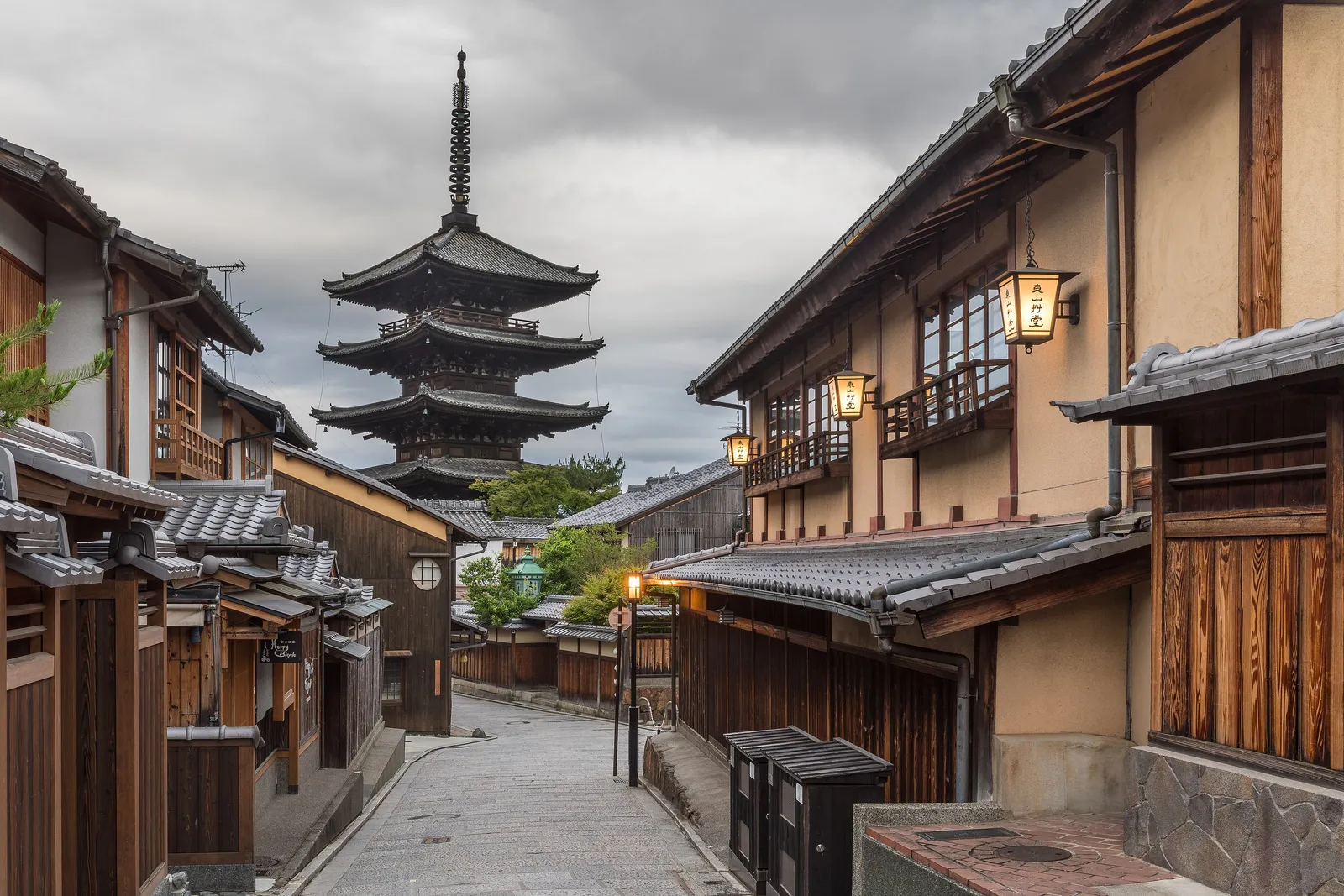
Kyoto was Japan's capital for over a thousand years, and it shows: around 1,600 Buddhist temples and 400 Shinto shrines survive inside a walkable, mid-sized city, from the Golden Pavilion to the vermilion tunnel of Fushimi Inari. The core experiences are architectural masterpieces, the Arashiyama bamboo grove, evening walks through the geiko district of Gion, and kaiseki — Japan's most refined cooking, born here. Kyoto suits first-timers who want the classical Japan of the imagination, and it rewards early risers overwhelmingly: the famous sights are mobbed by mid-morning and magical at dawn, dusk, or after dark. Give it three to four days, more if you add day trips to Nara and Uji.
Top sights at a glance
No. 1
Fushimi Inari Shrine
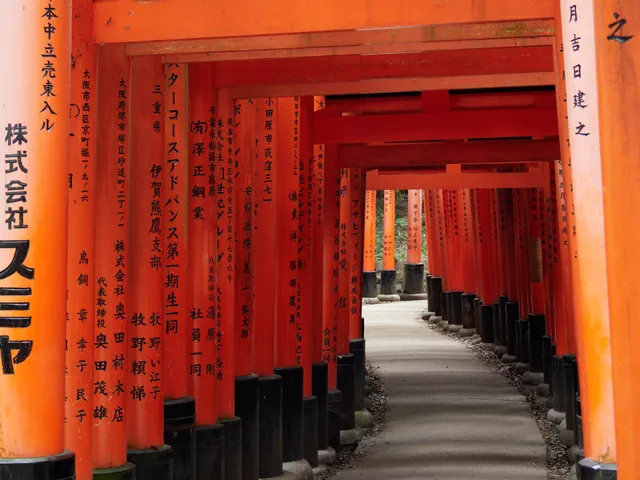
The head shrine of Inari, god of rice and business, whose mountain is covered by a dense tunnel of vermilion torii gates — thousands of them, each donated by a company or family seeking luck. The gates start crowded near the bottom and thin as you climb; past the halfway viewpoint at Yotsutsuji, with its view over southern Kyoto, it becomes a quiet forest hike. The full summit round trip takes two to three hours, but you can taste the essence in thirty minutes of walking uphill.
Good to know · Free and open 24 hours, every day — so arrive at 7 a.m. or after sunset to have the gates almost to yourself; midday is a procession. It is five minutes and ¥150 from Kyoto Station on the JR Nara Line to Inari Station, the trailhead literally at the station exit. Bring water for the full climb; there are teahouses en route.
No. 2
Kinkaku-ji
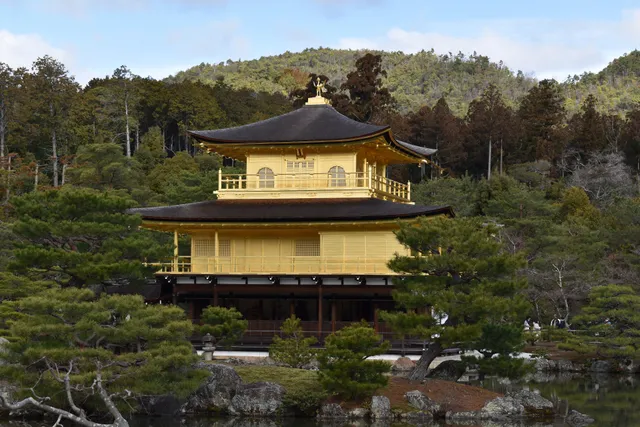
The Golden Pavilion: a three-story retirement villa of shogun Ashikaga Yoshimitsu, whose top two floors are covered entirely in gold leaf, converted to a Zen temple on his death in 1408. You cannot enter it — you view it across the mirror pond, where the gold doubles itself, then follow the garden path past the teahouse and out. The current structure dates only to 1955, after a monk burned the original down in 1950 (a crime that became a famous novel and film), which surprises people and changes nothing: on a still morning the reflection is Kyoto's single most famous view.
Good to know · ¥500, open 9:00-17:00 daily, as of October 2026. The visit is short — 15 to 45 minutes on a fixed one-way path — so time it for 9 a.m. sharp, before tour buses stack the viewing deck three deep. From Kyoto Station take bus 205 (about 40 minutes, ¥230); pair it with nearby Ryoan-ji's rock garden to make the west side a half day.
No. 3
Arashiyama
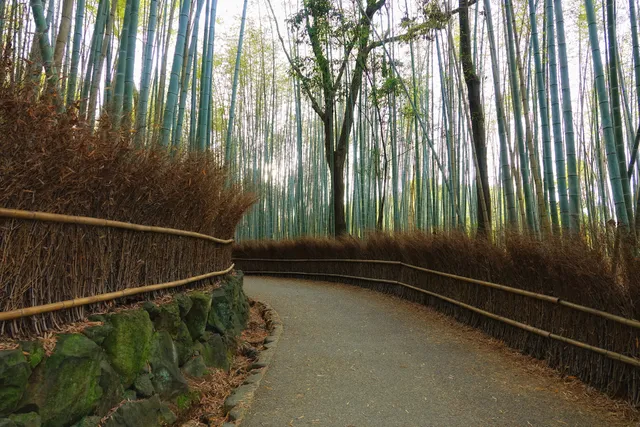
A river district on Kyoto's western edge, famous for its bamboo grove — a few hundred meters of path under swaying green stalks that photograph far better at 7:30 a.m. than at 11. The neighborhood around it earns the trip: Tenryu-ji, a Zen temple whose 14th-century garden borrows the mountains as backdrop, the Togetsukyo bridge with boat rides, riverside eating, and the steep climb to the Iwatayama monkey park. This is the one Kyoto sight where 'go early' matters more than anywhere else, because the grove is narrow and tour groups arrive like weather.
Good to know · The bamboo grove is free and always open; go before 8:30 a.m. Tenryu-ji costs ¥500 for the garden plus ¥300 for the buildings, 8:30-17:00, as of October 2026; monkey park ¥800. From Kyoto Station take the JR Sagano Line 15 minutes to Saga-Arashiyama (¥240), then walk 5-10 minutes north to the grove.
No. 4
Gion
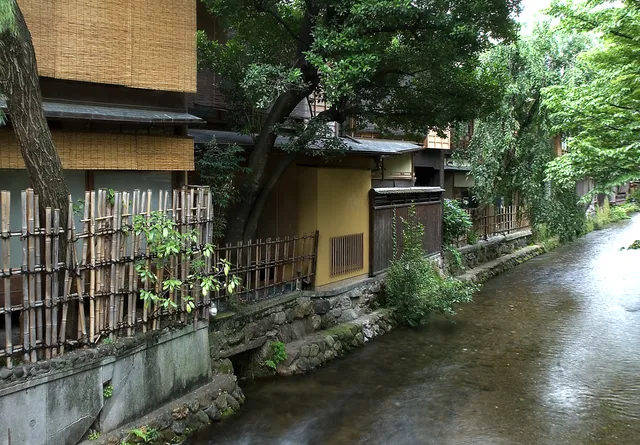
Japan's most famous geiko district: blocks of machiya townhouses around Shijo Avenue and Hanamikoji street, where Kyoto's traditional entertainers — apprentices called maiko, professionals called geiko — still work teahouse engagements. In the early evening you may glimpse them in full dress slipping between appointments. The neighborhood is also Kyoto's prettiest evening walk, especially along the willow-lined Shirakawa canal one block north of Shijo. Know the etiquette: several private lanes are now closed to tourists entirely, with no-photography rules actively enforced, because visitor misbehavior toward geiko got out of hand.
Good to know · Free to wander; the magic window is 17:30-19:00 as lanterns come on. Obey the no-photo/no-entry signs on private lanes — this is enforced, and fines have been discussed by the district. For a guaranteed, ethical encounter, book Gion Corner (about ¥5,500, shows at 18:00 and 19:00), a tourist-friendly sampler of tea ceremony, dance, and arts. Nearest stations: Gion-Shijo (Keihan) or Kyoto-Kawaramachi (Hankyu).
No. 5
Kiyomizu-dera
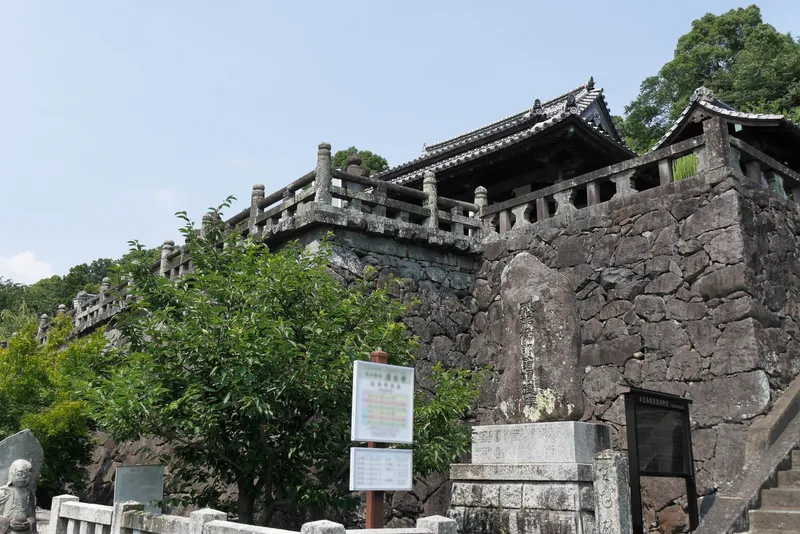
A hillside temple founded in 780, named for its waterfall, and built around a huge wooden stage that juts thirteen meters over the slope — assembled without a single nail, with the view over the city behind it. The approach through the Sannenzaka and Ninenzaka lanes of preserved machiya is half the experience: teahouses, pickle shops, matcha soft serve, and gravitational crowds. Seasonal nighttime illuminations (cherry blossom, August Obon, late-November leaves) keep the stage open until 21:30 and are genuinely worth planning around.
Good to know · ¥500, open 6:00-18:00 (until 18:30 in July-August; until 21:30 on illumination nights), as of October 2026 — the autumn 2026 light-up runs November 21-30. Go at 6 a.m. opening for empty lanes, or 30 minutes before an evening illumination. Bus 206 from Kyoto Station to Gojo-zaka or Kiyomizu-michi (¥230), then a 10-minute uphill walk; from the stage, walk down through Ninenzaka toward Gion.
See it in motion
Some places earn a moving picture
Stills can't show how this place moves — the drift, the light show, the crowd flow. We picked a recent, high-quality walkthrough rather than a promotional cut.
Spring Morning Walk through Historic Higashiyama | Kyoto, Japan 4K
Ambient Exploration · YouTube · plays on click
Embedded via YouTube's official player (privacy-enhanced mode). Video: Spring Morning Walk through Historic Higashiyama | Kyoto, Japan 4K by Ambient Exploration. Not affiliated with Japan Travel Navi; screened for quality and accuracy on 2026-10-06.
Kyoto is the Japan people picture before they land: temple roofs in the mist, raked gravel, lantern-lit lanes, and food arranged like an argument for elegance. It was Japan’s imperial capital for over a thousand years and still carries itself that way: some 1,600 temples and 400 shrines, seventeen UNESCO World Heritage monuments, and craft worship that turns tea, tofu, and a sheet of tofu-skin into high culture. It is also the most touristed city in Japan per capita — the big sights run at capacity much of the year. That is manageable: Kyoto rewards early risers almost unfairly, and it is compact enough that its best hours — dawn at a temple, dusk along a canal — are easy to reach on foot.
A Bit of History
In 794 the emperor moved his court to a new city laid out on the Chinese grid-capital model, Heian-kyo, “capital of peace and tranquility” — today’s Kyoto. For the next thousand-plus years it was Japan’s political and cultural center, and nearly everything the world associates with “traditional Japan” was refined here: the Tale of Genji, the world’s arguably first novel, was written by a court lady around 1008; noh theater, tea ceremony, kaiseki cuisine, ikebana, and kimono aesthetics all grew out of the courtly and merchant culture of this city.
The imperial court was poor in power, though, and by the 1400s real authority sat with shoguns in Kamakura and later Edo. The Onin War (1467-77) burned most of the city to the ground; what you visit today is largely post-1500 reconstruction, built by ambitious monks, aristocrats, and above all merchants. The Tokugawa era treated Kyoto as the ceremonial heart of the country — the emperor stayed here as a figurehead while shoguns ran Japan from Edo — and the city’s temple-building and craft guilds flourished. Kinkaku-ji, Ginkaku-ji, Nijo Castle, and most of the Higashiyama temple-scape took their present shape in this period, and the craft neighborhoods behind them — Nishijin silk weaving, Kiyomizu potters — still work the same corners of town today. The original grid survives, too: Karasuma Street still runs north-south along the old imperial central avenue, which is why Kyoto feels legible on a map in a way Tokyo never will.
In 1868 the Meiji Restoration moved emperor and capital to Tokyo, and Kyoto’s economy slumped for decades. The twentieth century then dealt it a strange mercy: it was largely spared the WWII firebombing that leveled other Japanese cities, by decisions historians still debate, leaving one of the few big Japanese cities with its prewar fabric — and thousands of wooden buildings — intact. Since 1994, seventeen monuments have held UNESCO World Heritage status together. Today Kyoto is a city of about 1.5 million that hosts tens of millions of visitors a year, and its central challenge, overtourism, is one you can personally help with: spread out, go early, and get off the two or three streets everyone else is on.
Culture & Daily Life
Two quick distinctions unlock the city. Buddhist temples (ji, -dera) vs Shinto shrines (jinja): temples have halls, statues, incense; shrines have torii gates, fox statues, and rope pulls. You will use both constantly — bow at a shrine gate, toss a coin, two bows, two claps, a bow — and the guide at /guides/etiquette-manners/ covers the rest, from shoe removal to chopstick taboos. Note that most temples close by 17:00 — sightseeing here is a morning sport.
Kyoto runs on seasons harder than anywhere in Japan. Cherry blossoms (late March to mid-April), summer festival season (the whole month of July belongs to Gion Matsuri, with giant float processions on July 17 and 24), autumn leaves (mid-November, with illuminated temples at night), and New Year shrine visits. Traveling in those windows costs more and books out earlier — reserve accommodation the moment dates are fixed, and note that illuminate-season temple nights and the Gion Matsuri float evenings are the two events worth structuring a trip around.
The geiko world deserves context, not just photos. Maiko are apprentices (long hanging hair ornaments, long sleeves, red collar); geiko are the licensed professionals. They are a working entertainment guild, not a tourist attraction — the private teahouses where they perform are invitation-only. Glimpse from a distance, never chase a photo, and expect Gion’s private-lane photo bans to be enforced; for a guaranteed ethical encounter, book a ticketed cultural show or licensed maiko dinner through your hotel.
Daily-life Kyoto is a relaxed, mid-sized city — cafés in renovated machiya townhouses, bicycle traffic, the Kamo River as everyone’s living room. Rent a bicycle for a day (about ¥1,000-1,500); Kyoto is flat, and it is the locals’ way of moving. In the evening, join the riverbank: couples, baseball games, buskers, and the seasonal riverside dining decks (kawadoko) along the Kamo and in Pontocho alley.
Nature & Day Trips
Kyoto sits in a bowl of mountains, and the edges are where the city breathes. The Philosopher’s Path, a canal-side walk under cherry trees between Ginkaku-ji and Nanzen-ji, is the classic morning stroll; the Fushimi Inari mountain is the classic hike. In late November the whole rim turns red and gold. Northwest of the center, the Kurama-to-Kibune trail crosses a forested ridge between two mountain villages with temples and (in Kibune) riverside dining decks in summer — take the Eizan railway from Demachiyanagi, about 30 minutes, and hike one way.
For day trips, Nara — an earlier capital with a Great Buddha and a park full of bowing deer — is 35 to 45 minutes by train and has its own page in this guide. Uji, 20 minutes south, is matcha’s spiritual home: fields, historic tea shops, and the phoenix-adorned Byodo-in temple on the ten-yen coin. Fushimi, adjacent to the Inari mountain, is Kyoto’s sake brewery district with tastings in canal-side warehouses. Osaka, 30 minutes away, makes a loud, delicious contrast. Even Lake Biwa, Japan’s largest lake, is a short train ride for a canal-cruise change of pace. Snow on the mountain rim is rare and brief; winter is the quiet season.
Food & Drink
Kyoto is the birthplace of kaiseki — the multi-course seasonal dinner that evolved from tea-ceremony hospitality — and it remains the best place on earth to eat it. The honest tip: book kaiseki for lunch, not dinner. Lunch sets at serious restaurants run roughly ¥6,000-10,000 for the same kitchen that charges ¥20,000-40,000 at dinner; reserve a few days ahead through your hotel or Pocket Concierge-style booking sites.
Beyond the high end, Kyoto’s daily food is distinct: yudofu (simmered tofu hot pot, a Zen-temple specialty best around Nanzenji, sets ¥3,000-4,000), obanzai (home-style Kyoto small dishes — order several), nishin soba (noodles with sweet herring, the merchant’s lunch), pickles of every vegetable imaginable, and matcha everything, since Uji next door grows the country’s best. Nishiki Market, a covered arcade of over a hundred stalls called “Kyoto’s kitchen,” is the grazing circuit: skewers, tofu doughnuts, tamagoyaki, baby octopus (about ¥1,000-3,000 of snacking; mornings are calmer, some stalls close Sundays). On the 25th of each month, Kitano Tenmangu shrine adds a flea market with street-food stalls worth planning around.
Neighborhoods: Pontocho, the narrow lantern alley along the Kamo River, is the atmospheric dinner splurge with summer riverside decks; the Downtown grid around Shijo-Kawaramachi holds izakaya and standing bars at every price; Higashiyama’s lanes do teahouse lunches with temple views. Tonkatsu and ramen exist here too, but save those for Osaka — Kyoto’s kitchen is subtler: sesame tofu (goma dofu), yuba tofu-skin in every form, and summer hamo pike conger. If a shop’s menu defeats you, pointing plus 「これをください」 (kore o kudasai) works from counter to kaiseki. A realistic budget: ¥1,000-1,500 for a noodle lunch, ¥3,000-5,000 for a good dinner without drinks, and the kaiseki splurge once. Vegetarians eat unusually well here — shojin ryori (Buddhist temple cuisine) is a thousand-year-old vegan tradition, served at temples and specialist restaurants.
Top Sights
Fushimi Inari Shrine
Start here, ideally at dawn, because this is Kyoto’s best free experience and its most crowded by 10 a.m. The shrine itself sits at the mountain’s base; the attraction is the climb through thousands of vermilion torii gates, each engraved with its payer’s name — businesses buying luck from Inari, fox-guarded god of commerce. The dense, photogenic tunnel covers the lower slopes; at the Yotsutsuji intersection, 30-45 minutes up, the forest opens to a view over southern Kyoto, and from there to the summit the crowds drop to a trickle and the mountain turns quiet, shrines and fox statues tucked among the trees.
It is free and open around the clock, every day — which is why you should not visit at midday. Come at 7 a.m. or after sunset, when the gates are lamplit and the mountain nearly empty. The round trip takes two to three hours; teahouses operate partway up. Logistics are foolproof: JR Inari Station, five minutes and ¥150 from Kyoto Station, exits at the shrine’s main gate.
Kinkaku-ji
The Golden Pavilion is a three-story construction flex: palace style on the first floor, samurai style on the second, Zen temple style on the third — and the top two floors sheathed in gold leaf, topped by a golden phoenix. Shogun Ashikaga Yoshimitsu built it as his retirement villa in the 1390s; on his death in 1408 it became a Zen temple per his will. The 1950 arson that destroyed it — a monk’s obsession, immortalized in Mishima’s novel — means the building you photograph dates from 1955, a fact that changes little: the pavilion has burned many times across the centuries.
The ¥500 ticket (9:00-17:00, daily, as of October 2026) buys a fixed one-way garden route: the classic reflection shot across Kyoko-chi pond first, then past the head priest’s quarters, the luck-throwing coin statues, and the Sekkatei teahouse. The visit takes fifteen crowded minutes or forty calm ones, purely by arrival time. Come for the 9 a.m. opening; by 10:30 the viewing deck is three-deep in tour groups. Bus 205 from Kyoto Station takes about 40 minutes (¥230); combine with Ryoan-ji’s rock garden for a northwest half-day.
Arashiyama
Arashiyama is a whole riverside district, but you are here for the bamboo: a few hundred meters of path where tall stalks filter the light green and the wind sounds recorded. It takes twenty unhurried minutes, which is why timing decides everything — the grove is free and always open, and before 8:30 a.m. it is close to silent; by late morning it is a slow-moving crowd. After the grove, the district spreads out enough to absorb people: Tenryu-ji, the Zen temple whose 14th-century garden was designed to borrow the Arashiyama mountains as scenery, charges ¥500 for the garden plus ¥300 more to enter its halls (8:30-17:00, as of October 2026). The Togetsukyo bridge anchors riverboat rides and cormorant fishing in season.
The Iwatayama monkey park is a steep 15-20 minute climb to a hilltop troop of macaques with a panorama over Kyoto (¥800, entry by 16:00). The Sagano Scenic Railway, a 25-minute retro train up the Hozugawa gorge, is the area’s book-ahead item — reserve early for spring and autumn. Getting here: JR Sagano Line from Kyoto Station to Saga-Arashiyama, 15 minutes, ¥240, plus a 5-10 minute walk.
Gion
Gion is the geiko district, and it rewards two things: evening light and correct behavior. The core walk runs along Shijo Avenue from Yasaka Shrine west to the Kamo River, turning into Hanamikoji, the preserved street of machiya tea houses where maiko and geiko work private engagements. Around 17:30-19:00 lanterns come on and occasionally a white-faced figure in full dress hurries to an appointment — if so, hold your position and your distance; chasing a photo is exactly the behavior that got several private lanes closed to tourists, with no-photo rules enforced.
One block north of Shijo, the Shirakawa canal is the quieter gem: willows, stone bridges, and machiya backs over the water, nearly crowd-free most evenings. For a guaranteed and ethical cultural experience, Gion Corner stages a well-run hour of tea ceremony, maiko dance, flower arranging, and more at 18:00 and 19:00 for about ¥5,500 — book online, as of October 2026. In April, the district’s Miyako Odori runs daily maiko dance performances that are the real thing. Reach Gion via Gion-Shijo (Keihan Line) or Kyoto-Kawaramachi (Hankyu) stations, then walk everywhere.
Kiyomizu-dera
Kiyomizu-dera’s stage is one of the defining images of Kyoto: a wooden platform the size of a tennis court, jutting thirteen meters over a wooded hillside on a lattice of zelkova pillars, assembled without nails, with the whole city cupped below. Founded in 780 around a waterfall (kiyomizu, “pure water”), it lets visitors drink from its three-channel spring — health, longevity, wisdom; tradition says choose one. The main hall and the waterfall are the visit; the view over the city is the memory.
Two moves make this sight great instead of good. First, walk up through Sannenzaka and Ninenzaka, the sloping machiya lanes below the temple, and do it at opening — the temple opens 6:00 (¥500, until 18:00; until 18:30 in July-August, as of October 2026). Second, check the illumination calendar: in cherry season, mid-August, and late November (autumn 2026: November 21-30), everything stays lit until 21:30, and the night stage over a glowing city is arguably Kyoto’s best hour. Bus 206 from Kyoto Station to Kiyomizu-michi (¥230) plus a 10-minute uphill walk; exit down through Ninenzaka and continue to Gion.
Getting There & Around
Most visitors arrive by shinkansen from Tokyo: the Nozomi takes about 2 hours 20 minutes, and a one-way ticket costs ¥13,320 unreserved or roughly ¥14,000 reserved, as of October 2026 — the JR Pass no longer covers Nozomi without a supplement and rarely pays off (math at /guides/jr-pass-worth-it/). From Kansai Airport, the JR Haruka limited express reaches Kyoto in about 70 minutes for around ¥3,000. Osaka is 30 minutes and Nara 45 — why Kyoto anchors most Kansai itineraries.
Inside the city: the flat-fare city buses (¥230 in the central zone) reach almost every sight but jam badly — japan-guide and local tourist boards both advise riding trains and subways where possible and buses only for the last leg. Day passes: ¥1,100 for subway-plus-bus, ¥800 subway-only, paying off with three-plus rides. Your Tokyo Suica or an ICOCA works on everything. Distances in central Kyoto are shorter than they look on maps: Downtown to Gion is a 15-minute walk, Kiyomizu-dera to Gion 20, and cycling is flat and lovely — rentals run about ¥1,000-1,500 a day.
Where to Stay
Downtown, around Shijo-Kawaramachi and the Nishiki Market grid, is the practical best base: walkable to Gion and Pontocho dining, direct buses and Hankyu/Keihan trains outward, and the widest price range of any district. Pick this if you want evenings to happen on foot.
Kyoto Station’s immediate area is the logistics base: shinkansen, Haruka airport trains, buses to everywhere, and a food-and-shopping vertical city inside the station itself. Hotels here skew modern and good value; the trade-off is atmosphere: a 15-minute commute to the pretty parts.
Gion and the Higashiyama lanes are the atmosphere splurge: machiya boutique hotels and ryokan inside the postcard, worth one night of any budget if only for the empty 7 a.m. streets. Book far ahead; expect to walk bags a few cobbled lanes. Arashiyama, west, suits repeat visitors who want quiet, temples, and river air — a 20-minute commute from Downtown. Whatever you choose, reserve early: Kyoto’s hotels fill months out for cherry, Gion Matsuri, and autumn-leaf seasons.
Sources & verification (8)
- https://www.japan-guide.com/e/e3915.html
- https://www.japan-guide.com/e/e3908.html
- https://www.japan-guide.com/e/e3912.html
- https://www.japan-guide.com/e/e3902.html
- https://www.japan-guide.com/e/e3901.html
- https://www.japan-guide.com/e/e2363.html
- https://www.japan-guide.com/e/e2033.html
- https://www.japan-guide.com/e/e2158.html