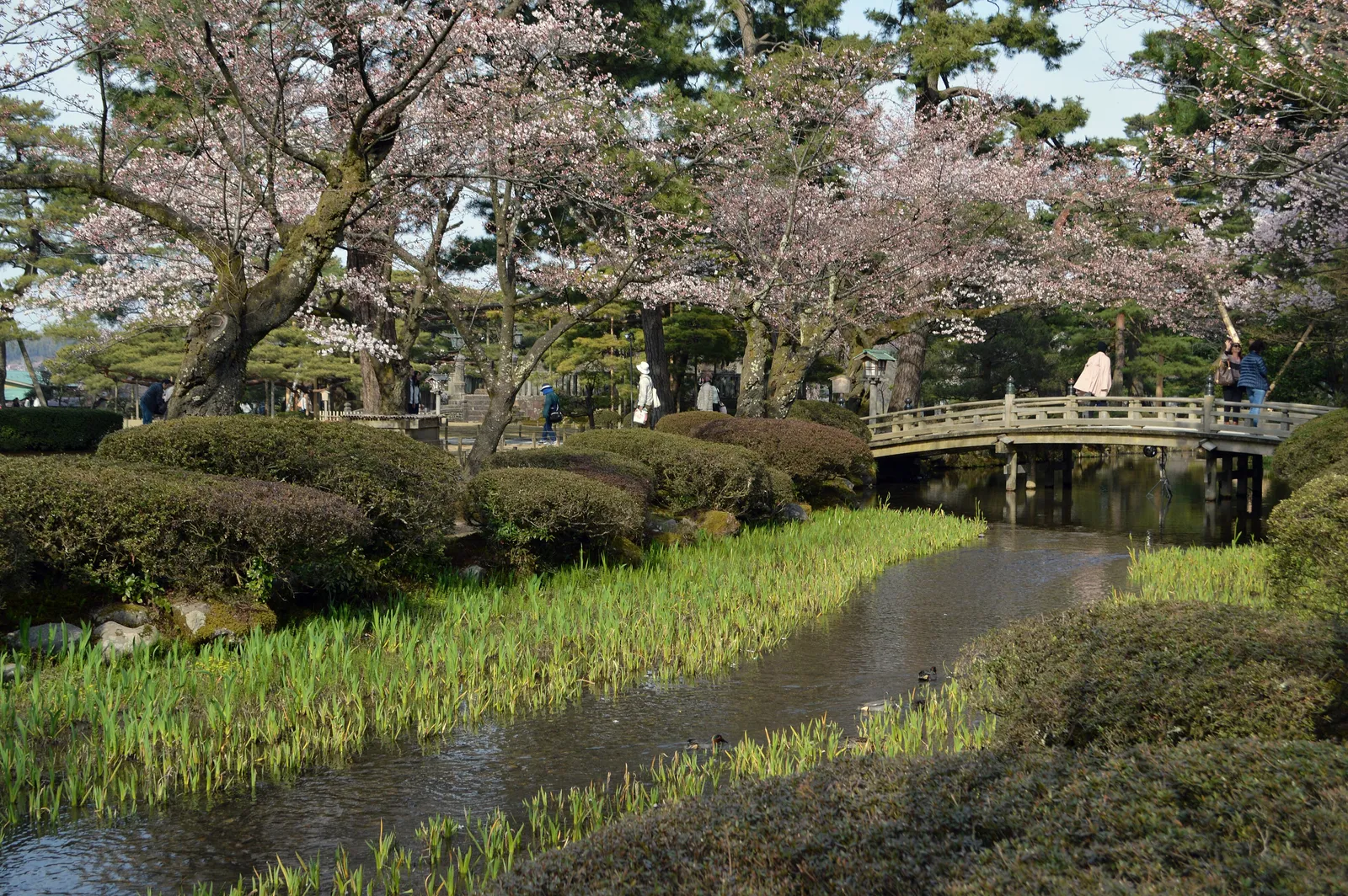
Kanazawa is Japan's best-preserved castle town, a place where samurai districts, geisha streets, and a million-koku lord's garden survived the war intact while bigger cities burned. Sitting on the Sea of Japan coast, 2.5 hours from Tokyo by shinkansen, it delivers the old-Japan atmosphere people cross the country for, at a fraction of Kyoto's crowds. The core experiences are Kenrokuen Garden, Kanazawa Castle, the teahouses of Higashi Chaya, the seafood stalls of Omicho Market, and the mud-walled lanes of Nagamachi, all within a compact, bus-friendly center. Add some of the country's best seafood, gold-leaf crafts, and an easy side trip to Shirakawa-go, and Kanazawa suits first-timers who want history without the tour-bus scrum and repeat visitors chasing a slower, craft-centered Japan.
Top sights at a glance
No. 1
Kenrokuen Garden
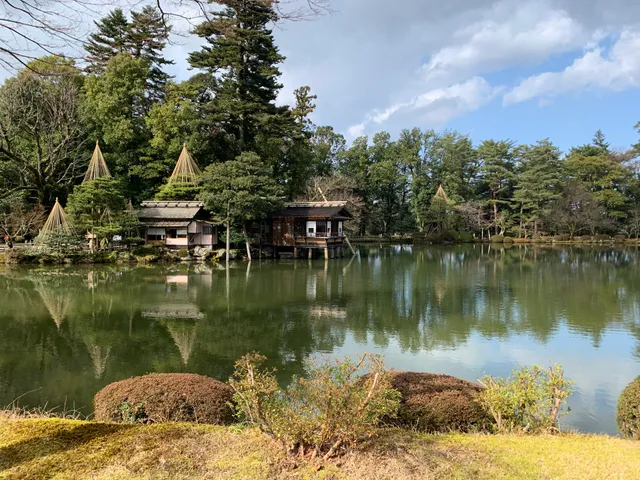
Kanazawa's headline sight and one of Japan's official 'three great gardens', built by the Maeda lords over two centuries around ponds, streams, and teahouses. The Kotoji lantern, fed by water carried from a mile away, is the city's postcard image. Every season rewrites the garden: plum and cherry blossoms in spring, irises in early summer, maple color in November, and the rope-supported pines of winter. It sits directly beside Kanazawa Castle, so the pair takes one comfortable morning.
Good to know · Entry is 320 yen, open daily: 7:00-18:00 from March to mid-October, 8:00-17:00 the rest of the year (as of October 2026). Arrive by 8:30 to beat the tour buses. Dawn entry is free but you must leave when regular hours start. Take the Loop Bus to Kenrokuen-shita, or walk 20 minutes from Omicho Market.
No. 2
Kanazawa Castle
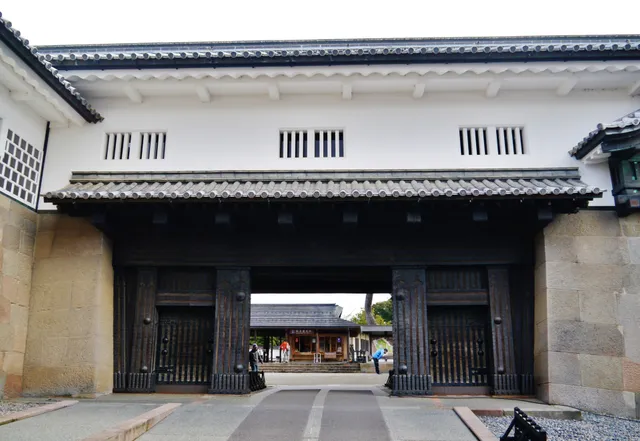
The seat of the Maeda clan, the wealthiest feudal lords after the shogun himself. Fires took the original keep in 1602 and it was never rebuilt, so today this is a park of massive stone walls, restored gates, and two gorgeous white turrets joined by the Gojukken Nagaya storehouse, rebuilt by hand with 1850s joinery techniques. It is less a castle-as-museum than a beautifully readable ruin, and the lawns make it a favorite local strolling ground.
Good to know · The castle grounds are free and open 7:00-18:00 (8:00-17:00 mid-October to February). The Gojukken Nagaya, Hishi Yagura, and Tsuzuki Yagura cost 310-320 yen combined, daily 9:00-16:30. Enter through Ishikawa-mon gate straight from Kenrokuen; the free Gyokuseninmaru garden below the walls is worth the detour.
No. 3
Higashi Chaya District
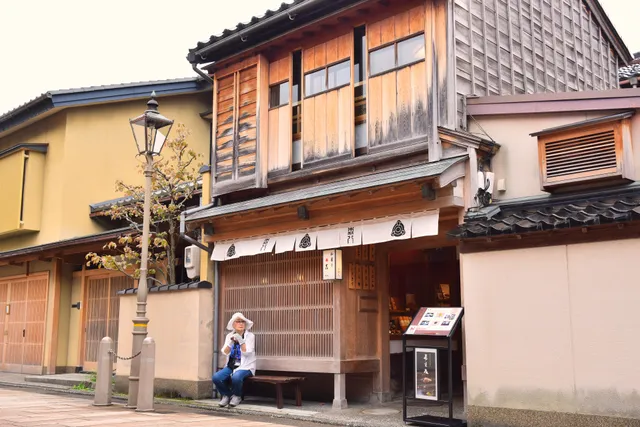
The largest of Kanazawa's three preserved geisha districts: two blocks of dark-wood teahouses where latticed facades still hide working ochaya. Geisha have entertained here for two centuries and the district is alive, not a diorama. Two teahouses open to the public - Shima, a preserved museum, and Kaikaro, a working teahouse serving tea with admission - plus gold-leaf shops and cafes hidden behind the main street.
Good to know · Strolling the street is free and best either before 9:00 or after 17:00 when day-trippers vanish. Shima teahouse costs 500 yen (9:30-17:30, daily); Kaikaro is 750 yen, closed Wednesdays. Take the Right Loop Bus from Kanazawa Station to Hashibacho, about 15 minutes. Do not photograph geisha you encounter - they are working, not performing.
No. 4
Omicho Market
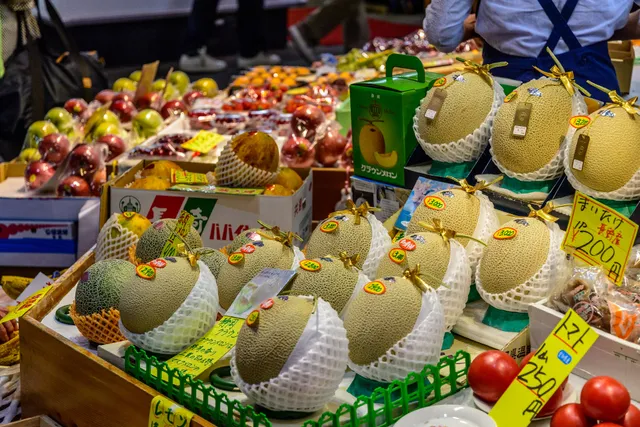
Kanazawa's kitchen since the Edo period: about 200 stalls under low roofs, selling Sea of Japan fish, Kaga vegetables, flowers, and kitchenware. It is the best place in the city to eat, not just to look - the seafood-don counters plate sweet shrimp, crab, and nodoguro blackthroat seaperch over rice for the price of a sandwich in Tokyo. Come hungry, and treat lunch here as a sight.
Good to know · Shops typically run 9:00-17:30; many close Sundays, Wednesdays, or holidays, so weekdays are safest (as of October 2026). Beat the lines by eating at 11:00 or after 13:30. Show the staff 「海鮮丼をください」 to order a seafood bowl. From Kanazawa Station, walk 15 minutes or take any bus to Musashigatsuji.
No. 5
Nagamachi Samurai District
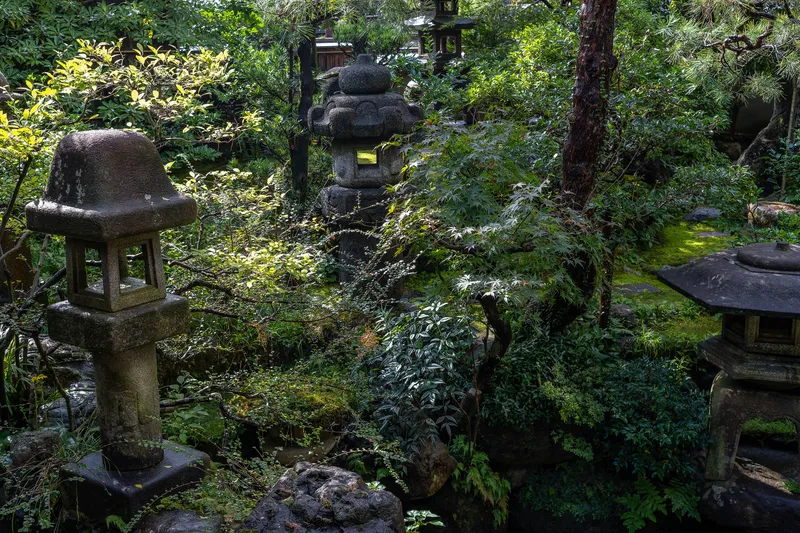
The neighborhood where mid- and high-ranking samurai families lived at the foot of the castle, and the closest thing modern Japan has to their everyday world: mud-plastered walls topped with straw, narrow lanes, water canals, and gates sized to rank. The restored Nomura residence is the star, with a small garden that photographs like Kyoto's famous ones. Quieter than the chaya districts, and best in low morning light or evening.
Good to know · The lanes are free and open around the clock. Nomura-ke costs 550 yen, open 8:30-17:30 (until 16:30 October-March). The Ashigaru footsoldier museum nearby is free, and the free audio guides at the Maeda clan museum are excellent. Take any bus from the station to Korinbo, then walk 5 minutes south.
See it in motion
Some places earn a moving picture
Stills can't show how this place moves — the drift, the light show, the crowd flow. We picked a recent, high-quality walkthrough rather than a promotional cut.
Kanazawa - 4K Walking Tour | Exploring ‘Little Kyoto’ on a 3-hour walk | Japan 🇯🇵 Mar 2025 [4K HDR]
traveler_HIRO · YouTube · plays on click
Embedded via YouTube's official player (privacy-enhanced mode). Video: Kanazawa - 4K Walking Tour | Exploring ‘Little Kyoto’ on a 3-hour walk | Japan 🇯🇵 Mar 2025 [4K HDR] by traveler_HIRO. Not affiliated with Japan Travel Navi; screened for quality and accuracy on 2026-10-06.
Kanazawa is the shortcut. Travelers arrive expecting “old Japan” and in Kyoto they share it with forty million others a year; here the samurai lanes, teahouse alleys, and one of the country’s three great gardens sit an easy bus ride apart, uncrowded most mornings. The city was the seat of the Maeda lords, the richest domain in the land after the shogun’s own, and they spent two centuries buying culture: gardens, crafts, teahouses, food. World War II spared nearly all of it, so you walk the actual streets, not reconstructions. Come for two or three days between Tokyo and Kyoto, eat Sea of Japan seafood at market prices, and you will leave wondering why everyone else is still fighting for sidewalk space in Gion.
A Bit of History
In 1583 the warlord Maeda Toshiie took a fishing and temple town on the Sea of Japan coast and made it his capital. The Tokugawa shogunate then handed the Maeda the largest fief outside its own, assessed at roughly a million koku of rice, on the empire’s wild western edge. Half frontier garrison, half statement of power, Kanazawa grew rich and then did something unusual with the money: it bought refinement. The Maeda promoted tea ceremony, Noh theater, crafts, and scholarship partly as a strategy - connoisseurship kept the shogunate’s suspicion at bay better than armies could - and the city’s culture rivaled Kyoto and Edo by the eighteenth century.
That culture accumulated layers you can still walk. A castle at the center, its approaches guarded by the samurai quarter of Nagamachi. Entertainment districts - Higashi, Nishi, and Kazuemachi - where geisha still work today. Temple districts seeded around the city’s edge as firebreaks and spiritual bulwarks. And a crafts economy that grew around aristocratic taste: gold leaf hammered to a ten-thousandth of a millimeter, Kaga yuzen silk dyeing, Kutani porcelain, and lacquerware, feeding the mansions of Edo.
The twentieth century treated all of this with bizarre mercy. Kanazawa was among the largest Japanese cities to escape air raids - its military value was low, the war moved on - so the street plans and merchant houses survived intact. The city remained a quiet prefectural capital, quietly making gold leaf, until March 2015, when the Hokuriku Shinkansen reached it and cut Tokyo to two and a half hours. Visitor numbers jumped; the city responded with multilingual signage, a prepaid loop bus system, and careful crowd management rather than theme-parking its districts. The 2024 Noto Peninsula earthquake hit the region’s north hard, and recovery continues, but Kanazawa itself was undamaged and remains the comfortable base from which to explore the coast.
Understand the city as a deliberate artwork funded by rice, and the sights stop being a checklist: the garden, the castle, the teahouses, and the samurai lanes were one lord’s single argument about what a city should be.
Culture & Daily Life
Kanazawa’s daily rhythm is slower and softer than the megalopolises’. It rains - or snows - more here than almost anywhere in Japan, a Sea of Japan climate that locals treat as a feature: the umbrella sleeves at shop entrances, the deep eaves over the teahouses, and the gardens designed to look best wet. Pack a compact umbrella for any season and a warm layer from November through March.
Craft is the living local identity, not a museum pose. Gold leaf covers everything from temple altars to soft-serve ice cream; you can watch artisans hammer it in workshops near Higashi Chaya. Kaga yuzen dyers and maki-e lacquerers still take apprentices. The practical takeaway for visitors: this is one of Japan’s best small-cities for shopping that is actually made where you buy it, and the small galleries around Korinbo and the temple districts are worth an unhurried afternoon.
The contemporary side runs through the 21st Century Museum of Contemporary Art, a low glass disc west of the castle whose permanent collection - including Leandro Erlich’s walk-in “Swimming Pool” - makes it one of Japan’s most-visited museums. Timed tickets for the collection zones sell out on weekends; book the earliest slot online a day or two ahead. Locals use the surrounding lawn the way New Yorkers use a park, and children swim across the Pool’s surface glass all summer.
Two etiquette notes particular to here. First, the teahouse districts are residential and working: geisha going to appointments are professionals in transit - no photographs, no blocking doorways. Second, the city’s hospitality culture (omotenashi) runs deep; accept the small courtesies - shopkeepers walking you to the corner, free umbrella rentals - with a bow and a “sumimasen” rather than a tip, which embarrasses everyone.
Nature & Day Trips
The city itself is green to an unusual degree - Kenrokuen’s pines, the castle park, the Gyokuseninmaru garden’s pond loop - but the real nature payoff is regional. The signature day trip is Shirakawa-go, the UNESCO-listed village of steep-roofed gassho-zukuri farmhouses in the mountains 75 to 95 minutes away by highway bus (2,800 yen one way, rising to 2,900 yen in December 2026; advance seat reservations required and it is not covered by the Japan Rail Pass). Book the first departure from Kanazawa Station around 8:00, leave by early afternoon, and you will see the village in its best light without the midday crush.
For an overnight, take the JR line 30 to 60 minutes south to the Kaga Onsen towns - Yamanaka, Yamashiro, Katayamazu - old hot-spring villages with wooden bathhouses and riverside walking paths, where a night with dinner runs far less than an equivalent in Hakone. Yuwaku Onsen, a 40-minute bus ride in the hills above the city, is the quick local soak.
West and north lies the Noto Peninsula, a scoured coastline of fishing villages and shrines, hit hard by the January 2024 earthquake. As of October 2026 recovery is real but uneven, and some coastal sights and inns remain closed - check current status at the prefecture’s tourism site before committing, and know that your visit genuinely helps the rebuild. South of the city, Mount Hakusan, one of Japan’s three sacred mountains, offers serious summer hiking.
Food & Drink
Kanazawa eats from the Sea of Japan, and the difference from Tokyo’s Pacific-supplied counters is recognizable on the plate: sweet shrimp, snow crab (November to March), and above all nodoguro, the rich blackthroat seaperch that is the local hero fish, served grilled or as sushi. The base camp is Omicho Market, where kaisendon - rice buried under the morning’s catch - runs 1,500 to 3,000 yen at counter stalls that queue from 11:30. For a splurge night out, the counter sushi bars around Katamachi serve omakase from 4,000 to 8,000 yen that Tokyo would price double.
The local cooked dishes descend from the Maeda’s kitchens. Jibuni - duck simmered in dashi with wheat gluten and vegetables, thickened with grated wasabi - is the classic Kanazawa lunch. Oden here comes in a dark soy broth, kabura-zushi (turnip and mackerel pressed sushi) appears in winter, and Kaga yasai, heirloom vegetables grown in the surrounding sand dunes, show up tempura’d or simmered everywhere. A filling local dinner runs 2,000 to 3,500 yen without drinks.
Drink what the region grows. Ishikawa’s cold winters and soft water make clean, dry sake - ask for a local junmai by showing the bartender 「地酒をお願いします」 - and the small bars around Katamachi and the Korinbo backstreets pour by the glass. Coffee culture is oddly excellent, a legacy of the city’s postwar kissaten tradition; the old-school cafes serve it with thick custard pudding under names like “pudding a la mode.” Gold-leaf soft serve is tourist cheese, but the ice cream underneath is good, and it photographs beautifully against a temple wall.
Top Sights
Kenrokuen Garden
Kenrokuen means “garden of six qualities” - spaciousness, seclusion, artifice, antiquity, water, and panoramas - and no Japanese garden balances them better. The Maeda built it as the castle’s outer garden over nearly two hundred years, and its water still arrives through a seventeenth-century channel system that feeds streams, the Hisagoike waterfall, and Japan’s oldest fountain, driven by gravity alone. The icons: the Kotoji lantern’s two legs straddling the north shore of Kasumigaike pond, the Karasaki pine planted from a seedling of Lake Biwa’s famous tree, and the yukitsuri ropes strung from November like tents over the pines to protect them from snow.
Practicalities: entry is 320 yen, open every day of the year, 7:00-18:00 from March through mid-October and 8:00-17:00 after. Enter at 8:00 sharp - tour groups land around 9:30 - and do the loop counterclockwise from the Kotoji lantern. Budget two hours; add the Seisonkaku villa, a Maeda retirement villa at the garden’s edge, if the rain drives you indoors. Dawn admission (from roughly 4:00-6:00 depending on season) is free for early risers, but you must exit when paid hours begin.
Kanazawa Castle
Where most Japanese castles are one photogenic keep, Kanazawa’s is a landscape: fifty hectares of stone ramparts in two contrasting masonry styles, moats, gates, and rebuilt halls. Fire, not war, did the damage here - the keep burned in 1602 and was never replaced - and since 1996 the city has been rebuilding the palace structures with pre-industrial technique: no concrete, hand-forged nails, 1850s joinery. The 2001 reconstruction of the Gojukken Nagaya storehouse and its two white turrets is the highlight, with displays inside explaining how it was done.
The grounds are free and open until 18:00 (17:00 in winter); the interior circuit of Gojukken Nagaya, Hishi Yagura, and Tsuzuki Yagura costs 310-320 yen, 9:00-16:30 daily. Walk in through the massive Ishikawa-mon gate from Kenrokuen, cross the Gyokuseninmaru garden’s boardwalk (free, and often empty), and exit south toward Nagamachi - the whole castle-to-samurai-quarter descent takes twenty minutes on foot and is the best single walk in the city.
Higashi Chaya District
In the evening, when the day-trippers have gone, Higashi Chaya does what it has done for two hundred years: lanterns come on behind the lattices, and the alleys belong to the geisha who still live and work in the district’s roughly fifty teahouses. During the day it belongs to you. The main street is two blocks of dark, weathered wood; the side alleys hold the quieter pleasures - gold-leaf ateliers, a soy-sauce pickle shop, tiny cafes in former storehouses.
Two teahouses admit visitors. Shima (500 yen, 9:30-17:30 daily) is preserved as it was - the tea rooms where geisha performed, the kitchen, the instruments - and explains the district plainly. Kaikaro (750 yen, closed Wednesdays) is a working teahouse where admission includes matcha and a sweet in a vermilion room. Budget ninety unhurried minutes, more if you take tea. The Right Loop Bus from Kanazawa Station reaches Hashibacho in about 15 minutes; from there it is a five-minute walk. Photography of the streets is fine; photography of geisha is not.
Omicho Market
Locals call it “Kanazawa’s kitchen,” and for nearly three centuries the city has eaten from these covered aisles. Around 200 stalls sell what the Sea of Japan and the Kaga plain produce: snow crab in winter, sweet shrimp year-round, nodoguro, mackerel, heirloom vegetables, and the knives to cook them with. The architecture is unlovely and the aisles are tight; that is the point. This is a working wholesale-retail market, and the beauty is in the ice and the shouting.
Eat here twice if you can. Morning is for grazing - grilled scallop skewers, a block of tamagoyaki, a cup of sea urchin - and for watching the fishmongers break down the morning’s catch. Lunch is the kaisendon counters on the market’s edges, where a generous bowl runs 1,500 to 3,000 yen; queue before 11:30 or after 13:30 to avoid the scrum. Most stalls open around 9:00 and close by 17:30, and many shutter on Sundays, Wednesdays, or national holidays - weekdays are the safe bet. From Kanazawa Station it is a 15-minute walk or a 220 yen bus ride to Musashigatsuji.
Nagamachi Samurai District
At the foot of the castle walls, Nagamachi was where the warrior class actually lived, and the district still keeps its grammar: lanes wide enough for two swords to pass, canals running alongside, mud walls reinforced with roof tiles and thatch that are re-plastered every year. Walk it slowly and the details accumulate - rank encoded in gate size, nameplates of the families who served the Maeda for ten generations, water still running in the channel the wives used for rice washing.
The restored Nomura residence (550 yen, 8:30-17:30, until 16:30 October to March) is the one paid interior worth your time: tatami rooms facing a small waterfall garden that Kanazawa’s light makes luminous, and a display of the family armor. Around it, the free Ashigaru museum rebuilds a footsoldier’s two-room house, and the Maeda clan museum shows swords and relics with genuinely good free English audio guides. Take any bus from the station to Korinbo (about 10 minutes) and walk five minutes south; come at 9:00 or after 16:00, when the mud walls glow and the lane belongs to the neighborhood cat population.
Getting There & Around
The Hokuriku Shinkansen puts Kanazawa 2.5 to 3 hours from Tokyo (around 14,500 yen one way, covered by the Japan Rail Pass); from Kyoto or Osaka, the Thunderbird limited express takes roughly 2.5 to 3 hours via Lake Biwa’s western shore. The nearest airport is Komatsu, 40 minutes away by 1,300 yen bus, useful for domestic hops but rarely worth re-routing an international itinerary.
In town, buy the 800 yen one-day bus pass the moment you arrive if you plan more than four rides: it covers the Kanazawa Loop Bus (right and left loops every 15-20 minutes through all the sights) plus most central city buses. Single rides are a flat 220 yen. IC cards (Suica, ICOCA) work on the Loop Bus and JR buses but not on all city buses, so the pass saves friction too. Honestly, the center is walkable - Korinbo to Kenrokuen is 20 minutes on foot - and walking is how the city reveals itself. Taxis are metered, plentiful at the station, and reasonable for short hops; bicycle rental is a fine flat-city option if the weather holds.
Where to Stay
Stay downtown, not at the station, if you can. The Korinbo-Katamachi area is the pick for most travelers: the restaurant and bar district on foot, department-store basements for breakfast, and every bus line through it. This is where the city actually goes out at night.
Kanazawa Station’s east side is the convenience choice - a cluster of modern business hotels directly above the shinkansen gates and bus terminal, ideal for early Shirakawa-go departures or a one-night stop between Tokyo and Kyoto. Efficient, but you could be anywhere in Japan.
For atmosphere, the small ryokan and boutique inns tucked into Nagamachi and the edges of Higashi Chaya put you inside the historic districts after dark, which is when they are at their best. Inventory is limited and books out for autumn foliage season - reserve a month or more ahead for November.
Sources & verification (10)
- https://www.japan-guide.com/e/e2167.html
- https://www.japan-guide.com/e/e4200.html
- https://www.japan-guide.com/e/e4202.html
- https://www.japan-guide.com/e/e4204.html
- https://www.japan-guide.com/e/e4205.html
- https://www.japan-guide.com/e/e4206.html
- https://www.japan-guide.com/e/e4207.html
- https://www.japan-guide.com/e/e4208.html
- https://www.japan-guide.com/bus/shirakawago.html
- https://www.japan-guide.com/e/e5950.html